
Harvest
Expenses
Sign up

Recurring Expense Tracker

Harvest empowers businesses to efficiently track and categorize recurring expenses, offering insights that enhance budgeting and financial accuracy.

EXPENSE REPORT DRAFT

Drop your receipts here or click to upload

Images and PDFs (max 10 MB each)

Date
Category
Merchant
Description
Amount
Total
$0.00

Customise report

Appearance

Show report title

Report settings

Why Tracking Recurring Expenses Matters

Effective management of recurring expenses is crucial for businesses aiming to maintain financial health and stability. Recurring expenses, such as rent, subscriptions, and utility bills, often constitute a significant portion of a company's budget. Without proper tracking, businesses can easily lose sight of up to 20% of their total expenditures. Moreover, the financial impact of even minor accounting errors is substantial, costing U.S. businesses approximately $7.8 billion annually. Therefore, a systematic approach to tracking these expenses is essential to avoid budget overruns and enhance financial accuracy.

Despite the importance of managing recurring expenses, many organizations still rely on outdated manual processes, which are prone to errors and inefficiencies. For instance, it is reported that 19% of all expense reports contain errors requiring clarification. To combat these issues, automated expense management systems are recommended. By adopting such systems, businesses can significantly reduce manual errors and improve real-time visibility into their spending patterns.
How Harvest Simplifies Recurring Expense Tracking

Harvest offers an intuitive solution for tracking recurring expenses, specifically designed to meet the needs of small-to-medium businesses. With Harvest, users can manage expenses alongside time tracking and invoicing, making it easier to maintain a cohesive view of project-related costs. One of the standout features of Harvest is its ability to support multi-currency transactions, allowing international users to set default and client-specific currencies, though it does not perform currency conversions.

Harvest also enables detailed categorization of expenses, crucial for gaining budgeting insights. Users can create custom expense categories to better organize and track their recurring expenses. This level of customization helps businesses identify spending patterns and make informed financial decisions without the complexity of integrating with external financial planning tools.

Maximize Budgeting Insights with Customizable Categories

For businesses seeking deeper insights into their spending habits, Harvest provides the ability to customize expense categories. This feature allows users to tag expenses by project or category, offering a clear view of where money is being spent. By organizing expenses in this manner, companies can easily identify trends and areas for potential cost savings.

Customizable categories in Harvest serve as a powerful tool for budgeting, enabling businesses to allocate resources more effectively. This structured approach not only streamlines expense management but also aids in financial reporting and audits, ensuring compliance with accounting standards. Furthermore, detailed categorization can help mitigate the risk of subscription creep, where unnoticed recurring expenses quietly drain financial resources.

The Role of Automation in Reducing Errors and Enhancing Efficiency

Automation is a key factor in reducing manual errors and improving efficiency in recurring expense management. By transitioning from manual processes to automated systems like Harvest, businesses can minimize data entry mistakes and the loss of receipts, which are common issues with traditional methods. Processing each expense manually can cost between $27 and $58, highlighting the financial advantage of automation.

Harvest's automated features ensure consistent policy enforcement and provide real-time visibility into expense data. This capability allows businesses to make data-driven decisions and maintain accurate financial records. Additionally, automation helps in performing regular audits, a practice emphasized by experts as essential for identifying unnecessary recurring expenses and optimizing cash flow.

Harvest: A Project-Based Expense Tracking Solution

Harvest stands out as a project-based expense tracking solution that is both simple and effective. It caters to businesses that need to manage expenses while simultaneously tracking time and generating invoices. With its customizable tags and detailed expense categorization, Harvest offers a streamlined approach to managing recurring expenses.

While Harvest does not provide automatic notifications for upcoming payments, it allows users to track and categorize expenses for better financial management. This approach ensures that businesses can maintain control over their recurring costs and avoid the pitfalls of unmanaged expenditures. By using Harvest, companies can enhance their budgeting processes, improve cash flow, and reduce the likelihood of financial discrepancies.

Recurring Expense Tracker with Harvest

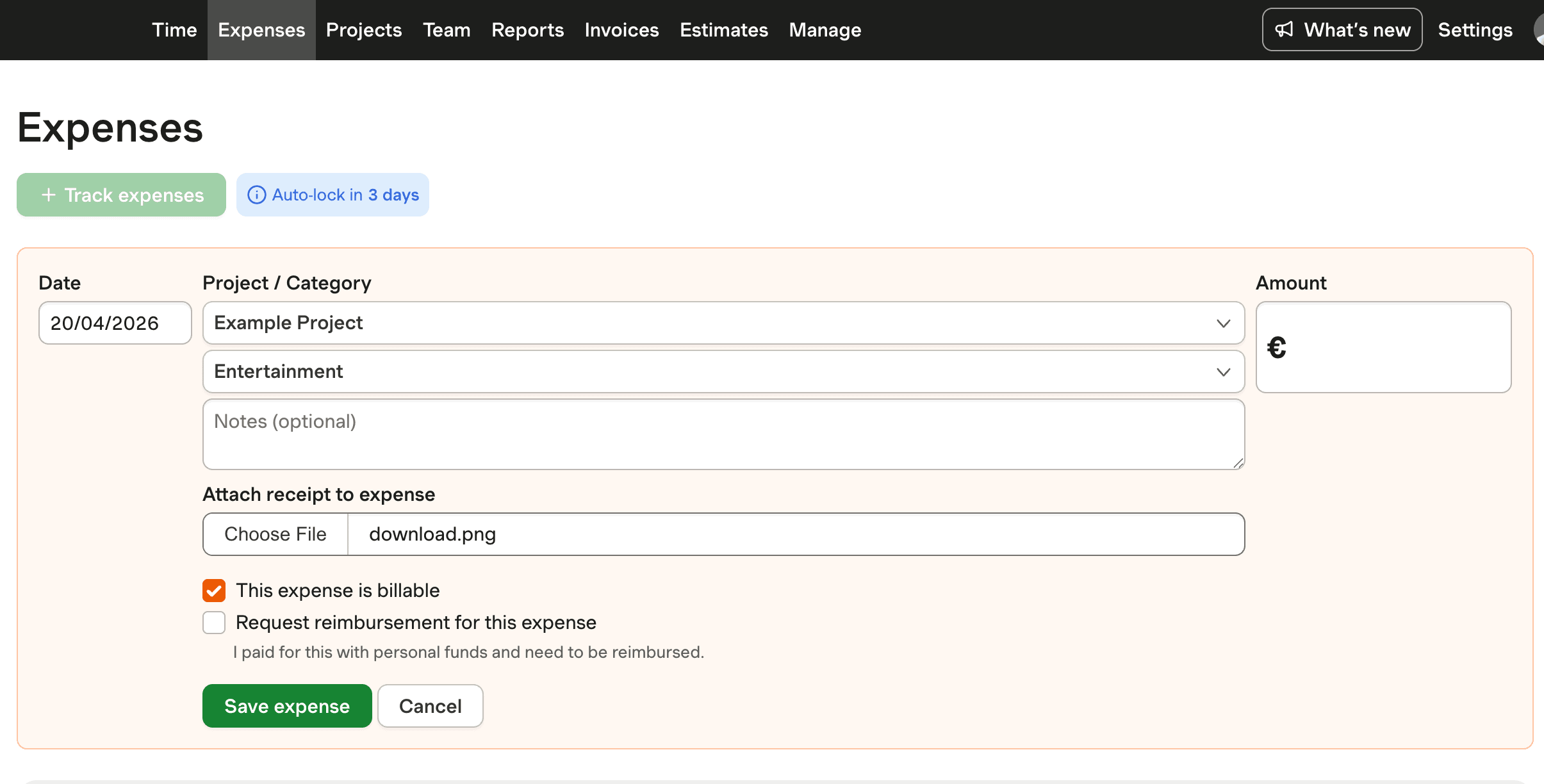
See how Harvest tracks recurring expenses with customizable categories and multi-currency support, enhancing budgeting and financial insights.

Harvest expense tracking interface showcasing recurring expense management features.

Recurring Expense Tracker FAQs

  • Recurring expenses are regular, ongoing costs that a business incurs, such as rent, subscriptions, and utility bills. These expenses are typically consistent in amount and schedule, making them predictable and essential for budgeting.

  • Harvest allows users to create custom expense categories, enabling detailed tracking and organization of expenses. This helps businesses gain insights into spending patterns, aiding in budgeting and financial decision-making.

  • Yes, Harvest supports multi-currency transactions by allowing users to set a default currency for their account and a preferred currency per client. However, it does not perform currency conversions.

  • Tracking recurring expenses is crucial to prevent budget overruns and ensure financial stability. Businesses can lose sight of up to 20% of their expenditures if recurring costs are not adequately monitored.

  • Automated expense trackers streamline processes, reduce manual errors, and provide real-time visibility into spending. This leads to improved financial accuracy and more informed decision-making.

  • Harvest enhances budgeting by allowing detailed categorization of expenses, providing insights into spending patterns. This helps businesses allocate resources more effectively and identify cost-saving opportunities.

  • Industries like agencies, construction, and legal firms benefit significantly from Harvest’s project-based expense tracking, as it helps manage complex financial needs and improves cash flow management.