
Harvest
Expenses
Sign up

Self Employed Track Expenses

Harvest is perfect for self-employed individuals needing to track expenses by project and client, offering mileage tracking and receipt uploads for comprehensive financial management.

  • Attach receipts to projects & tasks
  • Turn tracked expenses into client invoices
  • Free 30-day trial, no credit card needed

or drag & drop • Images and PDFs, max 10 MB

Why Expense Tracking is Crucial for Self-Employed Success

Effective expense tracking is essential for self-employed individuals to maximize financial efficiency and minimize tax liabilities. By systematically recording expenses, self-employed professionals can realize significant tax savings—between $3,000 and $8,000 annually, with high-income earners saving up to $15,000. This practice not only reduces taxable income but also provides clarity on business health, aiding strategic decision-making.

Without systematic tracking, freelancers risk missing an average of $2,400 in legitimate deductions each year, affecting cash flow and business growth. The shift towards digital record-keeping further aids compliance, with regulations in regions like the UK and Australia mandating digital receipts. Adopting digital tools reduces audit risk by up to 73%, streamlining data entry and freeing up time for core business activities.
Harnessing Harvest for Expense Management

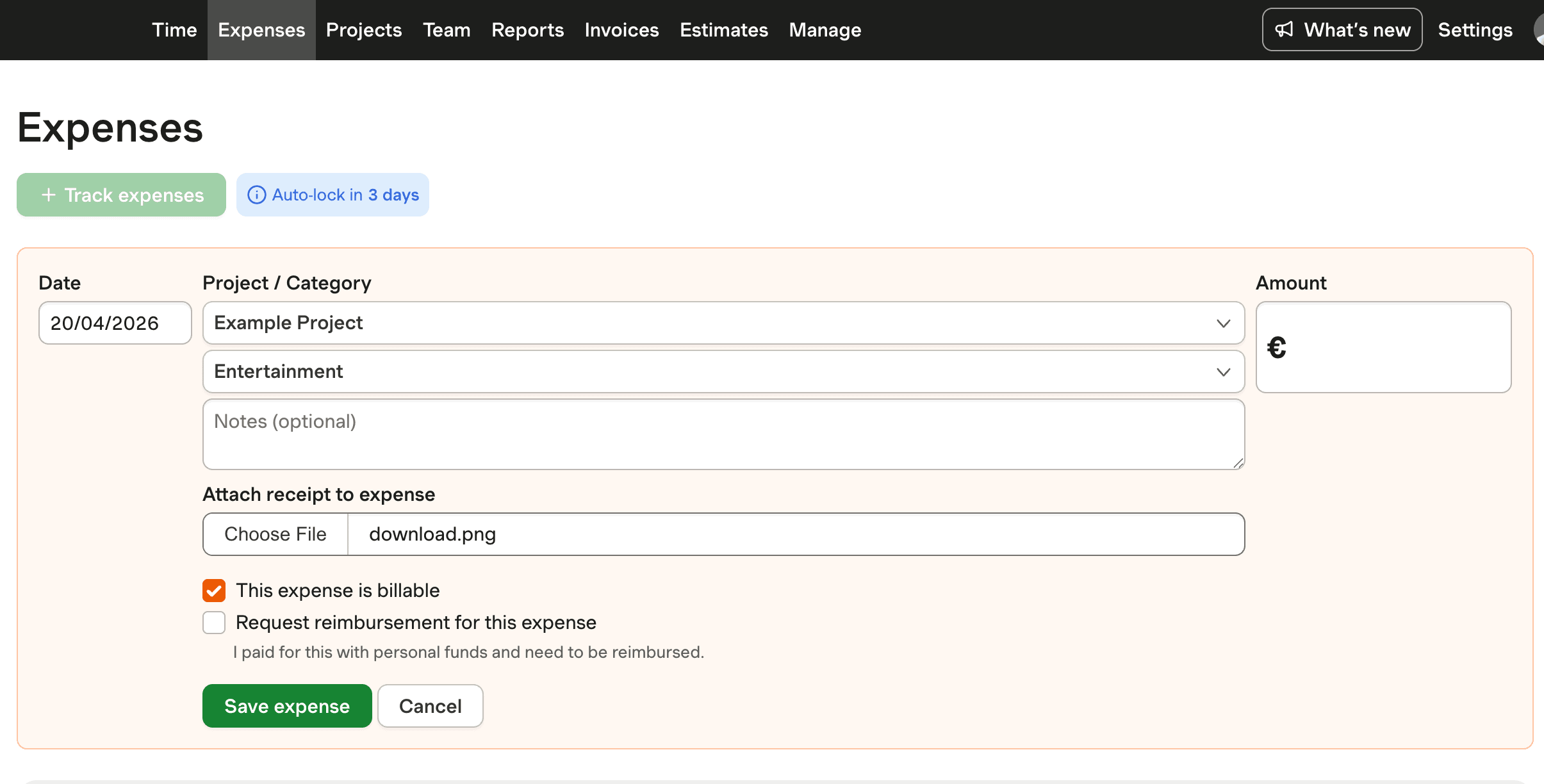
For self-employed professionals, Harvest offers a robust solution for tracking expenses by project and client, ensuring precise financial documentation. With Harvest, users can tag expenses for specific projects, facilitating accurate billing and streamlined invoicing. This capability is particularly beneficial for freelancers handling diverse projects across multiple clients, as it maintains clarity and organization.

Harvest also supports mileage tracking, allowing users to create a mileage expense category with per-mile rates. This feature is crucial for self-employed individuals who frequently travel for business, ensuring that all travel-related expenses are accurately recorded and managed. Though Harvest doesn't automate receipt capture, it allows for manual uploads, providing a comprehensive digital record that aligns with modern tax requirements.

Maximizing Tax Deductions with Organized Tracking

While Harvest doesn't offer direct tax advice, its organizational features facilitate the tracking necessary for maximizing deductions. By categorizing expenses by date and project, self-employed individuals can easily identify deductible expenses, ensuring compliance with IRS standards. This organized approach helps in capturing all potential deductions, translating into substantial tax savings each year.

To further enhance tax efficiency, it's recommended to integrate Harvest's expense tracking with professional tax guidance. This combination ensures that all expenses meet the "ordinary and necessary" criteria set by tax authorities, optimizing deductions while reducing the risk of penalties.

Digitizing Receipts for Compliance and Efficiency

In the era of digital record-keeping, maintaining organized digital receipts is crucial for tax compliance and operational efficiency. Harvest facilitates this by allowing receipt uploads via mobile devices, ensuring that all data is stored securely and is easily accessible during audits. This practice aligns with global trends towards digital documentation, as seen in tax regulations across the UK and Australia.

By digitizing receipts immediately after purchases, self-employed professionals can mitigate the common issue of lost documentation, which often leads to missed deductions. A consistent routine of scanning and organizing receipts digitally not only fulfills legal requirements but also enhances financial clarity and readiness.

Track Expenses with Harvest

See how Harvest helps self-employed professionals track expenses by project and client, enhancing financial management and accuracy.

Harvest software interface for self-employed expense tracking

Self Employed Track Expenses FAQs

  • Self-employed individuals should use digital tools like Harvest to track expenses efficiently. These tools allow for tagging expenses by project and client, crucial for organized financial reporting. Digitizing receipts immediately and categorizing expenses accurately ensures compliance and maximizes deductions.

  • Harvest offers project and client-based tagging, making it ideal for freelancers managing multiple contracts. It supports mileage tracking and allows receipt uploads, ensuring comprehensive expense documentation. This helps in accurate billing and enhances financial clarity.

  • Digital expense tracking is vital as it reduces the risk of audit by up to 73% and facilitates compliance with tax regulations. It also streamlines data entry, saving time and minimizing errors. With growing digital mandates, such record-keeping is becoming essential for tax compliance.

  • Harvest enables users to track mileage by creating a mileage expense category with a per-mile rate. This ensures that all business-related travel is accurately recorded, which is essential for calculating deductible travel expenses and maintaining precise financial records.

  • Common mistakes include mixing personal and business expenses, forgetting to record small expenses, and not keeping proper documentation. Using tools like Harvest to separate and categorize expenses can prevent these errors and maximize deductions.

  • To effectively separate personal and business expenses, self-employed individuals should use dedicated business bank accounts and credit cards. Harvest can aid this process by allowing expenses to be tagged by project, ensuring clear delineation between personal and business transactions.