
Harvest
Expenses
Sign up

Weekly Expense Report

High costs from manual expense processing can hinder business efficiency. Harvest streamlines weekly expense reporting with automated tracking and detailed categorization.

EXPENSE REPORT DRAFT

Drop your receipts here or click to upload

Images and PDFs (max 10 MB each)

Date
Category
Merchant
Description
Amount
Total
$0.00

Customise report

Appearance

Show report title

Report settings

The Importance of Automated Weekly Expense Reports

Automating weekly expense reports is crucial for businesses aiming to enhance efficiency and accuracy. Manual processing of expense reports can be costly, averaging $58 per report, and error-prone, with about 19% of reports containing errors. These errors cost an additional $52 each to correct, adding significant overhead for businesses processing numerous reports. Automation can reduce these costs and errors, allowing teams to focus on strategic activities.

Harvest addresses these challenges by offering automated expense tracking and detailed reporting capabilities. By utilizing Harvest, businesses can manage expenses with greater precision and efficiency, reducing processing time by 60% and cutting associated costs by 35%. This not only enhances productivity but also improves the accuracy of financial data.
Building a Comprehensive Weekly Expense Report

Creating a comprehensive weekly expense report involves several key steps to ensure accuracy and completeness. Typically, a weekly report should include all business-related expenses, categorized appropriately to reflect spending patterns. Common categories might include transportation, meals, and office supplies, which help businesses understand their expenditure distribution.

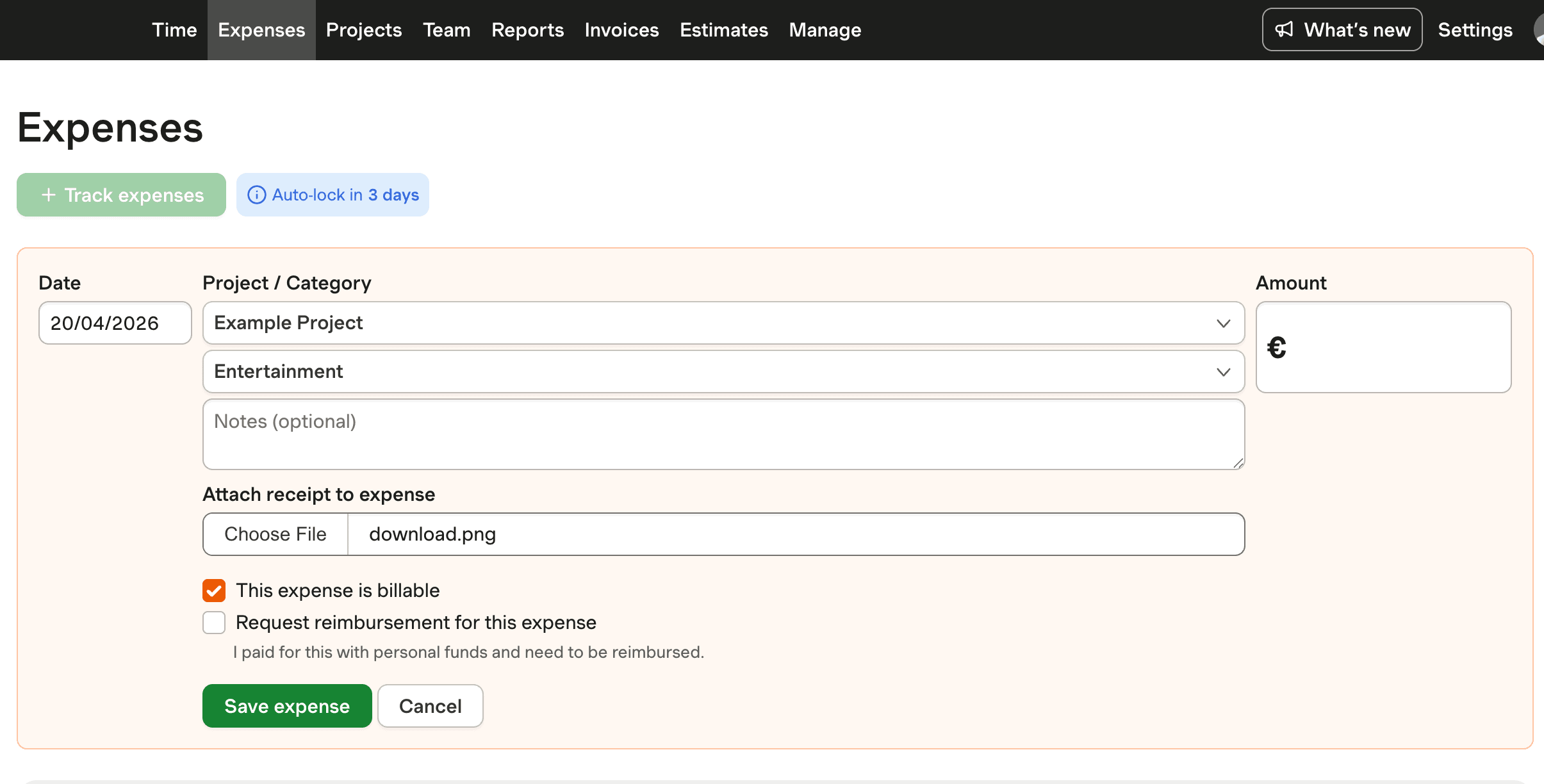
With Harvest, users can easily categorize expenses and generate reports that include subtotals for different expense categories. This feature simplifies the analysis of spending patterns and supports better financial decision-making. Although Harvest doesn't offer fields for business purpose or payment type, its detailed tracking and categorization capabilities provide a robust foundation for expense management.

Optimizing Expense Reporting with Technology

Leveraging technology in expense reporting can significantly optimize processes and reduce errors. As of 2024, 74% of Accounts Payable teams have adopted partial automation, up from 54% in 2022, highlighting a significant trend towards technological solutions. By 2025, 75% of businesses are expected to use primarily mobile apps for expense management, reflecting the shift towards digital solutions.

Harvest facilitates this optimization by offering a mobile-friendly platform that supports detailed tracking and categorization of expenses. Using Harvest, businesses can automate receipt capture and categorization, reducing the burden of manual data entry and minimizing errors. This ensures reports are accurate and comprehensive, supporting strategic financial management.

Best Practices for Expense Management Compliance

Compliance is a critical aspect of expense management, with regulations varying by region. Companies can face up to 5% revenue loss due to fraud and policy violations, making compliance strategies essential. Automated tools play a vital role in ensuring compliance by systematically enforcing policies and storing documentation securely.

Harvest supports compliance by providing features that assist in categorizing and documenting expenses accurately. While it does not directly integrate expense reports with accounting software, Harvest’s ability to manage detailed expense tracking helps maintain compliance through well-organized and accessible records. This supports businesses in adhering to legal and audit requirements, safeguarding against fraud and policy violations.

Weekly Expense Report with Harvest

See how Harvest simplifies weekly expense reports with automated tracking and detailed categorization for better financial management.

Harvest dashboard showing weekly expense report features.

Weekly Expense Report FAQs

  • A weekly expense report should include fields for the date, category, amount, purpose, and any relevant notes for each expense. This helps in categorizing and analyzing spending patterns.

  • Automated expense reporting reduces processing time by 60% and cuts costs by 35%. It minimizes errors and provides real-time insights, allowing finance teams to focus on strategic tasks rather than administrative ones.

  • Harvest offers detailed tracking and categorization of expenses, allowing you to view daily breakdowns and subtotals by category. This helps in analyzing spending patterns and ensuring accurate expense management.

  • Compliance ensures that expense management adheres to legal standards, reducing fraud risk and ensuring accurate financial reporting. Automated tools like Harvest support compliance by maintaining well-organized records.

  • Automation reduces manual data entry, minimizing errors and ensuring accurate categorization of expenses. This leads to more reliable reports and better financial insights.

  • Technology streamlines the process, reduces manual work, and enhances accuracy. Mobile apps and AI-driven tools are increasingly used to automate expense tracking, providing real-time insights and saving costs.