Sign up


Understanding the Fundamentals of Client Billing
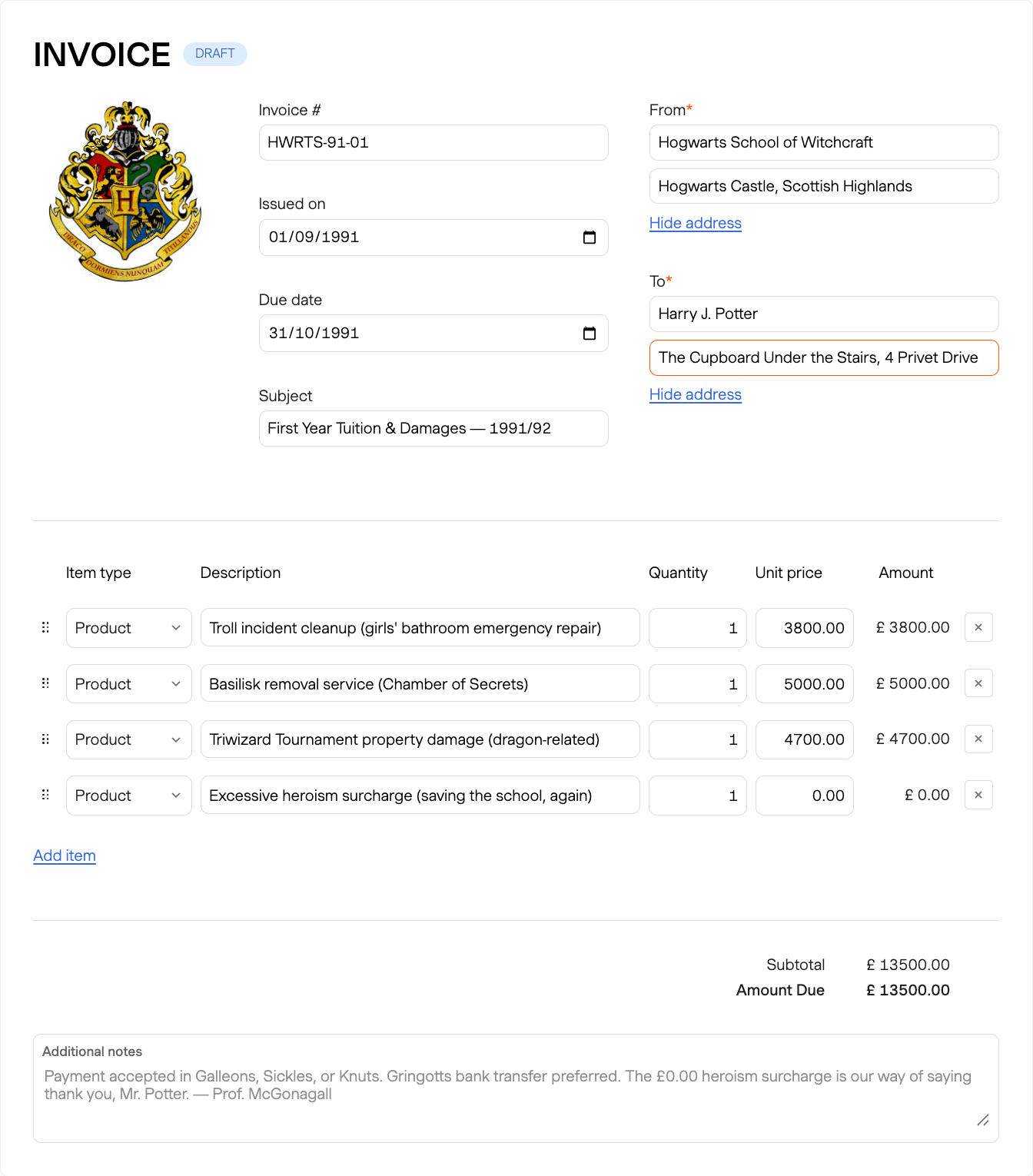
A client invoice is a formal request for payment that details the goods or services provided, their quantities, agreed-upon pricing, and the total amount due. To ensure legal compliance and smooth financial operations, every invoice should include several key components. These typically consist of a clear header identifying the document as an "Invoice," a unique invoice number for tracking, your business's full name, address, and contact information, and the client's name and address. Additionally, a detailed, itemized list of the goods or services provided, including descriptions, quantities, and unit prices, is crucial for transparency.
Legal and financial requirements for billing vary by jurisdiction, but universal standards emphasize transparency, accuracy, and completeness. For instance, VAT-registered businesses in regions like the European Union must comply with specific VAT Directive rules, while in the United States, the IRS has its own guidelines for valid invoices. Invoices must also clearly state the issue date, the payment due date, accepted payment methods, and any applicable taxes or late fees. For limited companies, the full company name as it appears on the incorporation certificate and the company registration number should be displayed.
Common billing terms help standardize communication and expectations. For example, "Net 30" signifies that payment is due within 30 days of the invoice date. "Billing in advance" or "prepaid" refers to charges for services to be provided later, while "billing in arrears" or "postpaid" means charges for services already delivered. "Accounts receivable (AR)" represents the total amount of money owed to your business. Understanding these terms is vital for accurate financial documentation and accounts receivable tracking.