Harvest
Invoices
Sign up

Convert Estimate to Invoice

Harvest streamlines the process of converting estimates to invoices, minimizing errors and saving time for contractors.

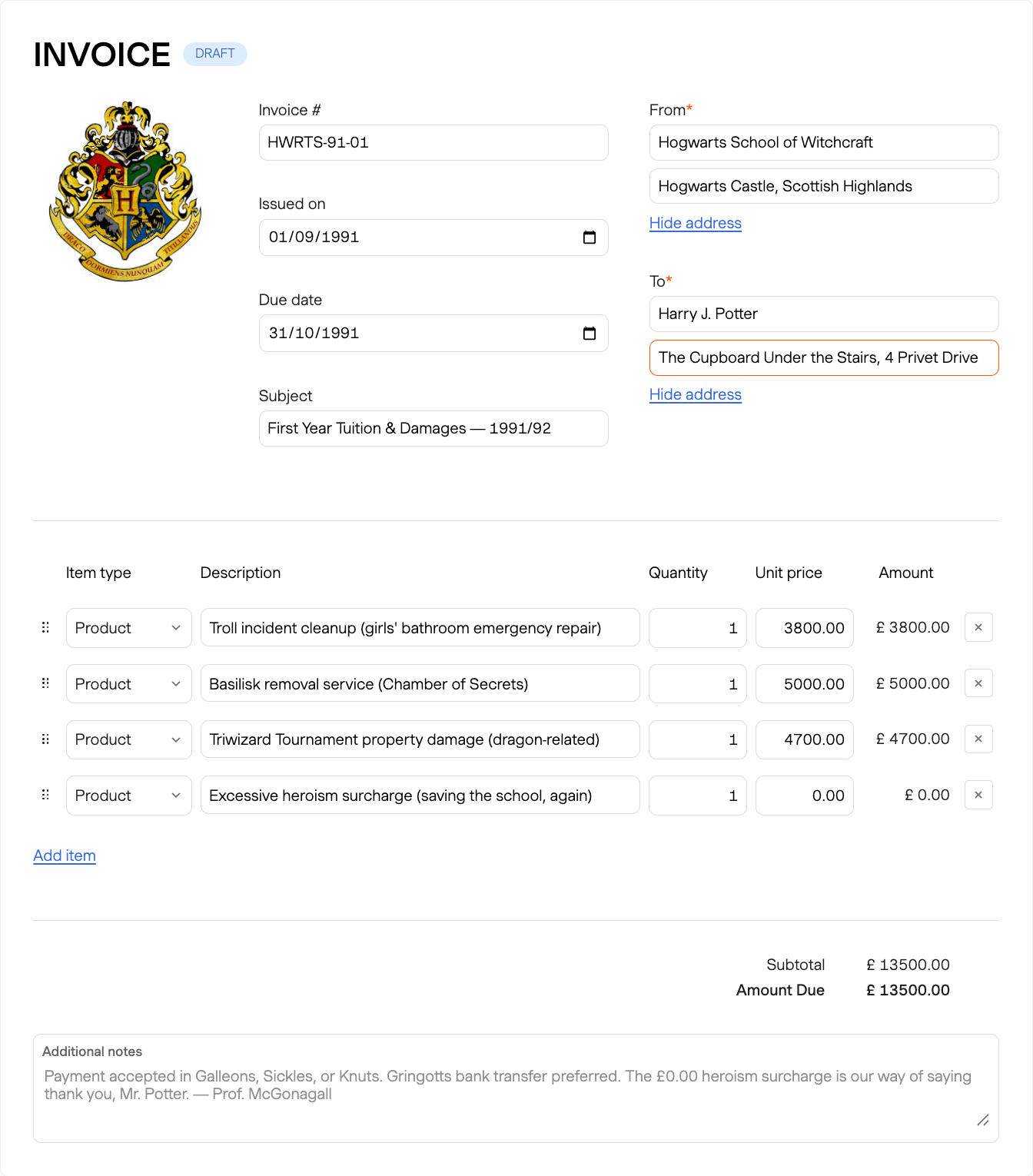
INVOICE DRAFT

Add your logo here
Item type
Description
Quantity
Unit price
Tax
Amount
Subtotal
$0.00
Discount
$0.00
Amount Due
$0.00
Get paid via:
Credit card / Debit card
ACH
Wire transfer

Customise invoice

Appearance

Add a logo
Show invoice title

Invoice settings

Tax Add up to 2 tax rates
%
Discount Apply a discount percentage
%

Understanding the Conversion Process: Estimate to Invoice

Converting an estimate into an invoice is a vital step in managing project finances, ensuring that agreed-upon terms translate accurately into payment requests. This process involves taking the details outlined in an approved estimate—such as services, quantities, and pricing—and generating a comprehensive invoice that clients can pay. The transition from estimate to invoice should be smooth, as errors can lead to disputes or delayed payments. Interestingly, manual invoice processing has an error rate of around 5%, but automation can reduce this to under 1%, representing a 90% improvement, according to industry research.

Harvest simplifies this process by automating the transfer of details from estimates to invoices, ensuring that project-specific information is accurately reflected. This feature not only saves time but also minimizes the risk of errors, supporting a seamless financial workflow. By linking estimates to invoices, Harvest helps maintain precise financial records, which is crucial for efficient project management.
Leveraging Automation for Efficiency and Accuracy

The efficiency gains from automating the conversion of estimates to invoices are significant. Companies adopting accounts payable automation report a reduction in processing costs by 70% or more, with a first-time match rate exceeding 97%. Automation also allows businesses to process invoices 85% faster than manual methods, which can drastically improve cash flow. For example, an e-commerce company experienced a 50% reduction in processing time and improved cash flow by switching to automated invoicing.

Harvest embraces this automation trend by enabling users to create invoices based on tracked time and expenses, directly from their estimates. This capability ensures that all relevant project information is included, enhancing both accuracy and efficiency. By automating these steps, Harvest helps contractors and service businesses focus on their core activities rather than getting bogged down in administrative tasks.

Common Challenges and Best Practices

Despite the benefits of automation, challenges can arise during the conversion of estimates to invoices. Common issues include incomplete details, mismatched numbers, and delayed invoice delivery. To avoid these pitfalls, it's essential to thoroughly review approved estimates before conversion. This means checking that all services, quantities, and pricing match what was agreed upon, which prevents misunderstandings and disputes later on.

Harvest addresses these challenges by using project-specific information in invoices generated from estimates, ensuring comprehensive and accurate documentation. Additionally, automated systems like Harvest's can alert users to missing details and generate unique invoice numbers, reducing the likelihood of errors. By sending invoices promptly upon project completion, businesses optimize cash flow and maintain positive client relationships.

Ensuring Compliance and Optimizing Cash Flow

Compliance with legal and tax requirements is a crucial aspect of invoicing, as invoices are not just payment requests but also legal documents. In the U.S., businesses must retain tax-related records for several years, and failing to do so can result in penalties. Automation aids compliance by ensuring accurate record-keeping and providing digital audit trails.

Harvest supports businesses in maintaining compliance by linking estimates to invoices, which helps in keeping detailed financial records that can be easily audited. Furthermore, by optimizing the invoicing process, Harvest aids in improving cash flow. For instance, companies using automated invoicing solutions can cut processing time by approximately 10 days, providing quicker access to funds and enhancing overall financial management.

Convert Estimates with Harvest

See how Harvest automates converting estimates to invoices, saving time and ensuring accuracy.

Screenshot showing estimate conversion to invoice in Harvest.

Convert Estimate to Invoice FAQs

  • In Harvest, converting an estimate to an invoice is straightforward. You can link your estimates to tracked time and expenses, ensuring all project-specific details are included. This automation saves time and reduces errors, streamlining your financial workflow.

  • Automating invoice creation can reduce processing costs by 70% and improve accuracy by cutting errors to under 1%. It speeds up the invoicing process by 85%, enhancing cash flow and compliance.

  • An accurate invoice should include a unique invoice number, business and client details, an itemized list of services or products with prices, applicable taxes, the total amount due, and clear payment terms.

  • Harvest improves cash flow by automating the conversion of estimates to invoices, reducing processing time, and ensuring prompt invoice delivery. This acceleration allows for faster payments and better financial management.

  • Invoices must be retained as they serve as legal documents for tax and audit purposes. Failure to keep accurate records can lead to penalties and compliance issues. Automated systems help maintain these records efficiently.

  • Manual invoice processing often results in errors like incorrect totals and missing details, with an average error rate of 5%. Automation reduces these errors significantly, ensuring accurate invoicing.

  • Automation enhances efficiency by streamlining the process, reducing manual data entry, and ensuring accuracy. Companies report up to a 93% reduction in manual errors and processing time cut from days to minutes.