Harvest
Invoices
Sign up

How to Invoice As a Contractor

Contractors often face late payments, with 8-12% of invoices going uncollected. Harvest provides a comprehensive invoicing solution, offering detailed, itemized billing to ensure timely payments.

INVOICE DRAFT

Add your logo here
Item type
Description
Quantity
Unit price
Tax
Amount
Subtotal
$0.00
Discount
$0.00
Amount Due
$0.00
Get paid via:
Credit card / Debit card
ACH
Wire transfer

Customise invoice

Appearance

Add a logo
Show invoice title

Invoice settings

Tax Add up to 2 tax rates
%
Discount Apply a discount percentage
%

Essential Components of a Contractor Invoice

When creating an invoice as a contractor, certain components are essential to ensure clarity and prompt payment. A contractor invoice should include basic information such as the contractor's business name, address, and contact details. It's also crucial to incorporate the client's information, a unique invoice number, and the invoice date. The inclusion of these elements helps maintain a professional and organized billing process.

Beyond the basics, itemizing all services rendered is key. This includes detailing labor hours, rates, materials used, and any additional costs such as permits or change orders. Such detailed descriptions prevent ambiguity, reducing the likelihood of payment disputes. Industry research shows that invoices lacking clarity can result in up to 8-12% of payments going uncollected annually.

Harvest supports contractors by providing tools to create detailed, itemized invoices. This ensures that every aspect of the project is documented, from labor and materials to subcontractor costs, making the invoicing process transparent and efficient.
Formatting Your Invoice for Success

Correctly formatting your invoice is vital to avoid confusion and ensure timely payments. A consistent, professional format helps clients easily understand the charges and payment terms. Use a clear layout that separates different charges, such as labor and materials, and provides a total amount due. Each invoice should also clearly state the payment due date and the methods accepted.

Standardizing invoice formats is recommended by experts to minimize errors and streamline the collection process. Consistency in format not only aids client understanding but also simplifies internal financial analysis. With Harvest, contractors can utilize templates that ensure standardized formatting for all invoices, reducing the risk of errors and delays.

Incorporating clear payment terms is another essential aspect. Specify any penalties for late payments and consider offering incentives for early payments. These strategies encourage timely payments, which can significantly improve cash flow.

Best Practices for Contractor Invoicing

Effective invoicing practices are crucial for contractors to maintain a healthy cash flow and foster strong client relationships. One best practice is to send invoices promptly upon project completion. Delayed invoices can lead to delayed payments, extending the average collection period from 45-60 days, which is common in the industry.

Utilizing software like Harvest can streamline the invoicing process. Harvest allows contractors to set up recurring invoices for long-term projects and handle progress billing. This feature is particularly beneficial in the construction industry, where payments often align with project milestones or completion stages.

Another important practice is to track all sent invoices and follow up on overdue payments. Harvest facilitates this by integrating with online payment platforms, making it easy for clients to pay directly from the invoice and for contractors to track payment status. Automated reminders can also help in recovering overdue invoices without manual intervention.

Managing Change Orders and Additional Costs

Change orders and additional costs are common in contracting, particularly in industries like construction. Properly managing these changes in your invoicing is crucial to avoid disputes and ensure you are compensated for all work performed. Each change order should be documented and approved in writing before being added to the invoice.

Harvest simplifies the process of managing change orders by allowing contractors to add these as line items in invoices. This feature ensures that all additional costs are clearly communicated to clients, reducing the risk of payment disputes. Supporting documentation can also be attached to invoices, providing further clarity.

By ensuring that all changes are properly documented and billed, contractors can maintain transparency and client trust, which are essential for successful project management and financial health.

Invoice Seamlessly with Harvest

Harvest enhances contractor invoicing by allowing detailed, itemized billing and flexible payment terms. Simplify your billing process today.

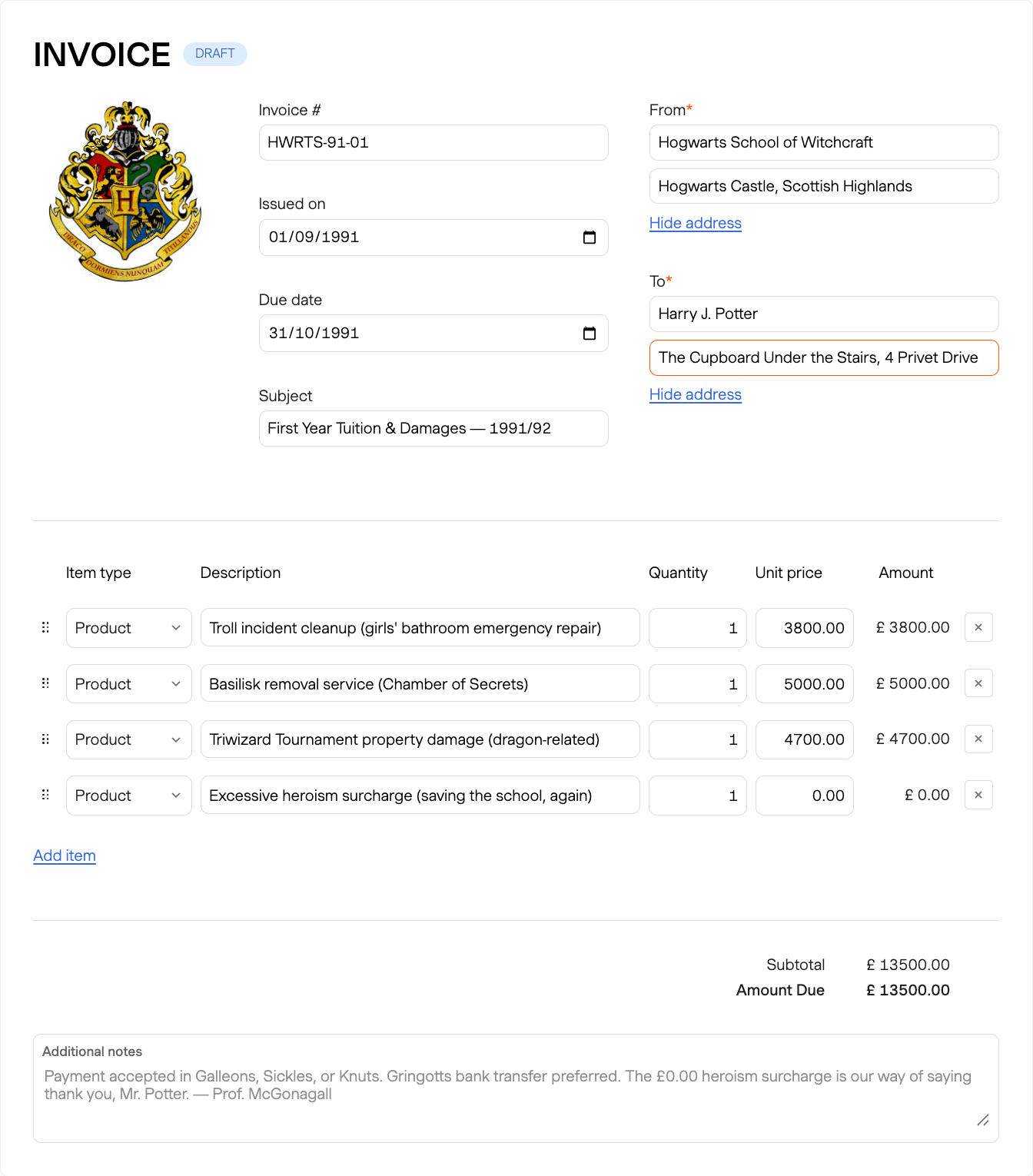
Screenshot showing Harvest's contractor invoicing interface with itemized billing features.

How to Invoice As a Contractor FAQs

  • A contractor invoice should include the contractor's business name, address, contact details, client's information, a unique invoice number, and the invoice date. Detailed itemization of services, labor, materials, and additional expenses is crucial to prevent disputes and ensure clarity.

  • To ensure timely payments, clearly state payment terms and due dates. Offering incentives for early payment can encourage clients to pay promptly. Using software like Harvest to send invoices immediately upon project completion can also expedite the payment process.

  • Progress billing involves invoicing clients based on the percentage of work completed or at specific project milestones. Harvest supports this method by allowing contractors to set up recurring invoices, aligning billing with project progress and ensuring steady cash flow.

  • Change orders should be documented and approved in writing before inclusion in invoices. Harvest allows contractors to add change orders as line items, ensuring all additional costs are communicated clearly and reducing the risk of disputes.

  • Itemized billing is important because it provides transparency, helping to prevent disputes and ensuring clients understand exactly what they are being charged for. Harvest supports itemized billing by allowing detailed line items for labor, materials, and subcontractor costs.

  • Invoicing software like Harvest automates the billing process, reducing errors and saving time. It allows for detailed, itemized invoices, integrates with payment platforms for easy client payments, and supports tracking and follow-up on invoices, improving cash flow.

  • Standardized invoice templates ensure consistency, reduce errors, and enhance client understanding, leading to faster payments. Harvest provides templates that help maintain professional and organized invoicing formats.