Harvest
Invoices
Sign up

Invoice Generator for Iran

Harvest offers robust invoicing features that can be customized to fit various business needs, providing an efficient solution for generating invoices tailored to specific requirements, though specific support for Iranian regulations and currencies is not detailed.

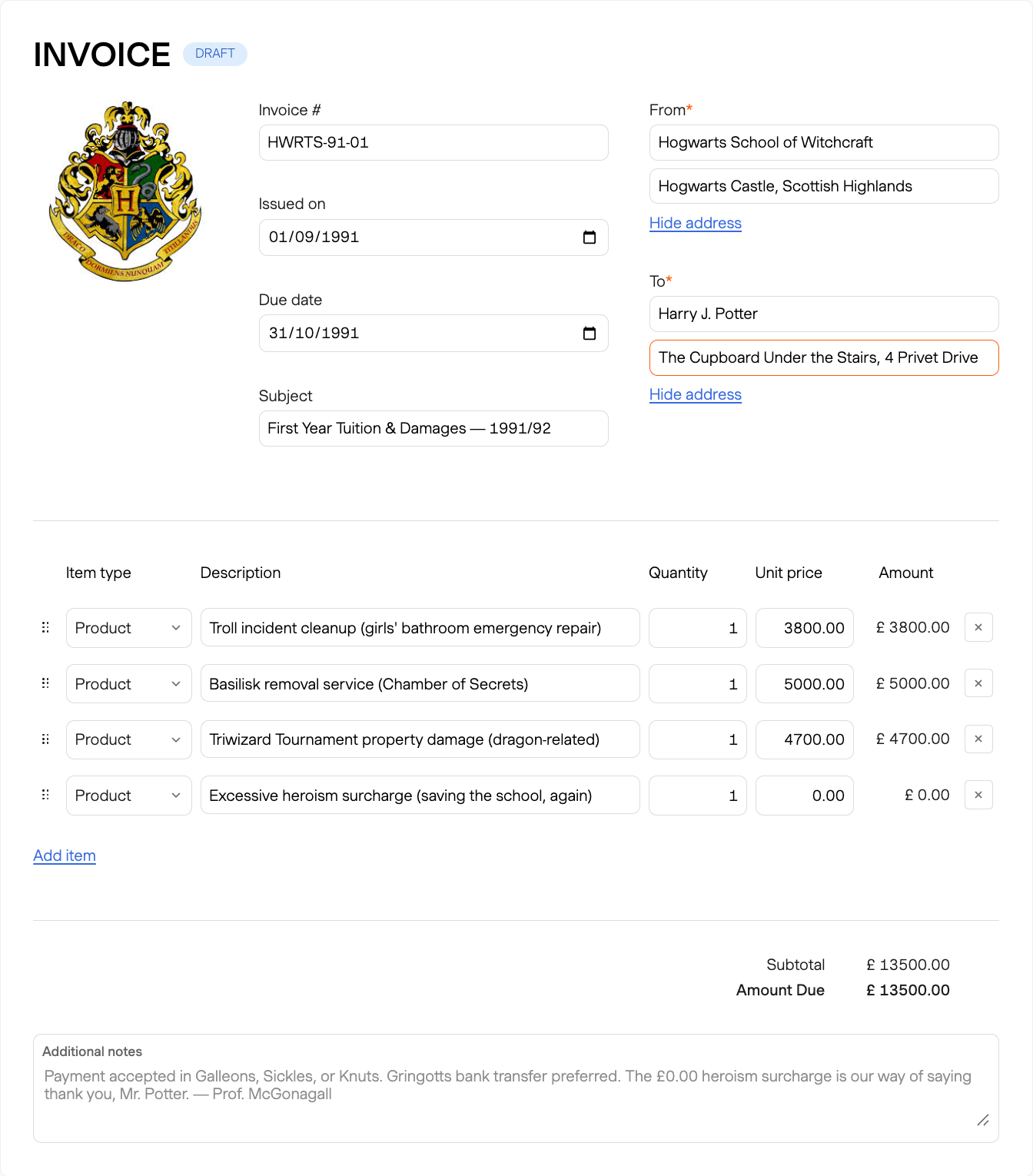
INVOICE DRAFT

Add your logo here
Item type
Description
Quantity
Unit price
Tax
Amount
Subtotal
$0.00
Discount
$0.00
Amount Due
$0.00
Get paid via:
Credit card / Debit card
ACH
Wire transfer

Customise invoice

Appearance

Add a logo
Show invoice title

Invoice settings

Tax Add up to 2 tax rates
%
Discount Apply a discount percentage
%

Key Features for Iranian Businesses

For an invoice generator to be truly effective in Iran, it must offer specific functionalities tailored to the local business environment. Foremost, robust support for the Iranian Rial (IRR) is essential, including accurate handling of its currency symbol (﷼) and decimal places, even though the Dinar subdivision is rarely used in practice. The system should also provide comprehensive Persian (Farsi) language customization, allowing for invoices to be generated entirely in Persian, including right-to-left text, appropriate date formats (such as the Solar Hijri calendar), and common invoice terminology. Crucially, the generator must ensure compliance with Iranian tax regulations, such as correctly calculating and displaying the current Value Added Tax (VAT) rate, which stands at 10% as of 2024. This includes adherence to specific invoice numbering and reporting requirements set by the Iranian National Tax Administration.
Selection Criteria for Choosing an Invoice Generator

When evaluating invoice generators, Iranian businesses should prioritize solutions that streamline their operations and integrate seamlessly with local practices.

  • Ease of Use: An intuitive interface and straightforward workflow are paramount to minimize training time and reduce errors. The generator should allow for quick creation, editing, and sending of invoices without complex steps.
  • Integration with Local Payment Gateways: Look for compatibility with prominent Iranian payment systems like Shetab, ZarinPal, or SanaPay, which are crucial for facilitating domestic online transactions. This integration can significantly accelerate payment collection.
  • Custom Fields for Local Business Practices: The ability to add custom fields is vital for incorporating unique Iranian business identifiers, contract numbers, or specific descriptive elements often required by local clients or regulatory bodies. This flexibility ensures invoices meet all necessary local standards.

Avoiding Common Pitfalls

Selecting an unsuitable invoice generator can lead to significant operational and compliance challenges for Iranian businesses. One major pitfall is encountering issues with currency conversion if the software is not natively designed for the Iranian Rial. This can result in incorrect calculations, discrepancies in financial records, and potential disputes with clients or tax authorities. Another common problem is language translation errors or a lack of proper Persian script support, which can lead to unprofessional invoices, miscommunication, and a perception of carelessness, potentially delaying payments. Most critically, businesses must avoid non-compliance with local tax laws. Using a generator that fails to accurately apply the correct VAT rate (currently 10%) or meet specific Iranian invoice formatting and reporting mandates can result in penalties, fines, and complications during tax audits.

See Your Iranian Invoice Template in Action

Preview how your invoice will look with IRR currency, Persian language support, and local tax compliance — ready for Iranian businesses.

Invoice Generator for Iran FAQs

  • In Iran, invoicing regulations require compliance with several key elements. Businesses must include accurate financial details, such as the currency in Iranian Rial (IRR) and the applicable Value Added Tax (VAT), currently set at 10%. Invoices should also follow the format and numbering system prescribed by the Iranian National Tax Administration. Additionally, businesses must ensure their invoices are in Persian, using appropriate date formats and terminology.

  • Many invoice generators offer integration with major Iranian payment gateways such as Shetab, ZarinPal, and SanaPay. These integrations facilitate seamless transaction processing and payment collection, which is particularly important for businesses operating within Iran's unique financial ecosystem. This capability allows businesses to streamline their invoicing processes and improve cash flow efficiency.

  • Harvest allows you to import clients and projects using CSV files, making it easier to transfer existing data into the platform. This feature streamlines the onboarding process for new users.
  • Yes, many invoice generators support multi-language capabilities, including Persian (Farsi). This feature is crucial for businesses that need to communicate effectively with Iranian clients, as it allows for invoices to be generated in the local language, complete with right-to-left text formatting and culturally appropriate terminology.

  • Free invoice generators often come with limitations that can impact their suitability for Iranian businesses. These may include restricted customization options, limited support for local currency and language, and potential compliance issues with Iranian tax laws. Additionally, free versions might lack integration with local payment gateways, which can hinder efficient financial operations.