
Harvest
Time Tracking
Sign up free

Billable Hours Calculator in Vietnam

Harvest is ideal for tracking billable hours and managing invoices, streamlining the process of compliance with Vietnamese labor laws.

Try Harvest Free

What should you charge per hour?

Most freelancers and consultants dramatically undercharge. This calculator accounts for what most people miss: non-billable time, taxes, and overhead.

$
Accounting for vacation, holidays, sick days
60%
Most freelancers can bill 50-70% of their time. The rest goes to admin, marketing, proposals, and learning.
$
Software, insurance, equipment, accounting, taxes beyond income tax, etc.
Your break-even rate $0
Recommended rate (+20% buffer) $0
Billable hours per week 0h
Equivalent daily rate $0

Start tracking your billable hours

Walk through the entire flow below. Start a timer, check your reports, and create a real invoice — all in three clicks.

Go ahead — start tracking!

One click and you're timing. Try it right here: start a timer, add an entry, edit the details. This is exactly how it feels in Harvest.

  • One-click timer from browser, desktop & mobile
  • Works inside Jira, Asana, Trello, GitHub & 50+ tools
  • Duration or start/end — your call
  • Day, week & calendar views to stay on top of it all
  • Friendly reminders so no hour gets left behind
Acme Corp
Website Redesign
Homepage layout revisions
1:24:09
Content Strategy
Blog calendar planning
1:30:00
SEO Audit
Technical audit report
0:45:00
Brand Guidelines
Color system documentation
2:15:00
Logo Concepts
Initial sketches round 1
1:00:00

Understanding Vietnam's Labor Code for Billable Hours

The Labor Code 2019 (Law No. 45/2019/QH14) and its associated decrees form the backbone of labor regulations in Vietnam, influencing how billable hours are calculated. Standard working hours are capped at 8 hours per day or 48 hours per week, with a push for a 40-hour workweek where feasible. Employers must ensure that employees working for 6 continuous hours receive a minimum 30-minute rest break. For night shifts, a rest period of at least 45 minutes is required.

Employees are entitled to at least one full day off each week, and shift workers should have 12 hours off before transitioning to a new shift. These provisions ensure that employee wellbeing is prioritized while also setting a clear framework for calculating billable hours. Understanding these foundational elements is crucial for businesses aiming to comply with Vietnamese labor laws and accurately manage billable hours.
Navigating Overtime Regulations in Vietnam

Overtime in Vietnam requires the employee's consent, a crucial element that ensures voluntary work beyond standard hours. The Labor Code stipulates that total working time, including overtime, must not exceed 12 hours in a day and 40 hours per month, with an annual cap of 200 hours for most sectors. However, industries such as textiles and electronics may extend this to 300 hours per year with government approval.

Overtime compensation varies: at least 150% of the standard rate on weekdays, 200% on weekends, and 300% on public holidays. Night shifts attract a 30% premium on the regular rate, with an additional 20% for night overtime. These structured overtime payments ensure fair compensation and motivate compliance with labor laws, making it essential for businesses to track and manage overtime meticulously.

Calculating Total Labor Costs: Wages and Contributions

When calculating billable hours, businesses must consider both wages and mandatory contributions. Vietnam's regional minimum wage system is tiered, with Region I (e.g., Hanoi, Ho Chi Minh City) having the highest rate at VND 4,960,000/month. Employers are required to contribute approximately 21.5% of gross salary to social, health, and unemployment insurance. Employees contribute 10.5% of their wages to these funds.

Understanding these contributions is vital for calculating the true cost of labor, which extends beyond the nominal hourly rate. By factoring in these costs, businesses can accurately determine the actual expense associated with billable hours, ensuring financial sustainability and regulatory compliance.

Best Practices for Managing Billable Hours in Vietnam

Accurate time tracking is essential for managing billable hours in compliance with Vietnamese labor laws. Implementing a robust time tracking system, whether manual or automated, helps capture start and end times, breaks, and overtime accurately. This not only facilitates payroll accuracy but also aids in compliance during audits.

Employers should maintain meticulous records and ensure that labor policies are clearly communicated to employees. Regularly reviewing labor regulations and keeping abreast of changes, such as minimum wage adjustments, are critical for staying compliant. Non-compliance can result in fines ranging from VND 4 million to VND 150 million, making adherence to these best practices essential for legal and financial health.

Track Billable Hours with Harvest

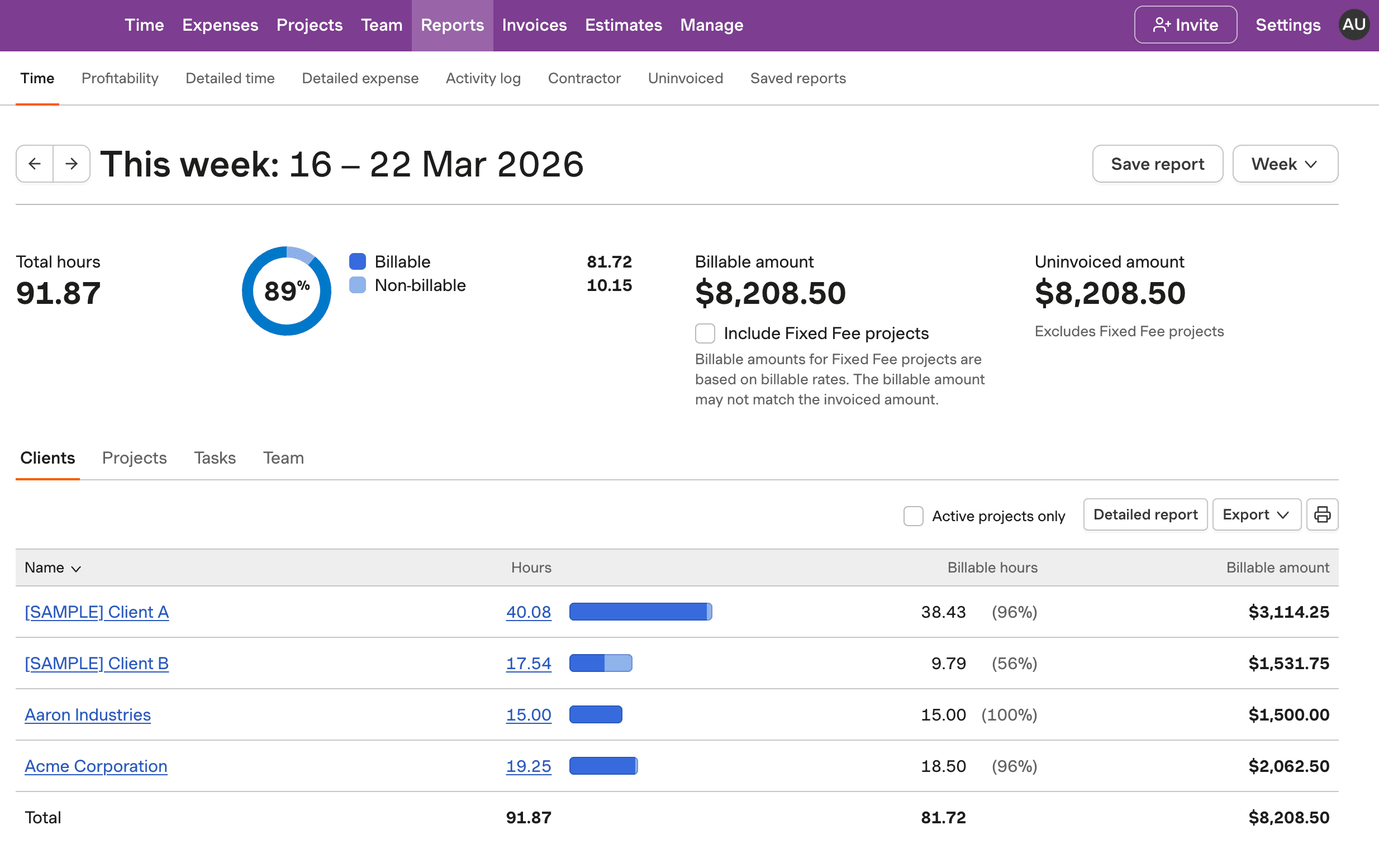
See how Harvest simplifies tracking billable hours in Vietnam, ensuring compliance with labor laws and efficient invoice management.

Harvest's billable hours tracking feature for Vietnam.

Billable Hours Calculator in Vietnam FAQs

  • In Vietnam, the standard working hours are capped at 8 hours per day and 48 hours per week, with a recommendation to aim for a 40-hour workweek. This framework ensures that employee work-life balance is maintained while allowing businesses to operate efficiently.

  • Overtime pay in Vietnam is calculated based on the standard hourly rate, with rates of 150% for weekdays, 200% for weekends, and 300% for public holidays. Additional premiums apply for night shifts and night overtime, ensuring fair compensation for extended work hours.

  • Effective July 1, 2024, Vietnam's regional minimum wages are VND 4,960,000 in Region I, VND 4,410,000 in Region II, VND 3,860,000 in Region III, and VND 3,450,000 in Region IV. These rates ensure that wages align with the cost of living across different regions.

  • Using a dedicated tool like Harvest can streamline the tracking of billable hours by offering features such as one-click timers and detailed reporting. This ensures accurate payroll management and compliance with labor laws.

  • Employers in Vietnam are required to contribute approximately 21.5% of the gross salary to social, health, and unemployment insurance. These contributions are mandatory and ensure employee welfare and compliance with labor regulations.

  • Harvest offers features like one-click timers and detailed reporting, making it easy to track billable hours. While it doesn't provide country-specific payroll tools, it complements time tracking by integrating with accounting platforms.

  • Yes, certain industries like textiles and electronics can extend the annual overtime limit to 300 hours with appropriate approvals. This flexibility helps industries manage peak workloads while maintaining compliance.