Harvest
Invoices
Sign up

Invoicing Software for Attorneys

Harvest offers robust invoicing features that can be adapted for legal services, including detailed line items and project-based billing, making it a versatile choice for attorneys.

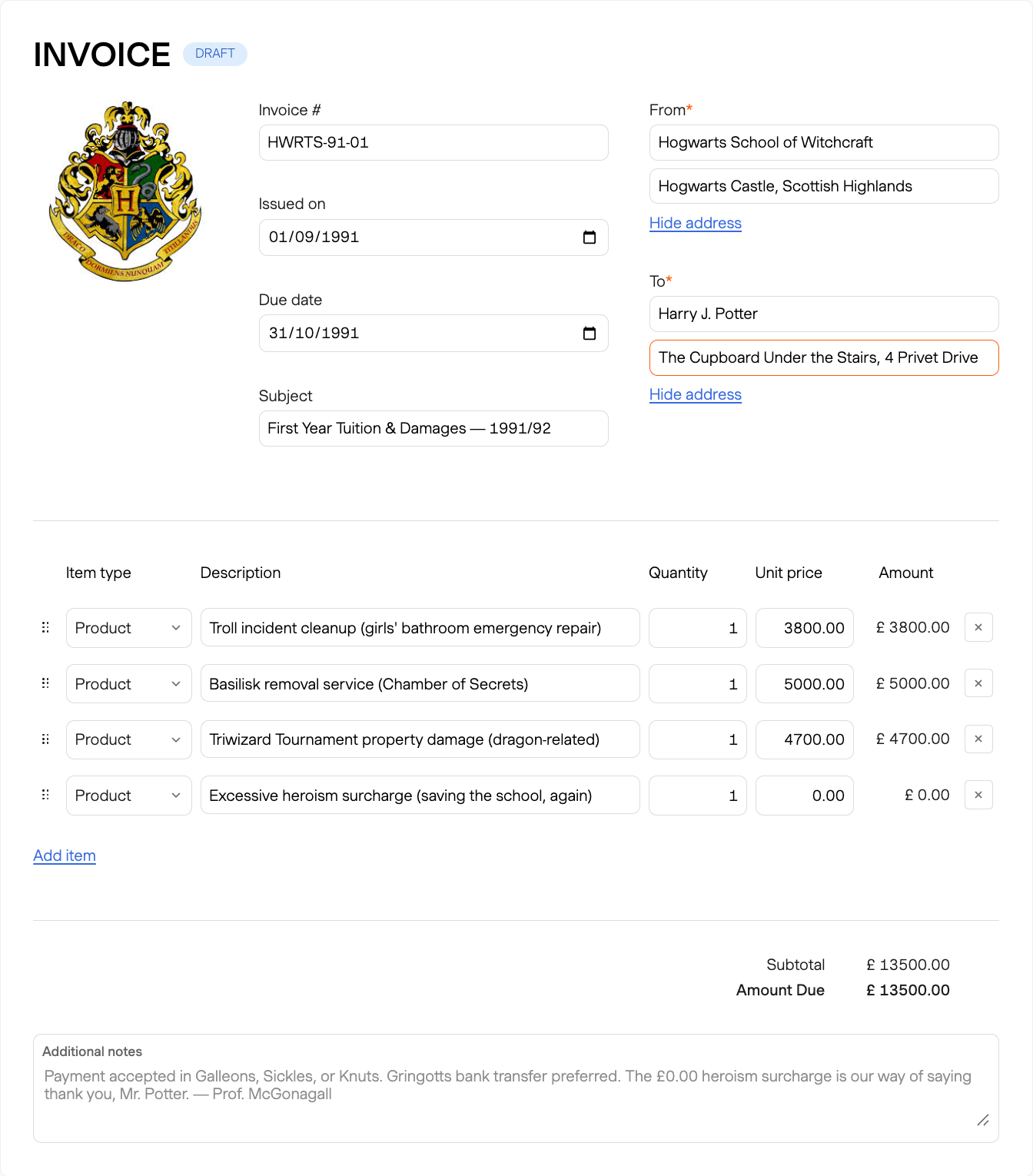
INVOICE DRAFT

Add your logo here
Item type
Description
Quantity
Unit price
Tax
Amount
Subtotal
$0.00
Discount
$0.00
Amount Due
$0.00
Get paid via:
Credit card / Debit card
ACH
Wire transfer

Customise invoice

Appearance

Add a logo
Show invoice title

Invoice settings

Tax Add up to 2 tax rates
%
Discount Apply a discount percentage
%

Key Features to Look for in Legal Invoicing Software

When evaluating legal invoicing software, prioritize features that directly address the unique compliance and billing requirements of law firms. A critical feature is support for the LEDES billing format (Legal Electronic Data Exchange Standard), which is essential for submitting invoices to many corporate clients and insurance carriers. Robust trust accounting compliance is non-negotiable, ensuring adherence to strict ethical rules regarding client funds, often requiring three-way reconciliation. Look for software that facilitates matter-based billing, allowing for clear organization and tracking of expenses and time entries per case. The ability to handle split billing among multiple clients or parties on a single matter is also vital. Finally, consider solutions offering automated payment plans to streamline collections and improve cash flow.
Avoiding Common Pitfalls in Selecting Legal Invoicing Software

To avoid common operational headaches, ensure your chosen legal invoicing software integrates smoothly with existing systems and offers comprehensive reporting. A significant pitfall is neglecting integration with legal case management systems; seamless data flow between these platforms prevents duplicate entry and reduces errors. Without proper integration, attorneys may spend an additional 5-10 hours weekly on manual data transfer. Another common issue arises from inadequate reporting on billable vs. non-billable hours, which is crucial for profitability analysis and attorney performance reviews. The software should provide clear, customizable reports that differentiate these hours. Furthermore, ensure the system supports highly detailed invoice line items, allowing for granular descriptions of services rendered, which enhances transparency and reduces client disputes.

Understanding Pricing Models for Legal Invoicing Software

Understanding the various pricing models is crucial for law firms to manage their budget effectively when acquiring invoicing software. Most providers offer either a per-user subscription model, where costs scale with the number of attorneys and staff accessing the system, or a tiered pricing structure based on features or usage volume. Some may also include transaction fees for integrated payment processing, typically ranging from 1.5% to 3.5% per transaction. When considering cost, evaluate not just the monthly fee but also potential hidden charges for data migration, premium support, or additional storage. For legal practices, the total cost of ownership should factor in scalability; ensure the chosen model accommodates future growth without disproportionate price increases.

See Your Legal Invoice Template in Action

Preview how your invoice will align with legal billing standards, featuring LEDES format support and detailed line item displays for client transparency.

Invoicing Software for Attorneys FAQs

  • Harvest allows you to create detailed invoices with line items for each time entry, showing the rate and billable amount, which is ideal for legal services and expenses.

  • Harvest supports matter-based billing by allowing you to link invoice line items to specific projects or cases. This feature is important for attorneys as it helps organize billing according to each client case, ensuring clarity and accuracy in billing.

  • Yes, Harvest allows users to categorize hours as billable or non-billable, making it easy to track profitability and assess project performance.
  • Legal invoicing software may face limitations such as keeping up with frequent regulatory changes and ensuring complete compliance with all jurisdiction-specific billing requirements. Additionally, software might not fully integrate with all legacy systems used by law firms, which can lead to compliance challenges.

  • Attorneys should prioritize features such as LEDES format support for compliance, robust trust accounting, matter-based billing, and efficient integration with legal case management systems. These features ensure accurate, compliant billing and streamline overall financial management.