Harvest
Invoices
Sign up

Invoicing Software for Banking

Harvest provides simple and effective invoicing solutions for small businesses, although it may not meet the specialized needs of the banking sector.

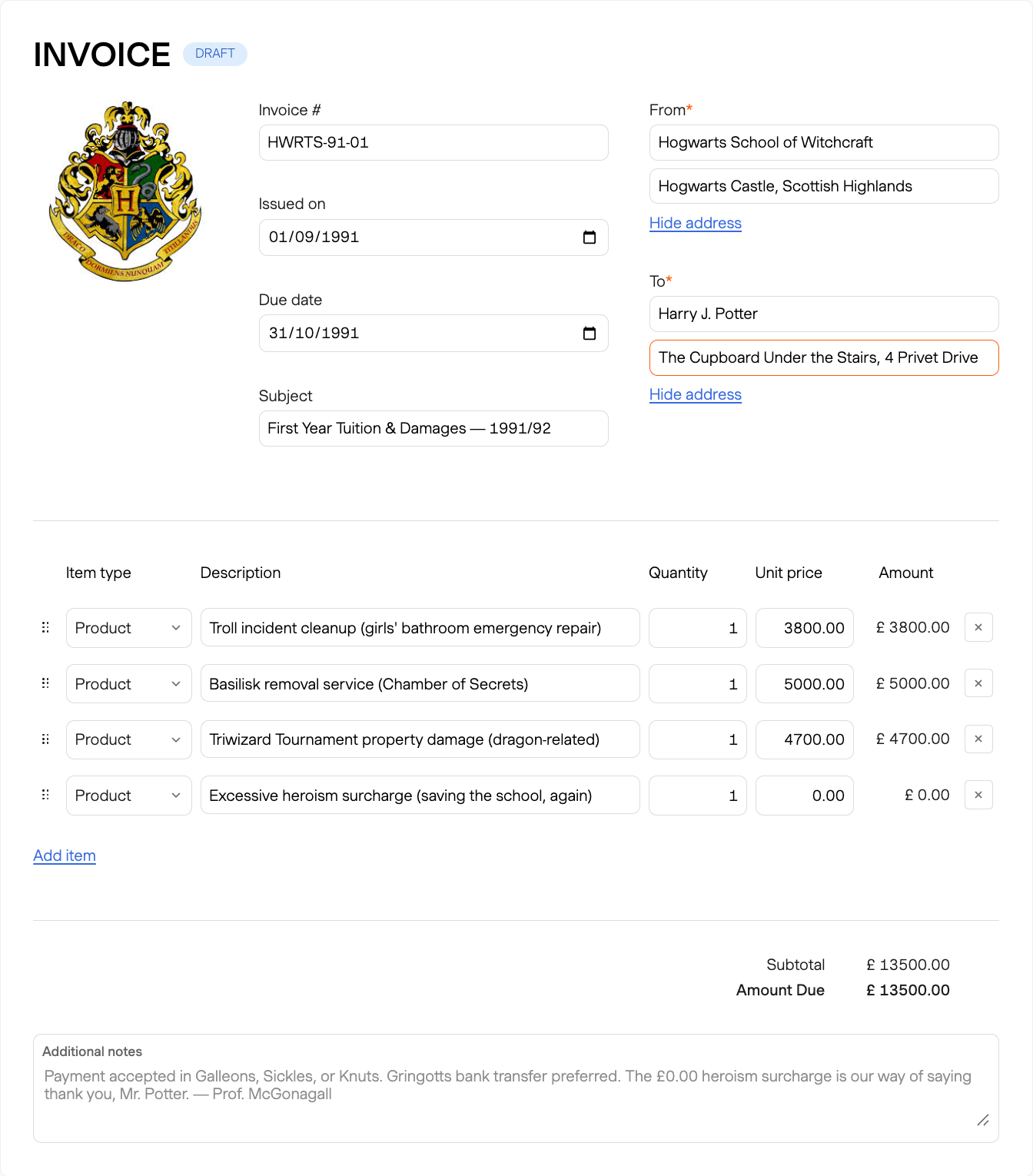
INVOICE DRAFT

Add your logo here
Item type
Description
Quantity
Unit price
Tax
Amount
Subtotal
$0.00
Discount
$0.00
Amount Due
$0.00
Get paid via:
Credit card / Debit card
ACH
Wire transfer

Customise invoice

Appearance

Add a logo
Show invoice title

Invoice settings

Tax Add up to 2 tax rates
%
Discount Apply a discount percentage
%

Key Features for Banking Invoicing Software

Banking invoicing software must prioritize robust regulatory compliance, seamless integration, and highly customizable service billing to meet industry-specific demands. A critical feature is regulatory compliance, ensuring adherence to standards like SOX, GDPR, AML, and PCI DSS. This includes maintaining comprehensive audit trails, robust data encryption, and secure access controls to protect sensitive financial information. Another essential capability is integration with banking systems, such as core banking platforms, general ledgers, and CRM tools, often facilitated through robust APIs. This prevents data silos and streamlines reconciliation processes. Finally, the software must offer customizable invoicing for banking services, accommodating complex fee structures, interest calculations, transaction-based charges, and advisory service billing, often requiring multi-currency support and dynamic pricing models.
Selection Criteria for Banking Invoicing Solutions

When selecting banking invoicing software, prioritize solutions that offer strong security, comprehensive audit trails, and flexible reporting capabilities tailored to financial operations. Consider these essential features:

  • Security and Access Control: Look for end-to-end encryption, multi-factor authentication, and granular, role-based access permissions to protect sensitive client and transaction data.
  • Auditability and Traceability: The system must provide immutable transaction logs and detailed audit trails, allowing for easy tracking of every invoice, payment, and adjustment for compliance and internal review.
  • Reporting and Analytics: Evaluate the ability to generate customizable financial reports, revenue recognition reports, and analytical dashboards that provide insights into billing trends and profitability.
  • Workflow Automation: Solutions should automate recurring invoices, payment reminders, and dunning processes, reducing manual effort and improving collection efficiency.
  • Scalability: Ensure the software can handle increasing transaction volumes, new service lines, and potential mergers or acquisitions without performance degradation or requiring a complete system overhaul.

Avoiding Common Pitfalls in Banking Invoicing Software

To avoid common pitfalls in banking invoicing software, address compliance, integration, and scalability challenges proactively during evaluation. A significant pitfall is issues with compliance; selecting software that isn't regularly updated for evolving financial regulations can quickly lead to penalties and reputational damage. Ensure the vendor has a clear roadmap for regulatory updates. Another common challenge involves integration difficulties; poor integration with existing core banking or accounting systems can result in data discrepancies, manual data entry, and increased operational costs, potentially adding 15-20% to processing time. Thoroughly test API capabilities and data synchronization during the pilot phase. Lastly, scalability concerns are often overlooked; choosing a system that cannot grow with your institution's transaction volume or service offerings will necessitate costly and disruptive migrations down the line. Opt for solutions proven to handle high transaction throughput and adaptable to future expansion.

See Your Banking Invoice Template in Action

Preview how your invoice will appear with compliance features and integration points essential for banking operations.

Invoicing Software for Banking FAQs

  • Essential features of invoicing software for banking include regulatory compliance support, integration with core banking systems, and customizable invoicing options. The software should offer robust security measures such as encryption and access controls, along with comprehensive audit trails and reporting capabilities. Additionally, it should support multi-currency transactions and complex fee structures inherent in banking operations.

  • Yes, invoicing software can integrate with existing banking systems. This is typically achieved through APIs that enable seamless data exchange between the invoicing software and core banking platforms, general ledgers, and CRM systems. Effective integration helps eliminate data silos, streamline reconciliation processes, and enhance overall operational efficiency.

  • Yes, Harvest allows you to customize your invoices by adding your logo, adjusting line items, and applying taxes and discounts as needed.
  • Invoicing software may face limitations in handling complex banking operations due to the need for highly specialized features that are unique to the banking sector. Challenges can include maintaining real-time data synchronization, adhering to strict regulatory requirements, and managing high transaction volumes. Additionally, the software might require frequent updates to remain compliant with evolving financial regulations.

  • Invoicing solutions ensure compliance with banking regulations by incorporating features such as comprehensive audit trails, secure data encryption, and role-based access controls. These features help maintain the integrity of financial data and ensure that all transactions are tracked and auditable. Regular updates from the software provider also ensure that the solutions remain aligned with current regulatory standards.