Harvest
Invoices
Sign up

Invoicing Software for CFOs

Harvest simplifies invoicing and time tracking, making it an ideal choice for CFOs seeking efficient financial management tools.

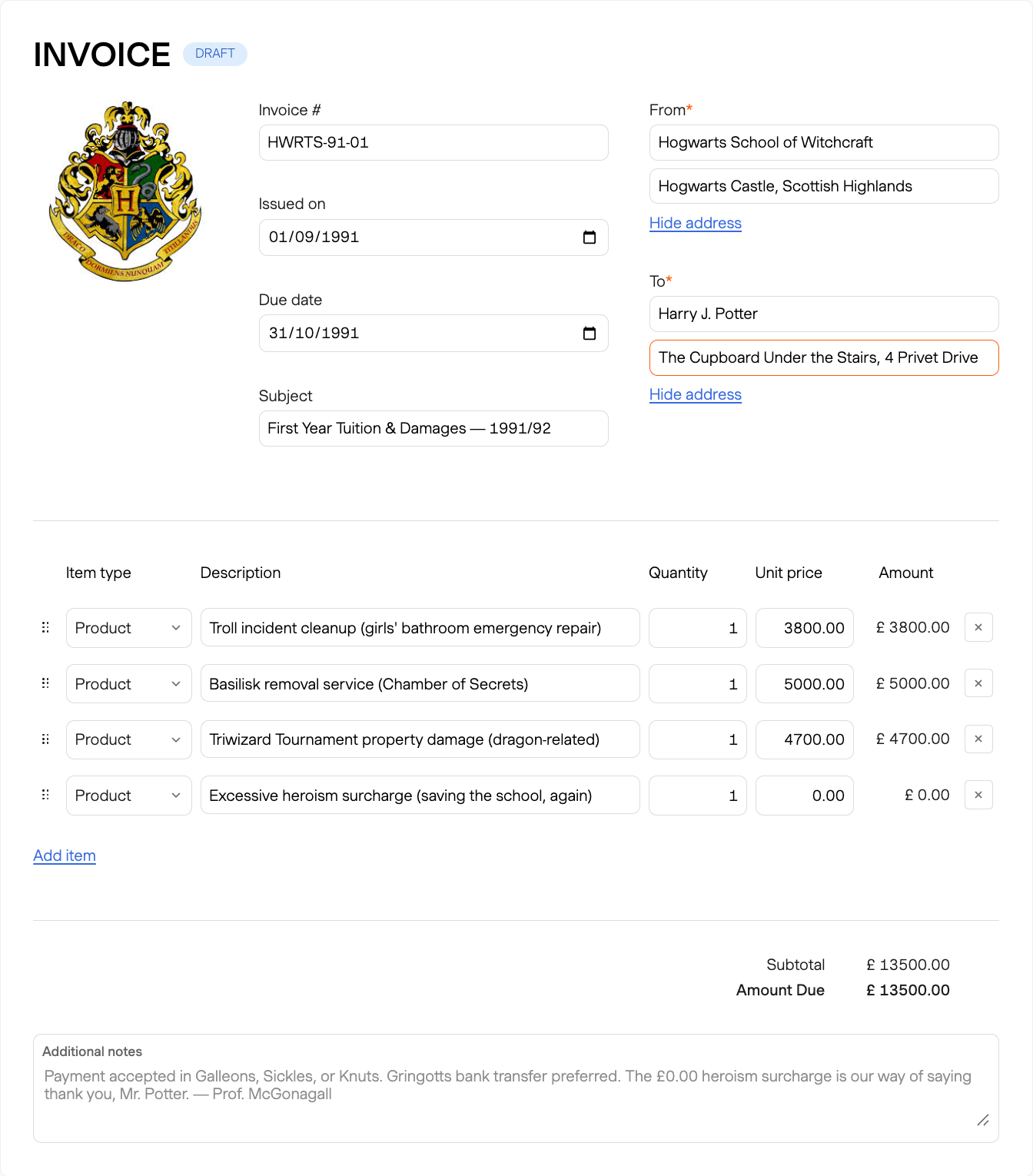
INVOICE DRAFT

Add your logo here
Item type
Description
Quantity
Unit price
Tax
Amount
Subtotal
$0.00
Discount
$0.00
Amount Due
$0.00
Get paid via:
Credit card / Debit card
ACH
Wire transfer

Customise invoice

Appearance

Add a logo
Show invoice title

Invoice settings

Tax Add up to 2 tax rates
%
Discount Apply a discount percentage
%

Key Features CFOs Should Prioritize in Invoicing Software

CFOs should prioritize invoicing software features that streamline operations and ensure financial accuracy and compliance. Efficient invoice processing is paramount, reducing manual data entry and accelerating cash flow by automating tasks like invoice generation, approval workflows, and payment reminders, potentially cutting processing time by 20-30%. Automated financial reporting capabilities are critical, offering real-time dashboards and customizable reports for insights into AR aging, revenue recognition, and cash flow forecasts, enabling faster month-end closes. Seamless integration with existing financial systems, such as ERP or GL, is non-negotiable to maintain a single source of truth and eliminate data silos. Finally, robust compliance with financial regulations, including e-invoicing mandates, tax requirements (e.g., VAT, sales tax), and industry-specific standards, must be built-in to mitigate risk.
Common Pitfalls to Avoid When Selecting Invoicing Software

Avoiding common pitfalls is crucial for a successful invoicing software implementation and long-term satisfaction. A significant mistake is overlooking integration capabilities; failing to ensure seamless connectivity with your existing ERP, CRM, or accounting software can lead to data discrepancies, manual reconciliation efforts, and increased operational costs, potentially adding 15-20% to processing time. Ignoring user feedback and reviews during the selection process often results in low user adoption rates and resistance to change, as the software may not meet the practical needs of daily users. Furthermore, underestimating the importance of compliance features can expose your organization to significant regulatory risks and penalties. Ensure the software can adapt to evolving e-invoicing standards, local tax laws, and specific industry requirements like retainage or progress billing.

Selection Criteria for the Best Invoicing Software for CFOs

Selecting the best invoicing software for CFOs requires a structured evaluation of long-term value and operational fit.

  • Evaluate Software Scalability: Assess if the software can grow with your organization, handling increasing invoice volumes, new business units, or international expansion without performance degradation or costly overhauls. Consider its capacity to manage a 2x or 5x increase in transactions over a five-year horizon.
  • Assess User Interface and Ease of Use: An intuitive user interface (UI) and strong user experience (UX) are vital for rapid adoption and minimizing training costs. Look for clear navigation, customizable dashboards, and straightforward workflows that reduce the learning curve for your finance team, aiming for less than 10 hours of initial training per user.
  • Consider Total Cost of Ownership (TCO): Beyond initial licensing fees, factor in all associated costs over a 3-5 year period. This includes implementation, customization, ongoing maintenance, support, potential upgrade expenses, and the cost of integrating with other systems. A lower upfront cost might hide higher long-term operational expenses.

See Your CFO-Focused Invoicing Solution in Action

Explore how invoicing software tailored for CFOs enhances efficiency with automated reporting and seamless system integration, ensuring compliance.

Invoicing Software for CFOs FAQs

  • CFOs should look for invoicing software that complies with relevant financial regulations, such as e-invoicing mandates and tax requirements, which vary by region. It is crucial to ensure the software supports compliance with VAT, sales tax, and any industry-specific standards. Additionally, the software should be capable of adapting to changes in regulatory environments, reducing the risk of non-compliance and costly penalties.

  • While invoicing software can automate many aspects of financial reporting, such as generating reports and dashboards, full automation is often challenging. CFOs may still need to perform manual reviews and adjustments to ensure accuracy and compliance with financial standards. Therefore, while software can significantly streamline reporting processes, human oversight remains essential to maintain financial integrity.

  • Harvest allows you to import clients and projects using CSV files, making it easier to transfer existing data into the platform. This feature streamlines the onboarding process for new users.
  • CFOs can ensure seamless integration by choosing invoicing software that offers robust APIs and pre-built connectors for popular ERP, CRM, and accounting systems. It is important to conduct thorough testing during the implementation phase to identify any integration issues early. Engaging with both the software provider and internal IT teams can help address compatibility challenges and ensure data flows smoothly between systems.

  • Invoicing software provides CFOs with several benefits, including improved efficiency through automation of invoicing processes, enhanced accuracy in financial reporting, and better cash flow management. It also facilitates compliance with financial regulations and offers valuable insights through advanced analytics and reporting tools. These capabilities enable CFOs to make informed financial decisions and optimize organizational performance.