Harvest
Invoices
Sign up

Invoicing Software for Data Analysts

Harvest provides robust invoicing capabilities tailored to data analysts, with features like customizable line items and detailed reporting to streamline project billing and analysis.

INVOICE DRAFT

Add your logo here
Item type
Description
Quantity
Unit price
Tax
Amount
Subtotal
$0.00
Discount
$0.00
Amount Due
$0.00
Get paid via:
Credit card / Debit card
ACH
Wire transfer

Customise invoice

Appearance

Add a logo
Show invoice title

Invoice settings

Tax Add up to 2 tax rates
%
Discount Apply a discount percentage
%

Key Features for Data Analysts

For data analysts, essential invoicing software features streamline project billing and enhance client communication. Look for tools that offer highly customizable invoice line items, allowing you to detail specific analysis tasks, data preparation efforts, or report generation phases, providing clients with clear transparency into your work. Integration with data visualization tools is also crucial; the ability to attach project dashboards or summary reports directly to an invoice can significantly add value and context for your clients. Furthermore, robust automated time tracking is indispensable, especially for hourly or retainer-based projects, ensuring accurate billing down to the minute and reducing manual effort.
Selection Criteria for Invoicing Software

When evaluating invoicing software, data analysts should prioritize systems that support their unique billing complexities. Opt for software with comprehensive support for complex billing structures, including hourly, fixed-fee, retainer, milestone-based, and even value-based pricing models. Detailed reporting features are paramount, offering insights into revenue streams, project profitability, and client payment histories, which can be invaluable for business analysis and tax preparation. Additionally, given the global nature of data work, robust support for multiple currencies and dynamic exchange rate updates is often a non-negotiable requirement, ensuring accurate billing for international clients and compliance with various financial regulations.

Avoiding Common Pitfalls

When selecting invoicing software, data analysts often encounter limitations that can hinder their workflow. A common pitfall is choosing software with insufficient flexibility for niche billing models, such as performance-based fees or tiered service packages, which may require manual workarounds. Another significant challenge arises from integration issues; a lack of well-documented APIs or seamless connectors can prevent the invoicing tool from communicating effectively with your existing project management, CRM, or accounting systems, leading to data silos and inefficiencies. Finally, overlooking scalability challenges can be costly; ensure the software can comfortably handle a growing client base and increasing project volume without incurring prohibitive costs or performance degradation.

Explore Your Invoicing Template for Data Analysis

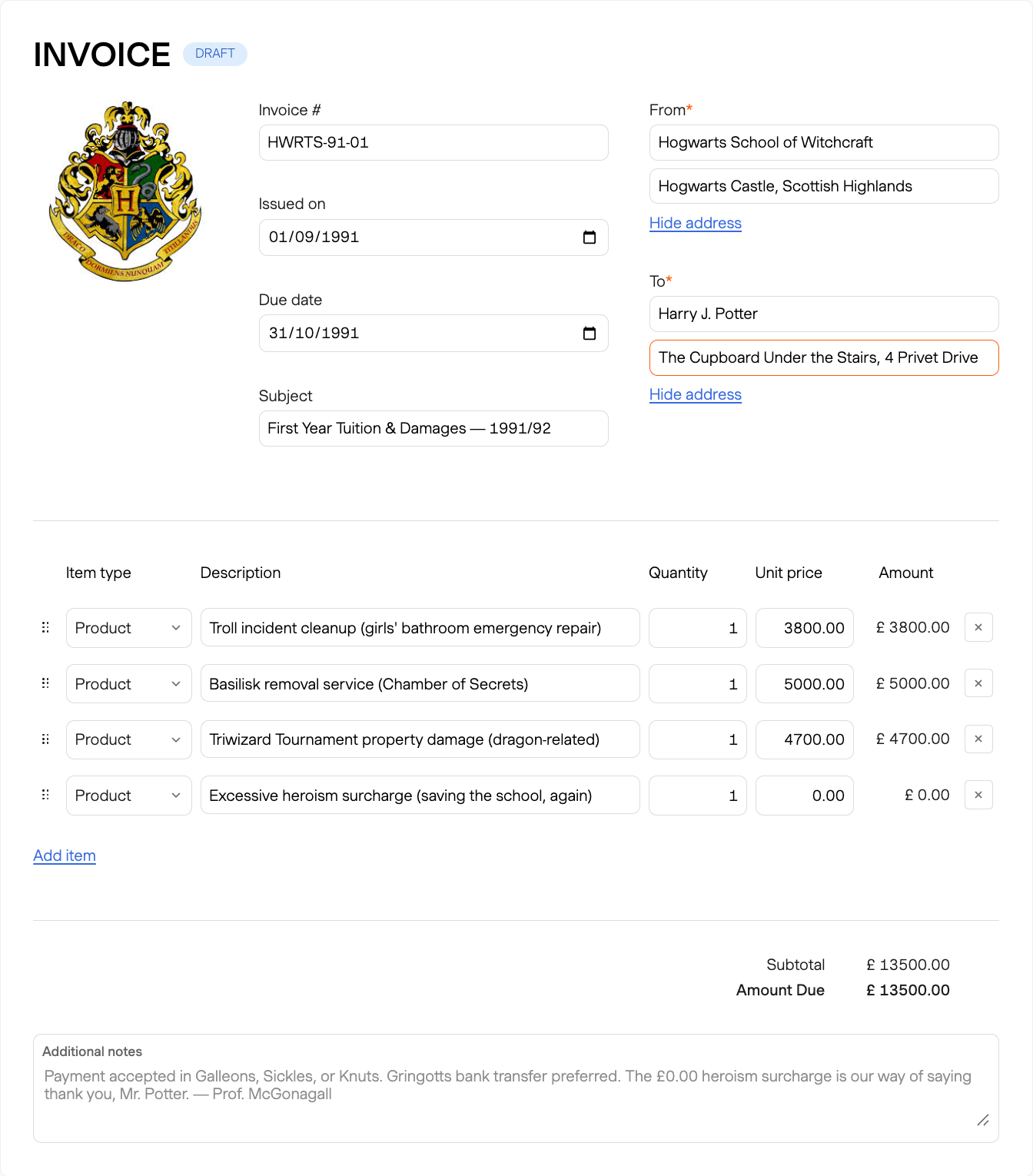
See how your invoice can feature detailed line items for each data analysis task and integrate with your data tools for seamless project billing.

Invoicing Software for Data Analysts FAQs

  • Harvest allows you to customize invoice line items by linking them to specific data analysis projects, ensuring accurate billing.

  • Harvest automates time tracking by linking tracked time and expenses directly to data analysis tasks.

  • Yes, Harvest is accessible across a range of devices, including desktops, tablets, and smartphones. You can track time from anywhere, ensuring you can log your hours wherever you are.
  • Data analysts should consider software that supports complex billing structures, integrates seamlessly with other tools, and offers robust reporting capabilities. The ability to handle multiple currencies and adapt to international billing requirements is also important.

  • Invoicing software may not cover every niche billing need, particularly if they involve highly specialized or performance-based models. Analysts should assess if the software can be adapted to these needs or if manual adjustments will be necessary.