Harvest
Invoices
Sign up

Invoicing Software for Japan

Harvest offers robust invoicing features with support for Peppol integration and multiple tax rates, making it adaptable for businesses in Japan.

INVOICE DRAFT

Add your logo here
Item type
Description
Quantity
Unit price
Tax
Amount
Subtotal
$0.00
Discount
$0.00
Amount Due
$0.00
Get paid via:
Credit card / Debit card
ACH
Wire transfer

Customise invoice

Appearance

Add a logo
Show invoice title

Invoice settings

Tax Add up to 2 tax rates
%
Discount Apply a discount percentage
%

Key Features for Compliance with Japan's Qualified Invoice System

To ensure legal and operational standards in Japan, invoicing software must fully comply with the Qualified Invoice System (QIS), which became effective on October 1, 2023. This system mandates that invoices include specific details such as the issuer's tax identification number, transaction date, and a clear breakdown of applicable tax rates and amounts to allow buyers to claim input tax credits. Software should seamlessly handle Japan's multiple consumption tax rates, specifically the standard 10% and the reduced 8% rate for certain food and beverages or newspaper subscriptions.

Furthermore, while not yet mandatory, integration with the Peppol network is highly recommended by the Japanese Digital Agency for electronic invoice exchange, utilizing the JP PINT format (based on Peppol BIS Billing 3.0). This ensures interoperability and compliance with the Electronic Bookkeeping Act for digital record retention.
Selection Criteria for Choosing Invoicing Software in Japan

When evaluating invoicing software for the Japanese market, prioritize solutions that offer an intuitive user experience tailored for local business practices. Look for clear, logical workflows that minimize training time for your team.

Pricing considerations should extend beyond the initial cost to include subscription models, potential transaction fees, and scalability options that accommodate business growth without unexpected expenses.

A crucial differentiator is robust bilingual support, encompassing not only the software's user interface but also the ability to generate invoices in both Japanese and English, and access to customer support in both languages. This facilitates communication with diverse clients and ensures accurate record-keeping. Consider software that offers flexibility to adapt to future regulatory changes, as Japan's e-invoicing landscape continues to evolve.

Common Pitfalls When Implementing Invoicing Software in Japan

Businesses often encounter challenges when transitioning to new invoicing software in Japan. A significant pitfall is underestimating the complexity of transitioning from paper to digital records, particularly regarding data migration from legacy systems and comprehensive staff training.

Another common mistake is failing to fully comply with the Electronic Bookkeeping Act (EBA), which, since January 2024, mandates the electronic storage of transaction data like invoices received or issued electronically. Ensure your chosen software provides tamper-proof, searchable, and verifiable electronic record maintenance for a minimum of 7 years and 2 months.

Lastly, managing bilingual invoicing can be tricky; inconsistencies between Japanese and English versions can lead to confusion or compliance issues. Implement clear internal guidelines and leverage software features that ensure accuracy across languages. Be aware of transitional measures for input tax credits, which allow deductions from non-qualified suppliers until September 2029.

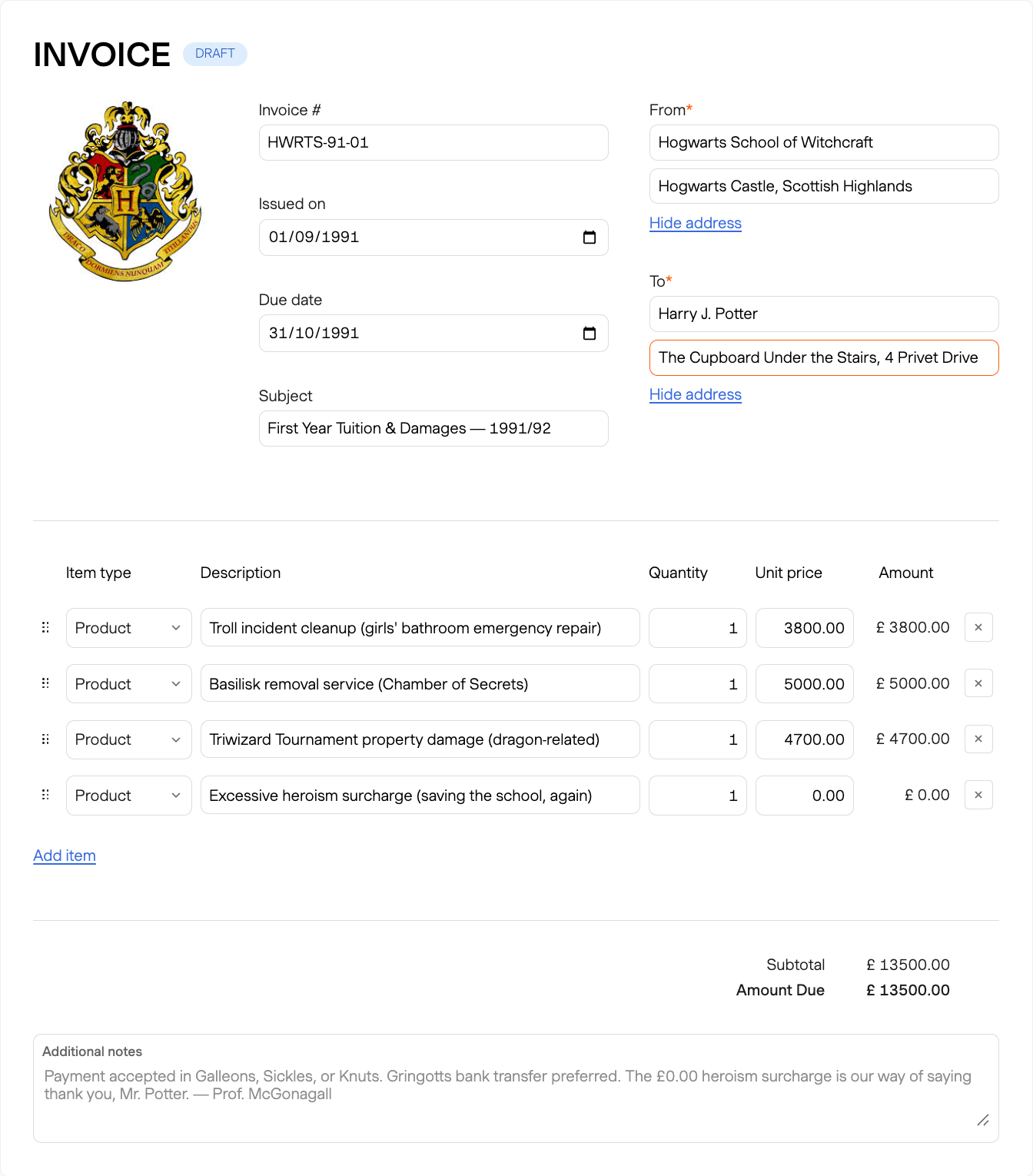
See Your Japanese Invoice Template in Action

Preview how your invoice will look with Japan's tax rates, bilingual fields, and Peppol network compliance — ready for Japanese clients.

Invoicing Software for Japan FAQs

  • Harvest allows you to prepare e-invoices for Japan's Peppol network by enabling UBL exports and configuring necessary Peppol network requirements.
  • Best practices include ensuring the software can generate invoices in both Japanese and English, maintaining consistent terminology and formatting across both languages, and providing training to staff on handling bilingual invoicing scenarios. It is also beneficial to establish clear guidelines for translating and formatting documents to avoid misunderstandings.
  • Harvest includes basic project management features, allowing you to track project budgets, timelines, and team allocations. However, it’s primarily focused on time tracking and invoicing, so for more advanced project management, you might consider using it alongside other tools.
  • Harvest supports handling multiple tax rates by allowing you to apply different taxes to each line item on your invoices.
  • Some limitations of invoicing software for compliance include the potential for software to lag behind regulatory updates, the complexity of managing multiple tax rates accurately, and the challenge of ensuring complete data accuracy and integrity when transitioning from manual to digital systems.