Harvest
Invoices
Sign up

Invoicing Software for Poland

Harvest supports preparing e-invoices for submission through an external Peppol gateway, aligning with the Peppol BIS Billing 3.0 standard, making it ideal for businesses across Europe.

INVOICE DRAFT

Add your logo here
Item type
Description
Quantity
Unit price
Tax
Amount
Subtotal
$0.00
Discount
$0.00
Amount Due
$0.00
Get paid via:
Credit card / Debit card
ACH
Wire transfer

Customise invoice

Appearance

Add a logo
Show invoice title

Invoice settings

Tax Add up to 2 tax rates
%
Discount Apply a discount percentage
%

Key Features to Ensure Compliance with KSeF

To ensure compliance with Polish regulations, invoicing software for Poland must offer robust integration with the Krajowy System e-Faktur (KSeF), Poland's National e-Invoicing System, which is mandatory for most businesses. Look for solutions that provide seamless, direct integration with KSeF, allowing for the automatic submission and reception of structured invoices. This integration is critical for meeting the legal requirement to issue and receive invoices via the government platform. Furthermore, the software should fully support the FA(3) XML format, which is the specific structured data format mandated by KSeF for e-invoices. Real-time VAT reporting capabilities are also essential, as KSeF facilitates immediate data exchange with tax authorities, streamlining VAT declarations and reducing manual effort.
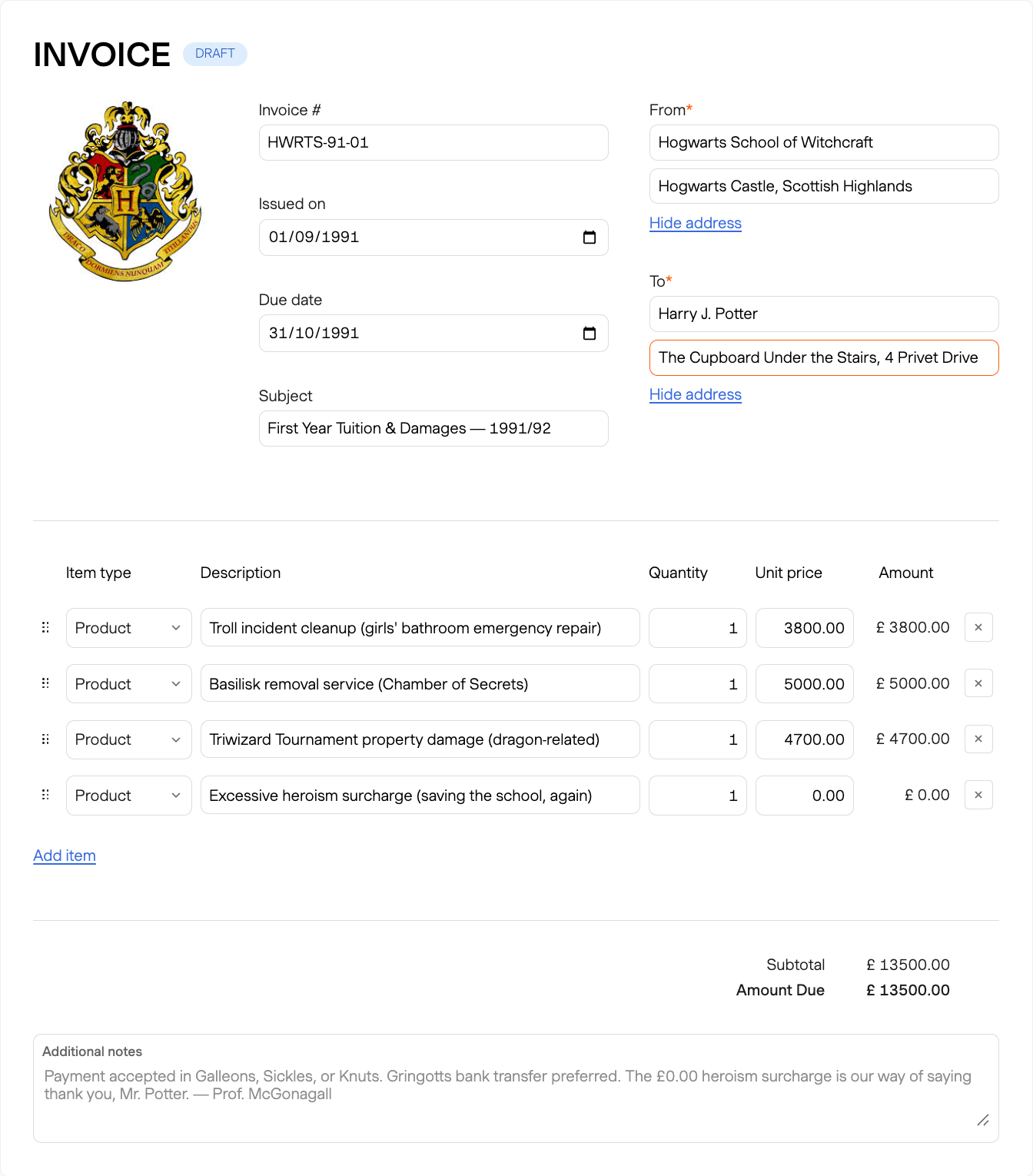
Selection Criteria for Invoicing Software in Poland

When choosing invoicing software for your Polish business, prioritize solutions that cater to your sector-specific invoicing needs. For instance, construction companies might require features for progress billing or retainage, while retail businesses need robust integration with POS systems. A user-friendly interface and overall ease of use are paramount; the software should be intuitive, minimizing the learning curve for your team and reducing errors. Evaluate the quality of customer support, ensuring it's available in Polish and responsive to local business hours. Regular updates are also crucial to keep pace with evolving Polish tax laws and KSeF requirements, ensuring continuous compliance without manual intervention.

Common Pitfalls When Choosing Invoicing Software

A common pitfall when selecting invoicing software in Poland is ignoring future compliance updates, particularly concerning the dynamic KSeF regulations. Opting for a system that doesn't demonstrate a clear roadmap for adapting to upcoming legislative changes can lead to costly non-compliance down the line. Another mistake is overlooking integration capabilities beyond KSeF, such as connections with your existing accounting systems, CRM, or banking platforms. Poor integration can create data silos and necessitate manual data entry, negating efficiency gains. Finally, underestimating training and support needs can severely hinder adoption. Ensure the vendor provides comprehensive training materials and readily available support to maximize user proficiency and minimize operational disruptions.

Experience Polish KSeF Compliance Firsthand

See how invoices align with Polish e-invoicing regulations, featuring integration with KSeF and support for the FA(3) XML format.

Invoicing Software for Poland FAQs

  • Harvest supports preparing e-invoices for submission through an external Peppol gateway, aligning with the Peppol BIS Billing 3.0 standard.
  • Penalties for noncompliance with KSeF in Poland can include fines and administrative penalties. Businesses may face financial repercussions for failing to issue and report invoices through the KSeF system, which is mandatory for most transactions. It's crucial for companies to stay informed about these regulations to avoid potential penalties.
  • Yes, Harvest allows you to add notes and comments to your invoices. This feature can be useful for providing additional context or information to clients regarding specific charges or billing periods.
  • While invoicing software can help automate many aspects of compliance with Polish e-invoicing regulations, it cannot fully automate compliance. Businesses still need to ensure that their software is updated with the latest regulatory changes and that users are trained to handle exceptions and manual entries that the software may not cover.
  • Invoicing software for Polish businesses should include features such as integration with KSeF, support for FA(3) XML format, real-time VAT reporting, and a user-friendly interface. Additionally, it should offer sector-specific functionalities, robust customer support, and regular updates to align with evolving regulations.