Harvest
Invoices
Sign up

Invoicing Software for United States

Harvest serves U.S. businesses with versatile invoicing solutions. Benefit from integration with popular accounting software and support for local payment methods.

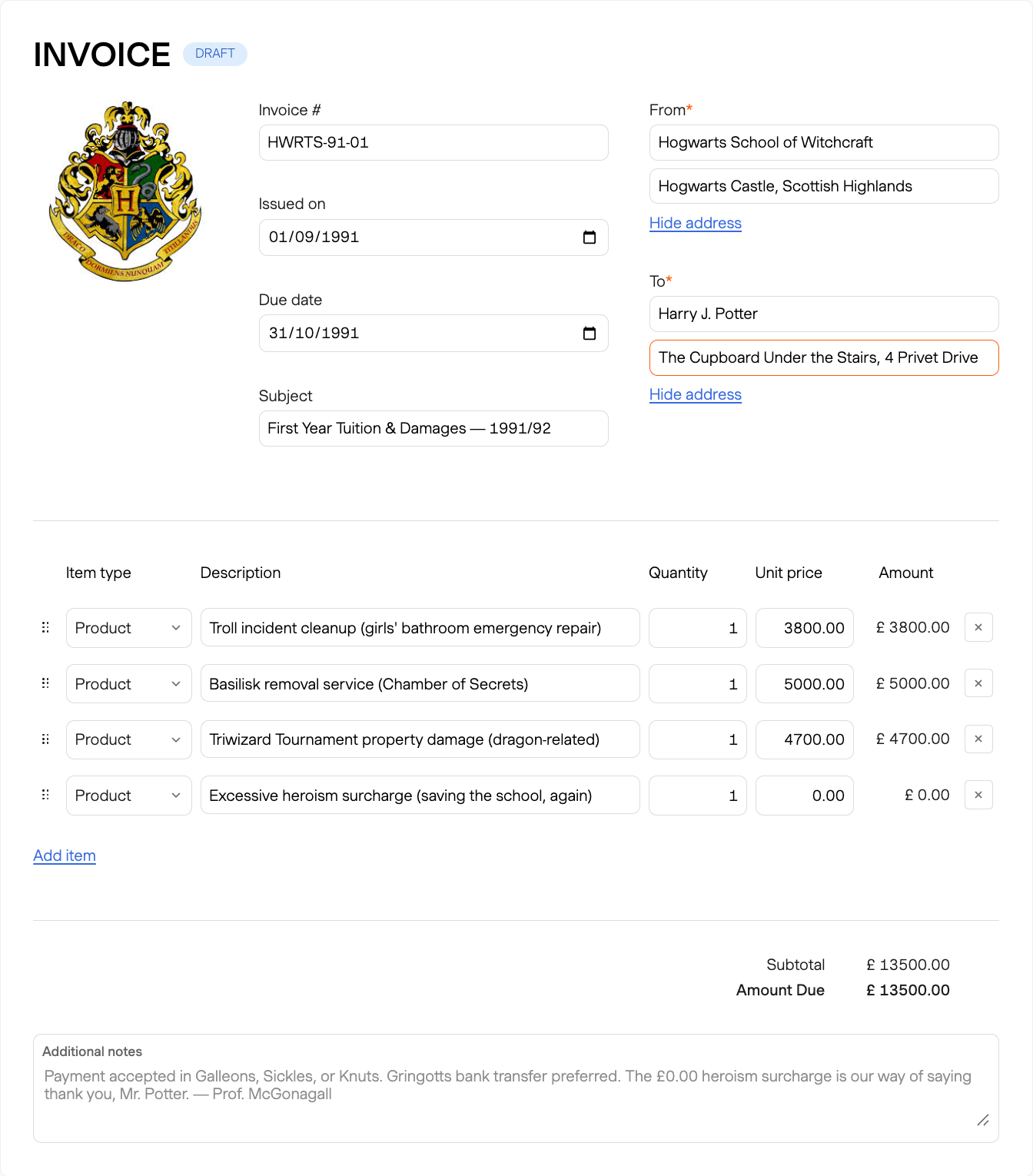
INVOICE DRAFT

Add your logo here
Item type
Description
Quantity
Unit price
Tax
Amount
Subtotal
$0.00
Discount
$0.00
Amount Due
$0.00
Get paid via:
Credit card / Debit card
ACH
Wire transfer

Customise invoice

Appearance

Add a logo
Show invoice title

Invoice settings

Tax Add up to 2 tax rates
%
Discount Apply a discount percentage
%

Essential Features for U.S. Invoicing Software

Choosing invoicing software for a U.S. business requires specific features to ensure compliance and streamline operations. Look for robust support for state-specific sales tax regulations, which can vary significantly by jurisdiction and product or service. Seamless integration with popular U.S. accounting software is crucial for avoiding manual data entry and maintaining accurate financial records. This ensures your invoicing data flows directly into your general ledger. Additionally, automated payment reminders significantly reduce late payments, often improving collection rates by 10-15%. Customizable invoice templates are also vital, allowing you to brand documents and include all necessary legal disclaimers or payment terms specific to your industry.
Common Pitfalls When Choosing Invoicing Software

Businesses often encounter several pitfalls when selecting invoicing software, particularly regarding U.S. market specifics. A significant issue is the lack of support for local payment methods, such as direct integration with common U.S. credit card processors or ACH payment gateways, which can lead to higher transaction fees or a cumbersome payment experience for clients. Inadequate customization options can also hinder operations, preventing businesses from tailoring invoices to specific client agreements or industry requirements. Furthermore, poor integration capabilities with existing CRM or project management tools can create data silos and necessitate inefficient manual transfers, undermining the software's intended purpose of automation.

How to Maximize Efficiency with Invoicing Software

To maximize efficiency, leverage your invoicing software's advanced features to automate and optimize your billing workflows. Automating billing processes for recurring services or subscriptions can save hours each month, reducing errors and ensuring timely invoicing. For project-based work, effectively managing client retainers and deposits is key; the software should track prepayments and apply them correctly to future invoices, preventing billing discrepancies. Utilize progress invoicing for larger projects, where payments are tied to specific milestones or a percentage of completion. This approach, often requiring 5-10% of each payment to be held as retainage until final inspection in construction, ensures cash flow aligns with project progression.

See Your U.S. Invoice Template in Action

Preview how your invoice will look with state-specific tax rates, customizable templates, and ACH payment methods — ready for U.S. clients.

Invoicing Software for United States FAQs

  • Harvest integrates with popular accounting software like QuickBooks and Xero, allowing you to copy invoices and payments seamlessly.

  • Harvest allows you to set up automated payment reminders for late invoices, which can be tailored to your specific schedule and message preferences.

  • Yes, Harvest allows you to set custom payment terms for each invoice, specifying due dates and payment conditions that suit your business needs.
  • When choosing invoicing software for a small business in the U.S., consider features like state-specific tax support, integration with existing accounting tools, and the ability to customize invoices to fit your business needs. Also, evaluate the software's support for local payment methods to ensure convenient payment processing for your clients.

  • Invoicing software may have limitations, such as handling complex billing scenarios or integrating with less common industry-specific tools. While these programs can automate many tasks, certain processes may still require manual oversight or intervention to ensure accuracy and compliance.