Sign up


Understanding Dutch Invoice Requirements
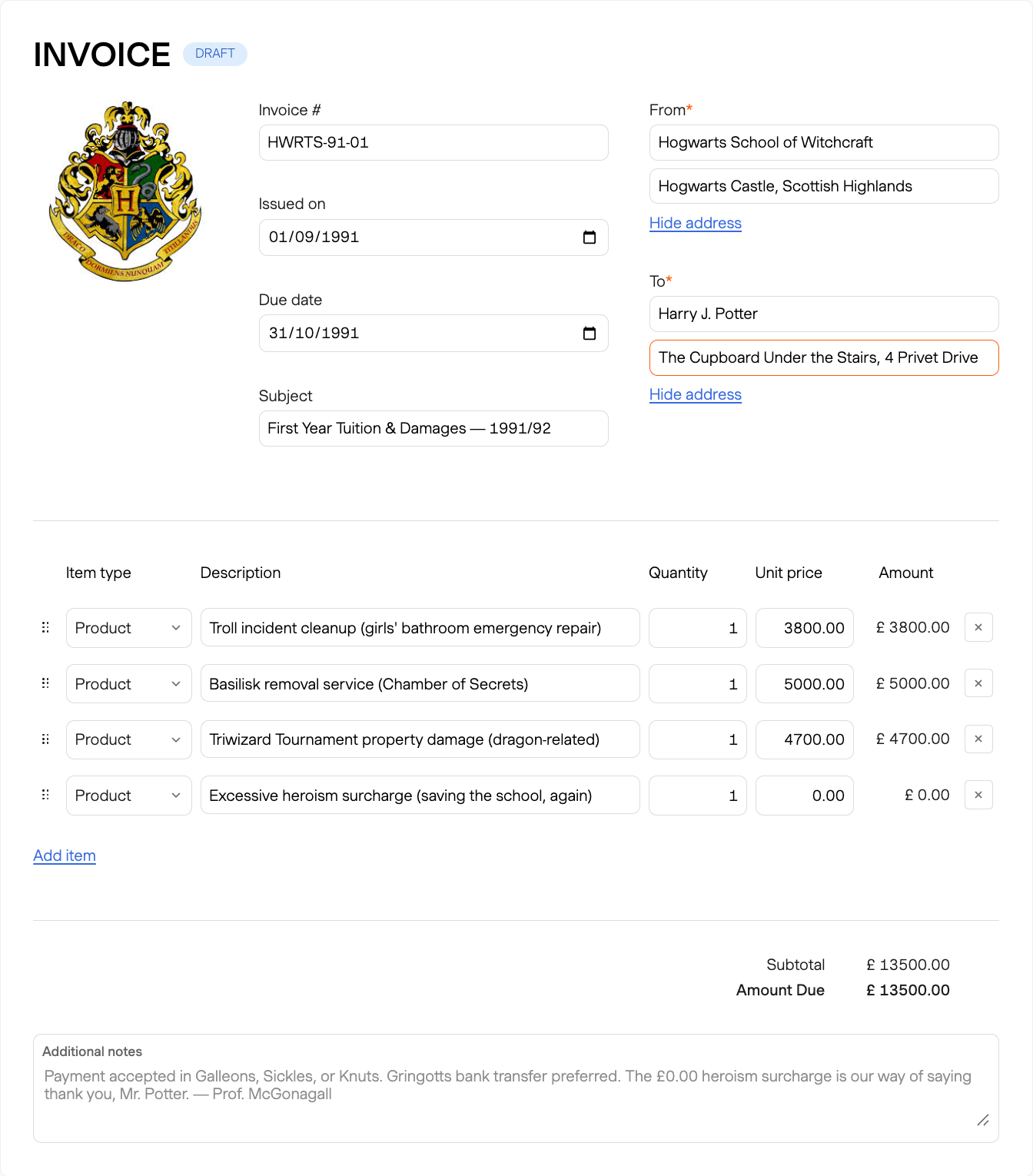
To ensure legal compliance, every invoice issued by a business in the Netherlands must contain specific mandatory information. This legal framework protects both businesses and consumers by ensuring transparency and proper tax administration. Key details required on a standard Dutch invoice include:
- Your full legal name and address, and that of your customer. A P.O. Box is not sufficient for an address.
- Your VAT identification number (btw-id) and, if applicable, your Dutch Business Register (KVK-nummer). The VAT ID is a public number starting with "NL" followed by 9 digits, the letter 'B', and two check digits (e.g., NL000099998B57).
- A unique, sequential invoice number with no gaps in the sequence.
- The date the invoice was issued and the actual date of supply or delivery, if different.
- A clear description of the goods or services supplied, including their quantity or extent.
- The price per unit (excluding VAT), any price reductions not included in the unit price, the applicable VAT rate (e.g., 21% standard, 9% reduced, 0% for certain cross-border transactions), the total amount excluding VAT, and the exact VAT amount in euros for each rate.
- For cross-border B2B transactions or when reverse charge applies, the customer's VAT identification number must also be included.
While these are general requirements, some industries have adjusted rules. For instance, entrepreneurs in taxi/public transport or hospitality may have simplified VAT reporting, and fuel receipts might not require the customer's name and address if payment method allows traceability. Businesses operating under the Small Businesses Scheme (KOR) are exempt from charging VAT and thus do not need to include VAT percentages or amounts on their invoices.