Harvest
Invoices
Sign up

Progress Billing Template for Contractors

Harvest helps contractors streamline billing by accurately tracking time and expenses, even though it doesn't support specialized progress billing features.

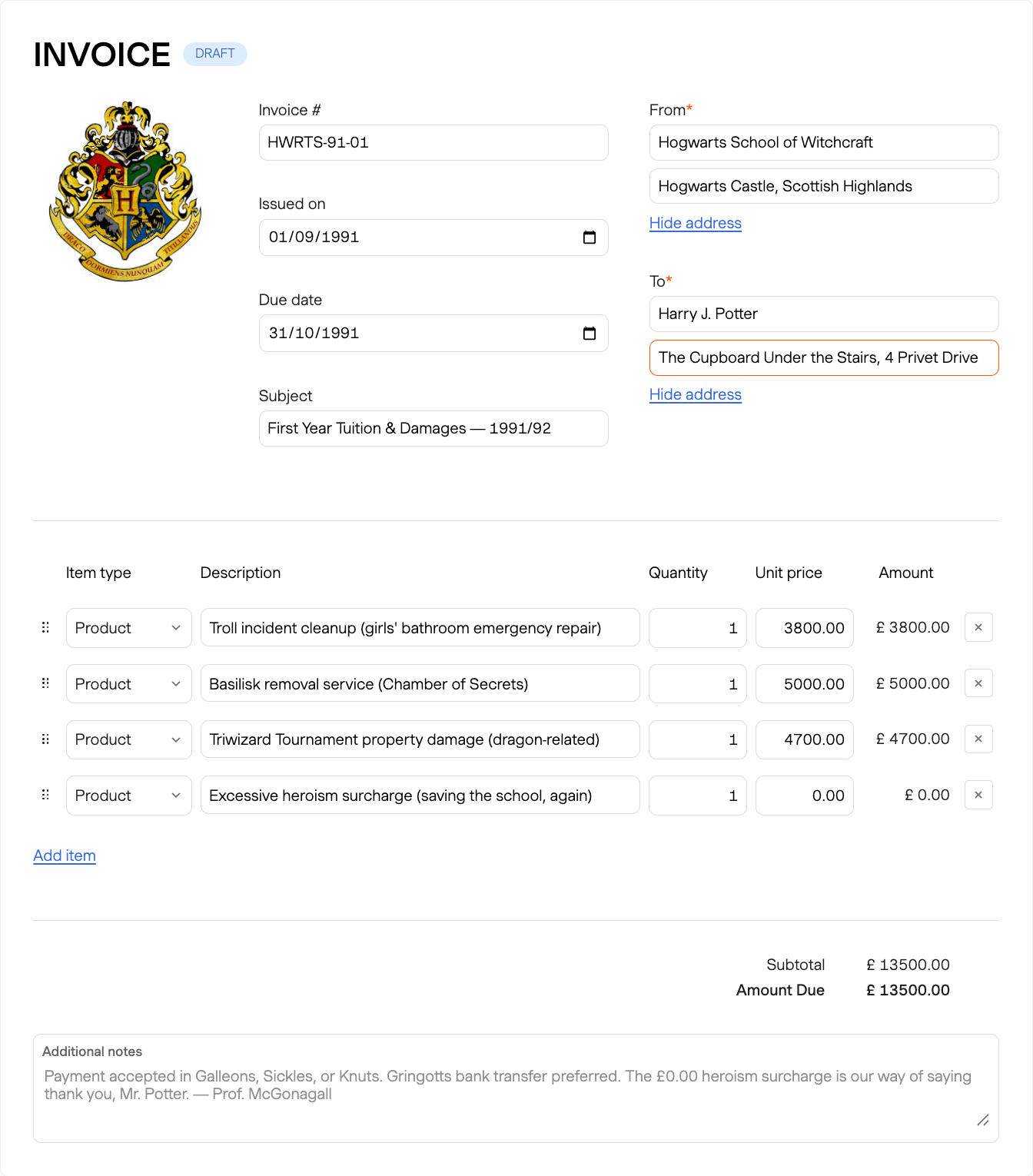
INVOICE DRAFT

Add your logo here
Item type
Description
Quantity
Unit price
Tax
Amount
Subtotal
$0.00
Discount
$0.00
Amount Due
$0.00
Get paid via:
Credit card / Debit card
ACH
Wire transfer

Customise invoice

Appearance

Add a logo
Show invoice title

Invoice settings

Tax Add up to 2 tax rates
%
Discount Apply a discount percentage
%

Understanding Progress Billing for Contractors

Progress billing is a vital tool for contractors involved in long-term and complex projects. This method allows contractors to invoice clients in stages as work progresses, rather than waiting for project completion. Not only does this facilitate improved cash flow management, but it also provides a level of transparency and financial security for both parties. According to industry data, late payments in the construction sector amounted to $208 billion in 2022, highlighting the importance of efficient billing practices like progress billing. This approach mitigates financial risks and helps avoid costly work stoppages, which affected 37% of contractors due to delayed payments.

In the construction industry, progress billing is a standard practice, especially for projects with large budgets and high material costs. Contractors typically tie payments to specific milestones, such as 25% upon foundation completion or 30% after framing. This structured approach ensures that payments are aligned with the actual work completed, reducing the likelihood of disputes. However, implementing progress billing effectively requires clear communication and meticulous documentation to avoid common pitfalls like incomplete invoices or unapproved change orders.
Key Components of a Progress Billing Template

A well-designed progress billing template is essential for contractors to manage incremental payments effectively. The template should include key components such as the schedule of values (SOV), which itemizes work categories and associated costs. Despite its importance, it's crucial to note that while Harvest helps with time and expense tracking, it does not support a schedule of values for itemizing costs. Instead, Harvest’s focus is on generating accurate invoices based on tracked time and expenses.

Another critical element is the retainage, which typically ranges from 5% to 10% of each payment and is withheld until project completion. Proper tracking of retainage is vital to avoid disputes and ensure compliance with state-specific payment laws like California’s, which mandates the release of retention monies within 45 days of project completion. Although Harvest doesn't calculate retainage, it can streamline the invoicing process by accurately reflecting expenses and time.

Benefits of Using Progress Billing Templates

Using progress billing templates offers numerous advantages for contractors, particularly in managing cash flow and enhancing project transparency. This billing method ensures a steady influx of revenue, reducing reliance on credit lines or loans and significantly mitigating financial risks. It also provides detailed visibility into project progress, enabling better financial planning and decision-making.

However, the successful implementation of progress billing requires adherence to best practices, such as creating a comprehensive contract that outlines payment terms and milestones. Utilizing technology like Harvest can simplify the invoicing process by tracking time and expenses accurately, although it does not support milestone-based billing. By integrating Harvest into your workflow, contractors can ensure that invoices align closely with actual work performed, minimizing the risk of underbilling and improving client trust.

Best Practices for Progress Billing

To maximize the effectiveness of progress billing, contractors should follow several best practices. First, develop a robust project timeline with clear milestones and align the schedule of values to these milestones. This ensures that invoices are consistent with the actual percentage of work completed and reduces the likelihood of disputes. Although Harvest does not support a schedule of values, it facilitates detailed invoicing based on tracked time and expenses.

Additionally, maintaining clear communication with clients about payment schedules and changes is crucial. This includes handling change orders efficiently to avoid billing disputes. While Harvest does not support change order adjustments affecting progress payments, it can help track associated time and expenses. Finally, leveraging technology to automate reminders and document requirements can prevent incomplete invoices and ensure timely payments, thus enhancing cash flow and project management efficiency.

How Harvest Supports Contractor Billing Needs

While Harvest does not offer specialized progress billing features, it is an invaluable tool for contractors looking to streamline their billing processes. Harvest enables contractors to create accurate invoices by tracking time and expenses meticulously. This capability is crucial for ensuring that invoices reflect actual work performed, which is essential for maintaining healthy cash flow and building client trust.

By integrating Harvest into their workflow, contractors can efficiently manage their billing operations, particularly in areas like time tracking and expense management. Although Harvest does not support progress billing tied to project milestones, its robust invoicing features ensure that contractors can accurately bill for services rendered, providing a reliable foundation for managing project finances.

Streamline Billing with Harvest

Explore how Harvest's time and expense tracking supports accurate contractor invoicing, even without specialized progress billing features.

Harvest progress billing template screenshot for contractors

Progress Billing Template for Contractors FAQs

  • A progress billing template is a document used by contractors to invoice clients incrementally as work progresses. It typically includes a schedule of values, retainage information, and payment terms aligned with project milestones.

  • Progress billing improves cash flow by ensuring a steady influx of revenue throughout a project. It reduces reliance on credit lines and loans, providing financial stability for contractors, especially small businesses.

  • Contractors often face challenges such as incomplete invoices, unapproved change orders, and underbilling. These issues can lead to payment delays and disputes, impacting cash flow and project timelines.

  • Technology aids progress billing by automating invoice generation, tracking project milestones, and integrating with other business processes. This enhances efficiency, accuracy, and financial visibility.

  • In California, prompt payment laws require owners to pay contractors within 30 days for undisputed amounts and release retention monies within 45 days of project completion. Non-compliance incurs penalties.

  • Harvest assists contractors by tracking time and expenses, enabling accurate invoicing. While it doesn't support progress billing tied to milestones, it ensures billing reflects actual work performed.

  • Clear documentation in progress billing is crucial for avoiding disputes and ensuring compliance. It includes maintaining records of invoices, change orders, and project milestones.

  • Contractors should create a detailed project timeline, align invoices with work completed, manage change orders efficiently, and maintain clear communication with clients to ensure effective progress billing.