Harvest
Invoices
Sign up

Recurring Billing for Contractors

Harvest streamlines the invoicing process for contractors by automating recurring invoices, significantly reducing administrative workload and ensuring consistent cash flow.

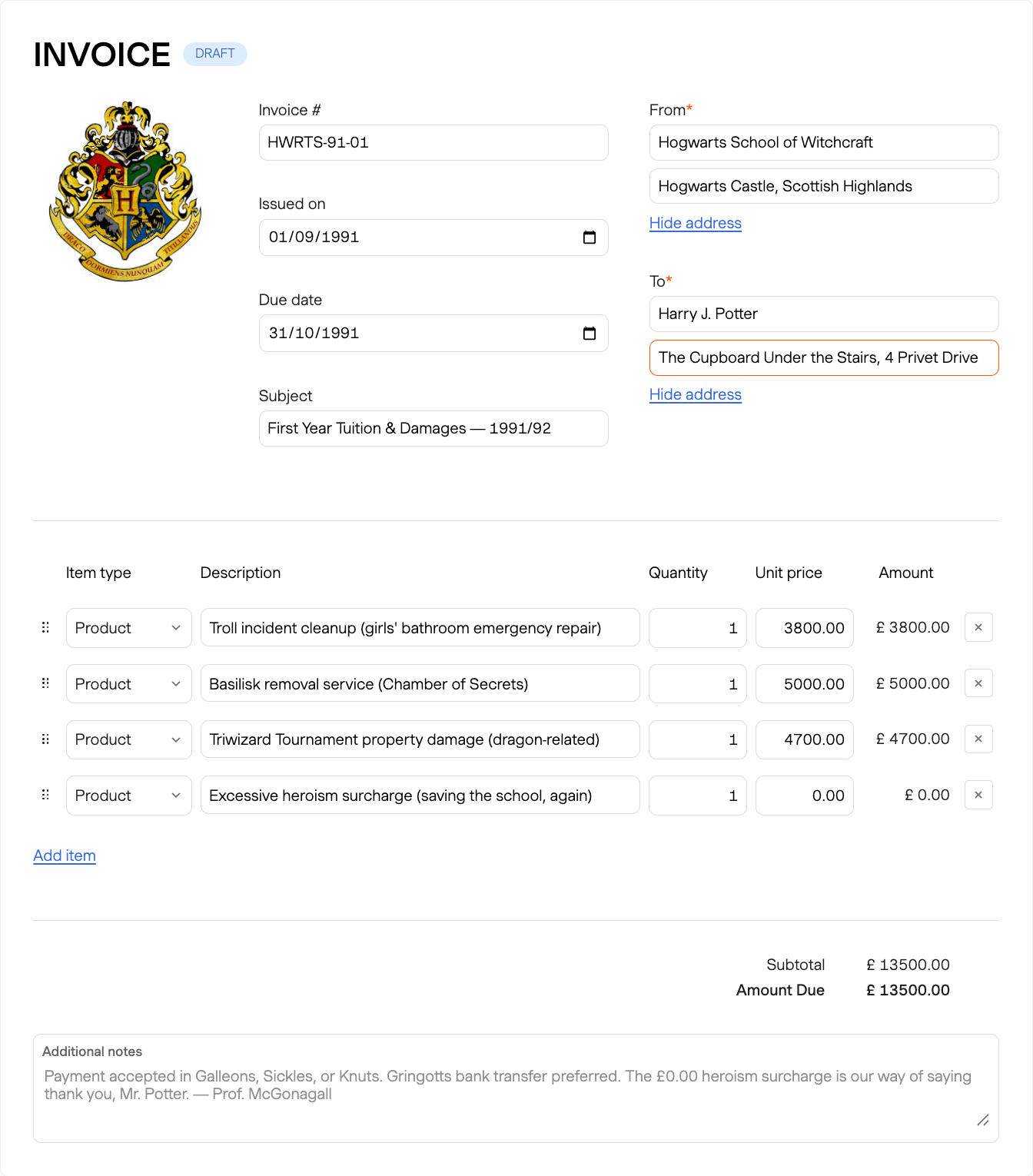
INVOICE DRAFT

Add your logo here
Item type
Description
Quantity
Unit price
Tax
Amount
Subtotal
$0.00
Discount
$0.00
Amount Due
$0.00
Get paid via:
Credit card / Debit card
ACH
Wire transfer

Customise invoice

Appearance

Add a logo
Show invoice title

Invoice settings

Tax Add up to 2 tax rates
%
Discount Apply a discount percentage
%

The Rise of Recurring Billing in the Contractor Sector

Recurring billing is rapidly gaining traction among contractors, offering a stable financial model in an industry often characterized by unpredictability. As businesses shift towards this model, they experience significant advantages, including financial stability and improved customer relationships. Industry research indicates that businesses operating under recurring revenue models grow 4.6 times faster than those dependent on transactional sales. This showcases the financial benefits of moving away from one-time project payments.

For contractors, the global subscription e-commerce market's projected 41.38% CAGR through 2033 suggests a broad acceptance of recurring billing models. Automated billing systems also offer substantial time savings, with some businesses reporting a 90% reduction in hours spent on billing tasks. This efficiency allows contractors to redirect resources toward strategic initiatives, enhancing overall business growth and client satisfaction.
Implementing Recurring Billing Effectively

Implementing a recurring billing system requires a structured approach. The first step involves identifying services suitable for recurring charges, such as maintenance or inspections. Following this, contractors should define pricing models that align with the value provided. Choosing between fixed fees, tiered pricing, or usage-based billing can make a significant impact on client satisfaction and revenue consistency.

Clear contracts are essential, outlining terms, services, payment schedules, and cancellation policies. Automation tools like Harvest can streamline this process by creating recurring invoice templates, reducing the administrative workload significantly. Regularly reviewing customer feedback and service profitability ensures that the billing system remains effective and aligned with business goals.

Legal and Compliance Considerations in Recurring Billing

Adopting recurring billing models involves navigating various legal and compliance landscapes. In the U.S., the Federal Trade Commission (FTC) regulates these practices, emphasizing clear disclosure of terms and easy cancellation processes. Contractors must ensure data security compliance, particularly with PCI DSS standards for credit card transactions, to protect customer financial information.

Retention of billing records is also crucial, with many jurisdictions requiring financial documents to be kept for several years for tax and audit purposes. Contractors should be aware of penalties for non-compliance, which can include significant fines and reputational damage. While Harvest focuses on invoicing solutions, businesses should seek legal advice to ensure compliance with regional regulations.

Overcoming Challenges in Recurring Billing

While recurring billing offers numerous benefits, contractors often face challenges such as customer reluctance to enroll in automatic payments. Concerns about overdrafts or loss of control can be mitigated by offering flexible payment options and transparent communication of billing terms. Implementing robust exception handling for failed payments also builds customer trust.

Harvest simplifies these processes by automating recurring invoices, reducing administrative tasks and allowing contractors to focus on service quality and customer relationships. With 55% of finance executives anticipating more than 40% of their revenue from recurring sources in the near future, overcoming these challenges can position contractors for sustained growth.

Practical Tips for Successful Recurring Billing

To ensure successful implementation of recurring billing, contractors should consider integrating billing systems with other business processes. CRM systems can be linked to track customer interactions and preferences, enabling personalized service. Similarly, connecting billing platforms with accounting software facilitates accurate financial reporting and reconciliation.

Utilizing digital payment gateways that support recurring transactions and offer features like automated failed payment recovery can minimize revenue loss and enhance customer experience. By leveraging tools like Harvest for automated invoicing, contractors can streamline operations and focus on nurturing long-term client relationships.

Recurring Billing with Harvest

See how Harvest automates recurring billing for contractors, reducing administrative workload and ensuring consistent cash flow.

Harvest dashboard showcasing recurring billing for contractors

Recurring Billing for Contractors FAQs

  • Recurring billing for contractors involves setting up automated processes where clients are regularly billed at set intervals, such as monthly or quarterly. This model offers financial stability and reduces the administrative burden associated with manual invoicing for each project.

  • Recurring billing provides contractors with a predictable revenue stream, enabling better cash flow management. It can lead to business growth, as firms with recurring models often grow 4.6 times faster than those relying on one-time payments.

  • Yes, legal considerations include compliance with consumer protection regulations, ensuring clear disclosure of billing terms, and following PCI DSS standards for secure payment processing. Contractors should seek legal advice to navigate these requirements effectively.

  • Harvest simplifies recurring billing by providing automated invoicing solutions. Contractors can set up recurring invoice templates, significantly reducing administrative tasks and focusing on delivering quality services.

  • Challenges include customer reluctance to enroll due to fear of overdrafts or loss of control. Offering flexible payment options and clear communication can mitigate these concerns. Automation tools like Harvest can also help manage these issues efficiently.

  • Industries such as HVAC, plumbing, and tech services benefit greatly from recurring billing models. These sectors often provide ongoing maintenance or support services that lend themselves well to predictable, recurring revenue streams.

  • To set up recurring billing effectively, identify suitable services, define clear pricing models, and automate invoicing with tools like Harvest. Regularly review and adapt your billing processes based on customer feedback and business performance.