Harvest
Invoices
Sign up

Purchase Order Template for Netherlands

Harvest simplifies the invoicing process by allowing the inclusion of essential tax details like VAT numbers, which is crucial for Dutch business transactions.

INVOICE DRAFT

Add your logo here
Item type
Description
Quantity
Unit price
Tax
Amount
Subtotal
$0.00
Discount
$0.00
Amount Due
$0.00
Get paid via:
Credit card / Debit card
ACH
Wire transfer

Customise invoice

Appearance

Add a logo
Show invoice title

Invoice settings

Tax Add up to 2 tax rates
%
Discount Apply a discount percentage
%

Essential Sections for a Dutch Purchase Order

A Dutch purchase order must contain specific mandatory elements to comply with local regulations and facilitate clear communication. These include comprehensive buyer and seller information, detailed VAT specifications, and precise payment and delivery terms.

  1. Buyer and Seller Information: Include full legal names, addresses, and Chamber of Commerce (KVK) numbers for both parties. For Dutch entities, the KVK number is crucial for identification.
  2. Unique Identification: Each PO needs a unique number and the date of issue for tracking and referencing.
  3. Order Details: Provide a clear description of the goods or services, including quantities, specifications, unit prices, and the total amount.
  4. VAT (BTW) Details: Specify the applicable VAT rate (the standard rate is 21% in the Netherlands) and the VAT amount, along with the VAT identification numbers for both buyer and seller.
  5. Payment Terms: Clearly state payment deadlines, methods, and bank details. Common terms might be "30 days net" or "14 days after invoice date."
  6. Delivery Terms: Outline the delivery address, expected delivery date, and any specific requirements, potentially referencing Incoterms (e.g., EXW, DDP) for international transactions.
  7. Reference to General Terms and Conditions: Explicitly mention and, ideally, attach your company's general terms and conditions (Algemene Voorwaarden).
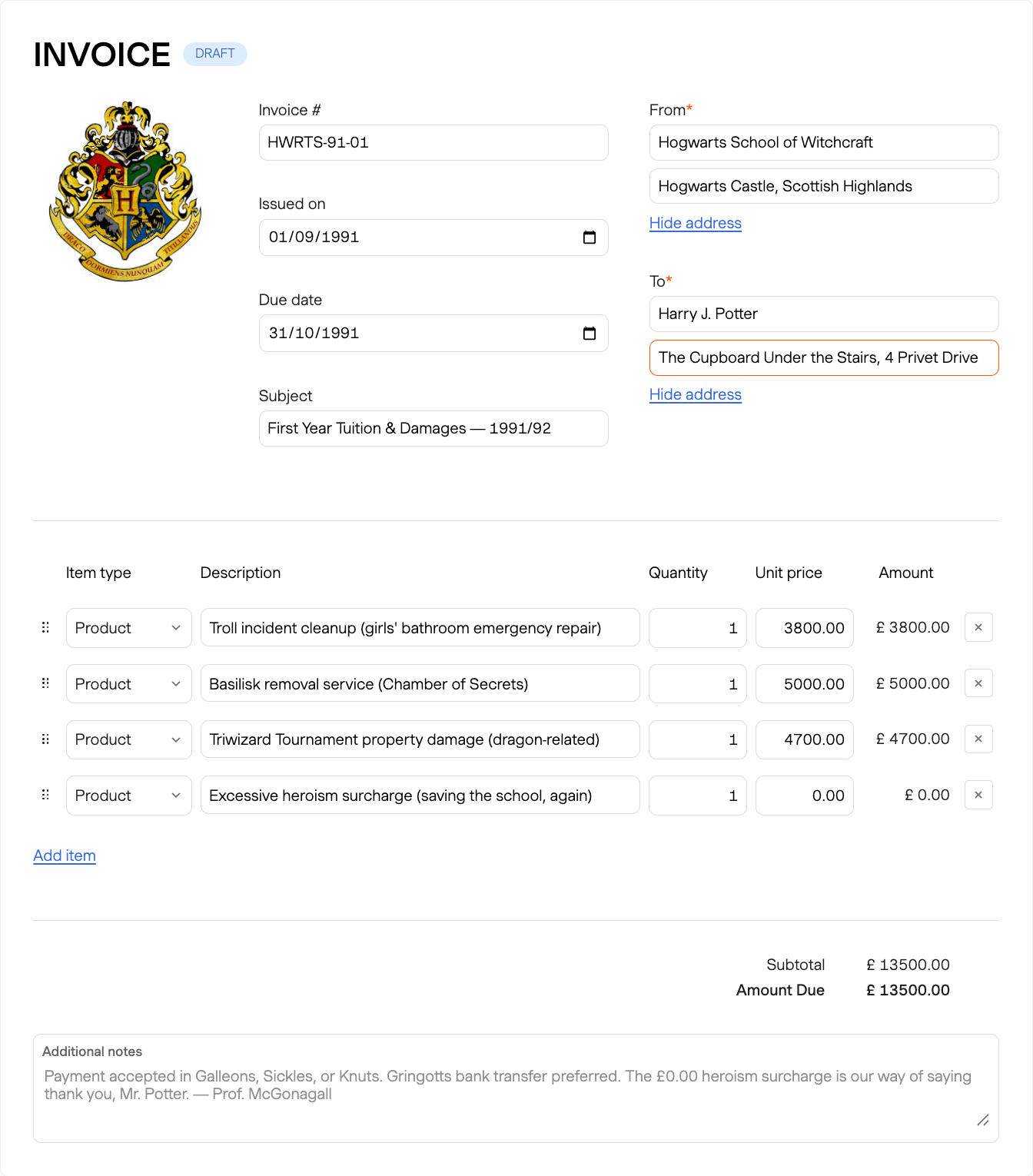
Customizing Your Purchase Order Template

Tailoring your purchase order template to specific business needs can significantly enhance efficiency and clarity. Beyond the mandatory elements, customization allows you to align the PO with your operational workflows and risk management strategies.

  • Branding: Incorporate your company logo and branding elements to maintain a professional and consistent image.
  • Internal References: Add fields for internal project codes, cost centers, or departmental approvals to streamline internal tracking and budgeting.
  • Optional Clauses: Include specific clauses relevant to your industry or transaction type. Examples include:
    • Warranty Provisions: Detail warranty periods (e.g., 12 months from delivery) or specific conditions for goods.
    • Confidentiality: Add clauses for sensitive information, especially when dealing with custom products or services.
    • Penalty Clauses: Specify penalties for late delivery (e.g., a percentage reduction per week up to a maximum cap) or non-compliance.
    • Quality Requirements: Outline specific quality standards, certifications, or inspection procedures for specialized items.
  • Alignment with Company Policies: Adjust payment terms, delivery schedules, and return policies to reflect your company's standard operating procedures and cash flow management.

Legal Considerations for Dutch Purchase Orders

Understanding the legal implications of using purchase orders in the Netherlands is crucial to mitigate risks and ensure enforceability. A purchase order, once accepted by the supplier, typically forms a legally binding agreement under Dutch law.

  • Binding Agreement: Ensure that both parties clearly understand that an accepted PO constitutes a contract. Dutch law emphasizes mutual consent.
  • Consistency: Verify that the PO's terms are consistent with any prior quotes, proposals, or master agreements to prevent contractual conflicts.
  • General Terms and Conditions (Algemene Voorwaarden): Always reference and provide your general terms and conditions. If not properly incorporated, they may not be legally binding.
  • Dispute Resolution: Clearly state the governing law (preferably Dutch law for transactions within the Netherlands) and the jurisdiction for dispute resolution.
  • Non-Conformity: Dutch law places the burden of proof on the buyer to demonstrate non-conformity of goods, except in consumer sales. Prompt inspection and notification of defects are essential.
  • Ambiguity: Avoid vague descriptions of goods, services, or terms, as these can lead to disputes and legal challenges.

See Your Dutch Purchase Order Template in Action

Preview how your purchase order will include Dutch VAT rates, legal terms, and company branding — ready for compliant transactions in the Netherlands.

Purchase Order Template for Netherlands FAQs

  • Harvest allows you to include VAT numbers and other tax information on invoices, which can be crucial for Dutch purchase orders.
  • VAT regulations in the Netherlands require that purchase orders include the applicable VAT rate and amount, along with the VAT identification numbers for both parties. The standard VAT rate is 21%, but reduced rates may apply to certain goods and services. It's essential to ensure that these details are accurately documented to comply with tax obligations.
  • Harvest supports multi-user time tracking by allowing team members to log their hours individually against shared projects. This feature enables accurate billing and performance analysis across the team.
  • While purchase order templates can help ensure that most legal requirements are met, full automation of compliance is challenging. Human oversight is necessary to verify that all legal terms and specific transaction details are correctly implemented and adapted to the latest regulations.
  • Harvest allows you to include VAT numbers and other tax information on invoices, which can be crucial for Dutch purchase orders.