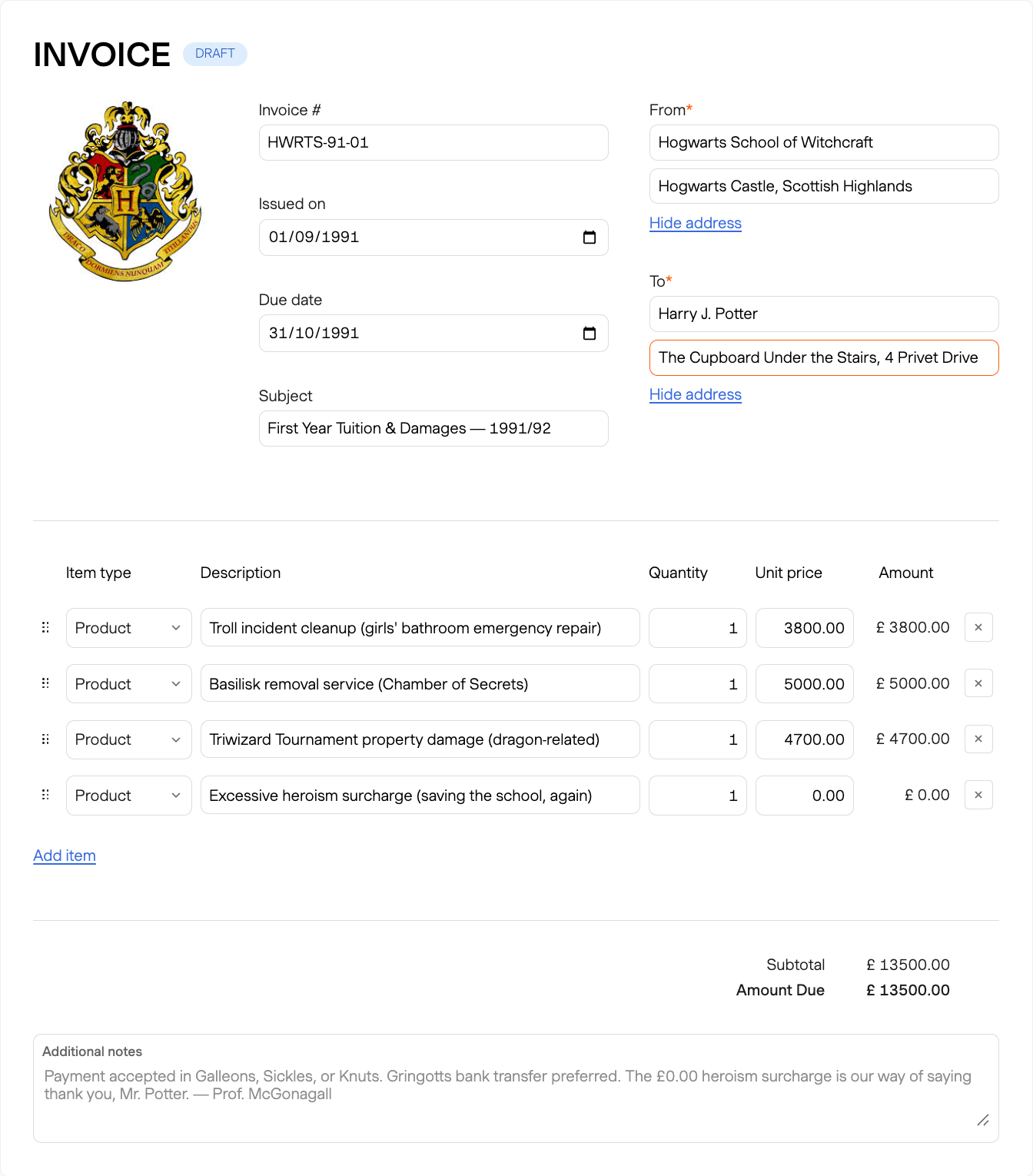
To ensure your purchase orders comply with Spanish regulations, it's crucial to include specific legal and tax-related information, often mirroring requirements for invoices. A compliant Spanish purchase order should always feature:
- Unique Purchase Order Number: Each PO must have a distinct, sequential number for tracking and auditing purposes.
- Full Identification of Parties: Include the complete legal name, address, and the Fiscal Identification Number (NIF) or VAT identification number for both the buyer and the seller. For Spanish entities, the NIF is typically an eight-digit number with a control character for individuals (DNI) or a letter followed by seven digits and a control character for businesses. For intra-community transactions, the VAT ID will include the "ES" prefix followed by nine characters.
- Dates: Clearly state the issue date of the purchase order and, if different, the date of the transaction or requested delivery.
- Detailed Description: Provide a comprehensive description of the goods or services, including quantities, unit prices, any applicable discounts, and the net amount.
- VAT Information: Specify the applicable VAT rate(s) and the corresponding VAT amount, broken out by rate, leading to the gross total. Spain has a standard VAT rate of 21%, with reduced rates of 4% and 10% for certain goods and services.
The reverse charge mechanism is particularly important for certain transactions in Spain, especially when a non-established supplier sells goods or services to a VAT-registered Spanish customer. In these cases, the responsibility for reporting and paying VAT shifts from the supplier to the buyer, meaning the supplier issues an invoice without VAT, and the buyer accounts for both input and output VAT in their return. This mechanism also applies to specific high-risk goods and services like mobile phones, laptops, and construction services.

 Sign up