Harvest
Invoices
Sign up

Recurring Payments for Contractors

Recurring payments can streamline operations and improve cash flow. Harvest helps contractors manage fixed-price contracts and predictable payment schedules.

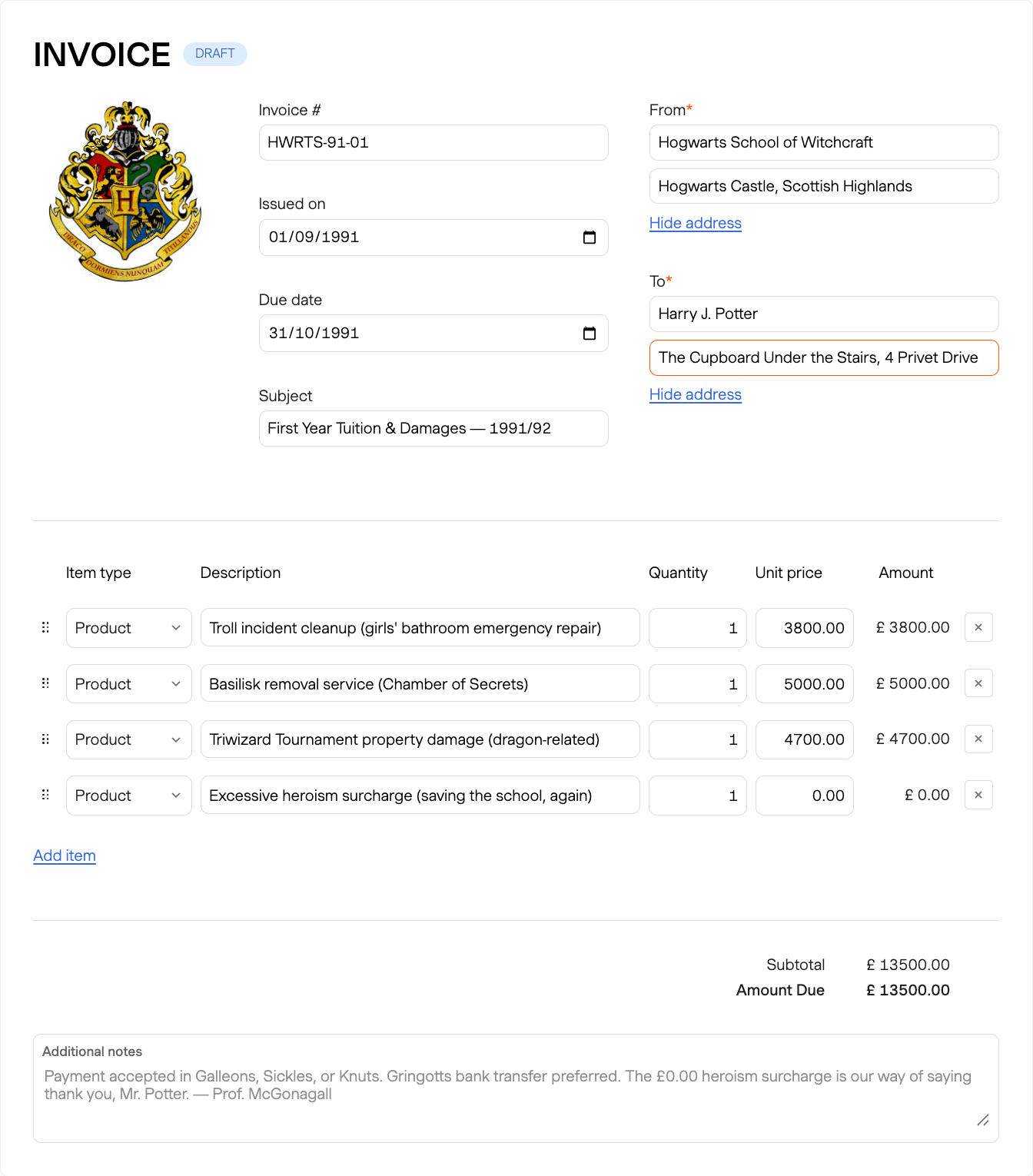
INVOICE DRAFT

Add your logo here
Item type
Description
Quantity
Unit price
Tax
Amount
Subtotal
$0.00
Discount
$0.00
Amount Due
$0.00
Get paid via:
Credit card / Debit card
ACH
Wire transfer

Customise invoice

Appearance

Add a logo
Show invoice title

Invoice settings

Tax Add up to 2 tax rates
%
Discount Apply a discount percentage
%

The Rise of Recurring Payments for Contractors

Recurring payments for contractors are becoming increasingly popular as businesses strive to streamline financial operations and enhance relationships with their external workforce. With advancements in payment automation technologies, companies are recognizing the inefficiencies inherent in traditional, manual payment processes. In fact, automating accounts payable processes can reduce processing costs by up to 80%, bringing invoice processing costs down from $16-22 per invoice to just $5-6 per invoice. This shift not only saves money but also drastically cuts the payment cycle time, reducing it from an average of 20 days to just five days.

The growing market adoption of contractor payment software is evident. The market was valued at $9.87 billion in 2024 and is projected to grow at a compound annual growth rate (CAGR) of 10.1%. This trend is mirrored in the broader recurring payments market, which is expected to grow from $182.06 billion in 2025 to $285.73 billion by 2030. Businesses are increasingly moving towards electronic payments, with 68% of organizations now utilizing ePayments solutions. Despite this, the construction industry still lags behind, with 69% of companies relying on paper checks. However, a shift is underway, as 86% of general contractors report faster payment processing times with digital tools.
Benefits of Automating Contractor Payments

Automating contractor payments offers numerous benefits, from cost savings to improved efficiency. Companies that automate these processes can see a 70-80% reduction in accounts payable staff time and a 75-90% decrease in payment errors. This efficiency is crucial for ensuring timely payments, which in turn improves cash flow and operational flow. Furthermore, automated invoicing processes are shown to cost 50% to 80% less compared to manual methods, providing a substantial return on investment.

For instance, a mid-market SaaS business generating $5 million annually could save approximately $22,813 monthly by implementing an automated billing system. This translates to a return on investment ranging from $45 to $100 for every dollar spent on the system. Moreover, establishing recurring revenue models can significantly boost a contractor's business valuation, potentially increasing it by two to four times compared to businesses relying solely on project-based revenue. These benefits highlight the importance of transitioning to digital payment solutions.

How Harvest Supports Recurring Payments for Contractors

Harvest provides essential tools for contractors to manage fixed-price contracts and predictable payment schedules. By supporting fixed-price contracts with set payment schedules, Harvest ensures financial security for independent contractors. This feature is particularly beneficial for those seeking stable, recurring income without the hassle of manual invoice generation.

While Harvest does not automate milestone payments, it supports manual invoicing for different project phases. This allows contractors to manage their cash flow effectively by invoicing at key project milestones. Additionally, Harvest integrates with project management tools like Asana, streamlining time tracking and invoicing processes. Though recurring payments need to be managed manually, this integration provides a seamless workflow for contractors managing multiple projects.

Compliance and Best Practices for Contractor Payments

While automating contractor payments offers significant benefits, compliance remains a critical consideration. Numerous US states have strengthened their prompt payment laws, such as New York's cap on retainage at 5% and Washington D.C.'s prohibition on cross-project setoffs. It's essential for businesses to stay informed about these regulations to avoid potential legal issues.

Best practices for implementing recurring payments include streamlining invoice processing, establishing clear approval workflows, and ensuring accurate transaction recording. Leveraging self-service portals empowers contractors to manage their payment preferences and view invoices independently, reducing administrative burdens. Additionally, strategic supplier onboarding and continuous improvement through feedback collection can further optimize the payment process, ensuring compliance and efficiency.

Manage Recurring Payments with Harvest

See how Harvest helps contractors manage fixed-price contracts and predictable payment schedules efficiently.

Harvest dashboard showcasing recurring payment management for contractors.

Recurring Payments for Contractors FAQs

  • Automation of recurring payments involves setting up systems that handle payments on a fixed schedule. This includes using software that supports fixed-price contracts and predictable payment schedules, like Harvest. Automation reduces costs and improves efficiency by cutting down manual processing time and errors.

  • Recurring payments offer stability and predictability for both contractors and businesses. They reduce administrative burdens, cut down processing costs by up to 80%, and drastically shorten payment cycles from 20 days to just five days. This improves cash flow and operational efficiency.

  • While Harvest supports invoicing and expense tracking for contractors, it does not handle compliance with contractor classification and tax regulations. Businesses should ensure they are informed about relevant laws and consider using additional compliance tools where necessary.

  • Harvest integrates with project management tools like Asana, allowing contractors to streamline their time tracking and invoicing processes. This integration supports efficient project management and seamless workflow transitions from project planning to billing.

  • Best practices include automating invoice processing, setting clear approval workflows, and using self-service portals for contractors. It's also crucial to stay informed about compliance regulations and continuously improve processes based on feedback and metrics.

  • Yes, there is a significant trend towards digital payment solutions, with 68% of organizations now utilizing ePayments. This shift is pronounced even in industries like construction, where digital tools are reducing payment processing times and improving cash flow.

  • Traditional payment methods often lead to inefficiencies such as delayed payments, high processing costs, and cash flow issues. Contractors are increasingly adopting digital tools to mitigate these challenges, ensuring timely and efficient payment processing.