
Harvest
Time Tracking
Sign up free

What Counts As Billable Hours

Struggling to identify what counts as billable hours? Harvest simplifies this process with precise tracking and reporting, ensuring you capture every billable moment.

Try Harvest Free

How much revenue is your team leaving on the table?

Most agencies run at 55-60% utilization. Even a small improvement means significant revenue. See what closing the gap looks like for your team.

Number of people who track billable time
$
Blended rate across roles (junior, senior, lead)
55%
Percentage of total hours that are billable. Industry average is 55-60%.
75%
A realistic target for service businesses is 70-80%.
Monthly revenue gap $0
Revenue at current utilization $0/mo
Revenue at target utilization $0/mo
Extra billable hours needed per person/day 0h
Annual revenue opportunity $0

Start tracking team utilization

Walk through the entire flow below. Start a timer, check your reports, and create a real invoice — all in three clicks.

Go ahead — start tracking!

One click and you're timing. Try it right here: start a timer, add an entry, edit the details. This is exactly how it feels in Harvest.

  • One-click timer from browser, desktop & mobile
  • Works inside Jira, Asana, Trello, GitHub & 50+ tools
  • Duration or start/end — your call
  • Day, week & calendar views to stay on top of it all
  • Friendly reminders so no hour gets left behind
Acme Corp
Website Redesign
Homepage layout revisions
1:24:09
Content Strategy
Blog calendar planning
1:30:00
SEO Audit
Technical audit report
0:45:00
Brand Guidelines
Color system documentation
2:15:00
Logo Concepts
Initial sketches round 1
1:00:00

Understanding What Counts as Billable Hours

Billable hours are the cornerstone of revenue generation for many professional service firms, including law, consulting, and creative industries. They represent the time spent directly on client-related tasks, such as consulting, legal research, and project deliverables, that can be charged to a client. In the legal industry, for example, attorneys often have annual billable hour targets ranging from 1,700 to 2,200 hours, depending on firm size. Achieving these targets is crucial, as failure to meet them can impact both revenue and career advancement opportunities.

Understanding what activities count as billable hours is essential for accurate invoicing and maximizing profitability. Common billable tasks include client meetings, drafting documents, court appearances, and project planning. Conversely, non-billable tasks—such as administrative duties, internal meetings, and business development—are not charged to clients but are vital for business operations. Harvest, a time tracking tool, facilitates this distinction by allowing users to log both billable and non-billable hours, ensuring clear and accurate billing.
The Impact of Poor Time Tracking on Revenue

Inaccurate or delayed time tracking can severely impact revenue for service-based businesses. Studies indicate that recording time at the end of the day can result in losing up to 10% of billable hours, while waiting until the next day can lead to a 25% loss. If left until the week's end, up to 50% of potential revenue can be lost. For a professional billing at $300 per hour, this could equate to a loss of $50,000-$75,000 annually. Such inefficiencies underscore the importance of real-time tracking.

Harvest addresses this challenge with one-click start/stop timers and manual time entry features, enabling professionals to capture time accurately as tasks are completed. By supporting industry-standard increments, such as six-minute blocks common in the legal field, Harvest ensures precision in billing practices. This reduces the risk of revenue leakage and enhances overall profitability.

Best Practices for Tracking Billable Hours

Effective time tracking is critical for optimizing billable hours and ensuring accurate client billing. To achieve this, businesses should establish clear policies that define billable tasks and the frequency of timekeeping. Tracking time in real-time, rather than retrospectively, can capture 95-98% of billable hours. Using consistent increments, such as 0.1-hour blocks, helps maintain accuracy in billing and reporting.

Harvest provides a comprehensive solution with automated timers, detailed reporting, and integration capabilities with tools like Asana and Trello. By categorizing tasks and using descriptive language in billing descriptions, professionals can minimize client disputes and enhance transparency. Regular review of time entries further ensures accuracy and helps identify any overlooked tasks, thereby maximizing revenue potential.

Navigating Industry-Specific Billable Hour Standards

Different industries have unique standards for what constitutes billable hours. In the legal sector, for instance, strict guidelines dictate that tasks like client consultations, legal drafting, and court appearances are billable. The American Bar Association recommends clear client agreements to define billable activities and prevent ethical issues such as overbilling.

Harvest's flexible tracking system caters to these varying industry standards, allowing firms to tailor their billing practices to specific requirements. By providing insights through detailed reports, Harvest empowers professionals to manage their billable hours effectively, aiding in compliance with industry norms and enhancing profitability. This adaptability is crucial for maintaining competitive advantage in diverse professional landscapes.

Ethical Billing Practices and Compliance

Maintaining ethical billing practices is crucial for preserving client trust and adhering to industry regulations. Common ethical pitfalls include overbilling, double billing, and billing for unproductive time. Such practices not only jeopardize client relationships but can also lead to severe legal repercussions.

Harvest helps mitigate these risks by providing clear distinctions between billable and non-billable hours and offering detailed reporting that supports transparency in invoicing. By leveraging Harvest's capabilities, professionals can ensure compliance with ethical standards, thereby safeguarding their reputation and fostering long-term client partnerships.

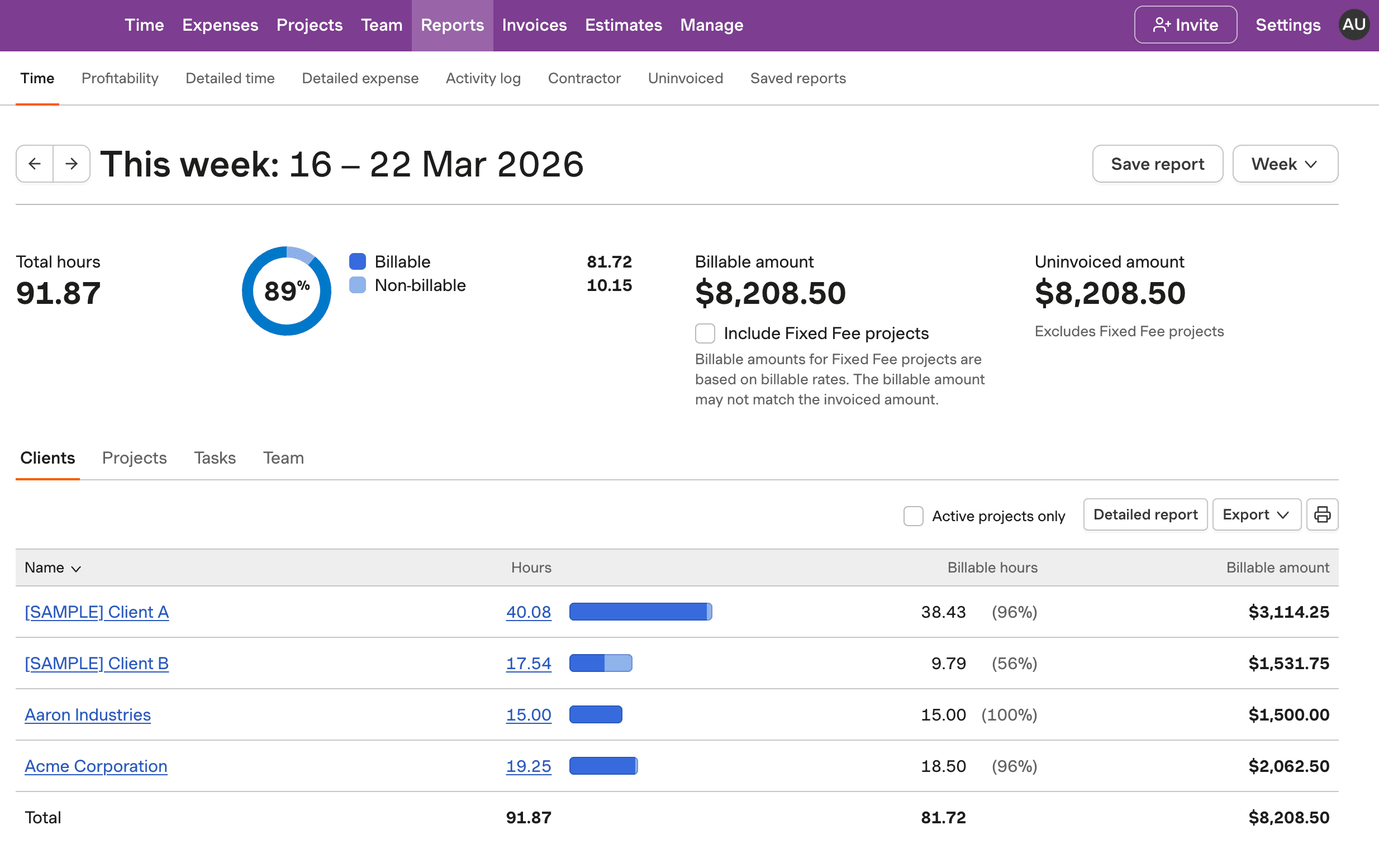
Billable Hours Tracking with Harvest

See how Harvest tracks billable hours with detailed reports and flexible increments, tailored for legal professionals.

Harvest dashboard showing billable hours tracking in legal context.

What Counts As Billable Hours FAQs

  • Billable hours include any time spent on tasks directly related to client projects. This typically covers client meetings, drafting documents, conducting research, and court appearances. Industries like law also bill for activities like legal research and consulting. Using a tool like Harvest can help accurately track these activities.

  • Billable hours are charged to clients and directly contribute to revenue, including tasks like client consultations and project deliverables. Non-billable hours, such as administrative work and internal meetings, are essential but not directly charged. Harvest allows tracking both types to manage profitability effectively.

  • To track billable hours effectively, use real-time tracking tools like Harvest, which offer start/stop timers and manual logging. Consistent billing increments and detailed task categorization also enhance accuracy. Regular review of time entries prevents revenue loss.

  • Common practices include using real-time tracking, billing in standardized increments (e.g., six-minute blocks), and categorizing tasks clearly. Tools like Harvest support these practices with features like automated timers and detailed reporting.

  • Billable hours are crucial for maximizing revenue in service-based industries. Inefficient tracking can lead to significant revenue loss, as seen with up to 50% lost potential if time is logged retrospectively. Harvest helps capture more billable hours, boosting profitability.

  • Harvest supports legal professionals by allowing tracking in six-minute increments, common in the industry. It helps manage profitability through clear distinctions between billable and non-billable hours and detailed reporting.

  • Yes, Harvest's flexible tracking system allows customization to meet various industry standards for billable hours, whether in law, consulting, or creative services. This adaptability ensures accurate billing practices across sectors.