
Harvest
Time Tracking
Sign up free

Project Status Report Tool

Harvest excels as a project status report tool, offering real-time progress tracking and visualizations to streamline communication and enhance transparency.

Try Harvest Free

Will this project be profitable?

Estimate your project cost, set the right price, and know exactly how many hours your team can spend before margin disappears.

Total hours across all team members
$
Average rate across all roles on the project
15%
Scope creep is real. Most projects need 10-25% buffer to stay profitable.
Recommended project price $0
Base cost (before buffer) $0
Hours per person per week 0h
Weekly burn rate $0
Max hours before loss 0h

Track project hours with Harvest

Walk through the entire flow below. Start a timer, check your reports, and create a real invoice — all in three clicks.

Go ahead — start tracking!

One click and you're timing. Try it right here: start a timer, add an entry, edit the details. This is exactly how it feels in Harvest.

  • One-click timer from browser, desktop & mobile
  • Works inside Jira, Asana, Trello, GitHub & 50+ tools
  • Duration or start/end — your call
  • Day, week & calendar views to stay on top of it all
  • Friendly reminders so no hour gets left behind
Acme Corp
Website Redesign
Homepage layout revisions
1:24:09
Content Strategy
Blog calendar planning
1:30:00
SEO Audit
Technical audit report
0:45:00
Brand Guidelines
Color system documentation
2:15:00
Logo Concepts
Initial sketches round 1
1:00:00

The Strategic Importance of Project Status Reports

Project status reports are vital for ensuring successful project management, offering a structured way to communicate progress, align stakeholders, and mitigate risks. With 31% of companies citing poor communication as a leading cause of project failure, effective reporting can significantly enhance project outcomes. In 2024, teams using real-time project tracking tools saw a 20% reduction in schedule deviations and a 20% improvement in accuracy due to real-time analytics. These reports foster accountability, streamline decision-making, and boost confidence among stakeholders, making them indispensable for project managers.
Essential Features of Modern Reporting Tools

Modern project status report tools offer advanced features that go beyond traditional templates, providing real-time tracking and customizable dashboards to highlight critical data. Integrations with existing software are crucial, as most projects utilize five or more tools, and seamless integration harmonizes data and streamlines workflows. Visual aids like Gantt charts and resource utilization graphs are standard, aiding in the visualization of timelines and milestones. Additionally, automation features that collect data and generate reports save time, while AI-powered analytics enhance risk forecasting with up to 85% accuracy.

Crafting Impactful Reports: Best Practices and Content

Creating effective project status reports involves tailoring the content to the audience, structuring them with key elements, and ensuring clarity. A well-crafted report will include an executive summary, progress updates, budget status, risks, and action items. Visual elements such as charts and graphs enhance comprehension and engagement. Consistent reporting schedules—daily, weekly, or monthly—should match project complexity and urgency. By adhering to these best practices, project managers can ensure their reports are concise, impactful, and well-received by stakeholders.

Understanding Tool Costs and Implementation

Project status report tools come with various pricing models, including per-user, per-project, and tiered structures. Entry-level plans can start from $7 per month, while mid-tier plans average around $947 per month. High-end solutions can exceed $1,492 monthly, offering comprehensive features and support. Factors influencing cost include the number of users, integrations, and customization needs. It's essential for organizations to consider scalability and long-term investments when selecting a tool, as well as the importance of training and onboarding to ensure successful adoption.

Project Status Reporting with Harvest

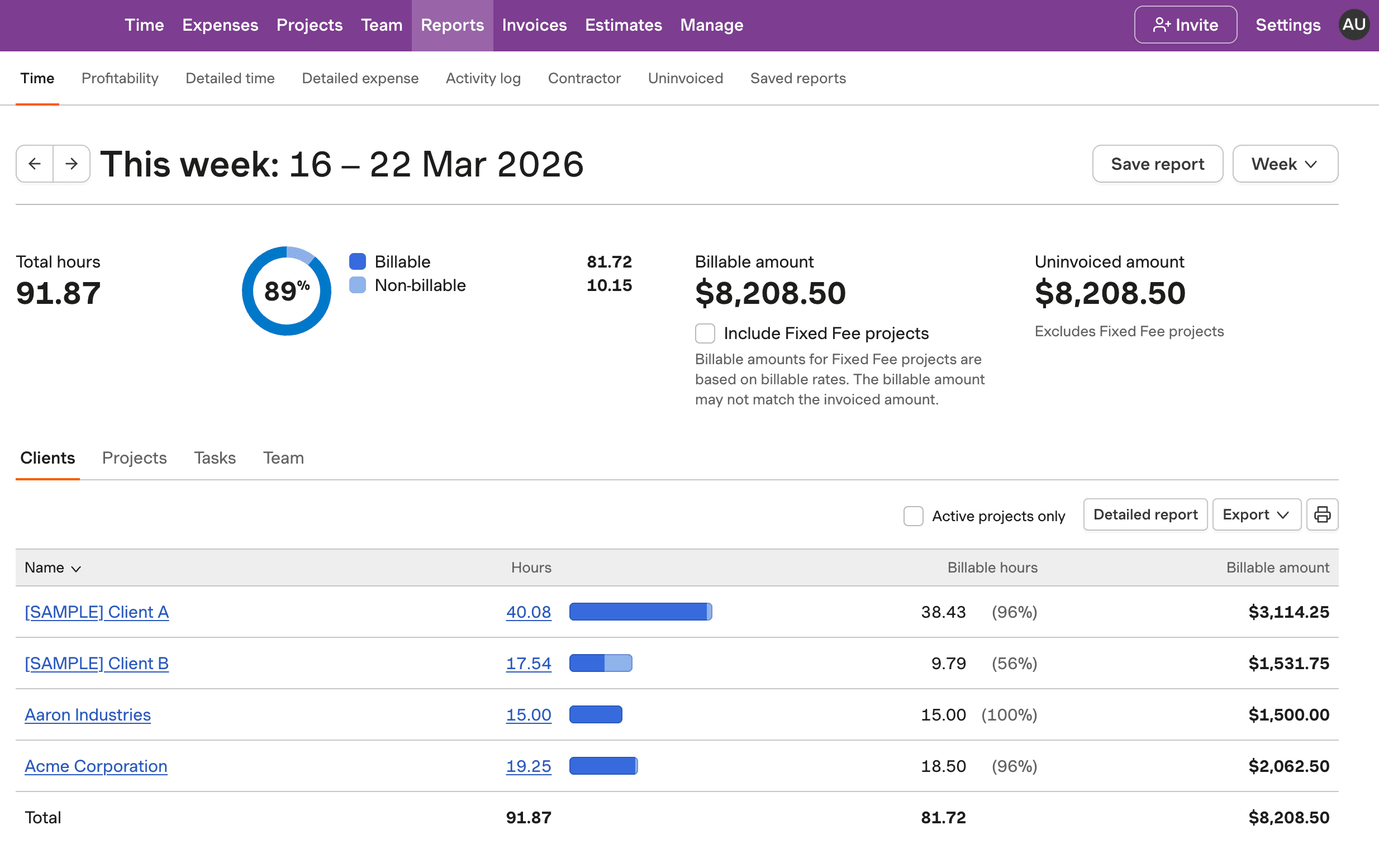
Discover how Harvest's project status report tool provides real-time tracking and visual insights to enhance project management.

Screenshot of Harvest's project status report tool interface.

Project Status Report Tool FAQs

  • Look for features like real-time tracking, customizable dashboards, and integration capabilities with other software. Visual aids such as Gantt charts and resource graphs are essential for clear communication. Automation and AI for data collection and report generation can significantly enhance efficiency and accuracy.

  • Most project status report tools offer integration capabilities with a variety of platforms such as CRMs, communication tools, and other project management software. This allows for seamless data synchronization and streamlined workflows, essential for managing complex projects that involve multiple tools.

  • Yes, many project status report tools offer customizable templates that help standardize reporting formats, ensuring clarity and comparability over time. These templates can be tailored to suit different project needs and stakeholder preferences, enhancing the effectiveness of communication.

  • A comprehensive project status report should include the project name and ID, reporting period, a summary of the project status, key accomplishments, upcoming milestones, budget and scope status, issues, risks, and recommended actions. This structure ensures that all critical information is communicated clearly.

  • Reports should be created based on the project's complexity and urgency. High-urgency projects might require daily reports, while longer-term initiatives may only need monthly or quarterly updates. Consistency in reporting frequency helps maintain stakeholder engagement and ensures timely decision-making.

  • Yes, Harvest includes built-in budget management features that allow you to track project costs and resource allocation effectively. You can monitor expenses with detailed visual aids like charts and graphs, ensuring that your project stays within budget and on track.

  • Harvest integrates smoothly with Asana, allowing you to track time directly from your tasks in Asana. This integration helps streamline workflows and ensures that all project-related activities are accurately accounted for, providing comprehensive insights into project progress and resource utilization.