
Harvest
Time Tracking
Sign up free

Remote Work Management Software

Harvest is your go-to solution for managing remote teams, addressing productivity challenges with its robust time tracking and invoicing capabilities.

Try Harvest Free

How much revenue is your team leaving on the table?

Most agencies run at 55-60% utilization. Even a small improvement means significant revenue. See what closing the gap looks like for your team.

Number of people who track billable time
$
Blended rate across roles (junior, senior, lead)
55%
Percentage of total hours that are billable. Industry average is 55-60%.
75%
A realistic target for service businesses is 70-80%.
Monthly revenue gap $0
Revenue at current utilization $0/mo
Revenue at target utilization $0/mo
Extra billable hours needed per person/day 0h
Annual revenue opportunity $0

Start tracking team utilization

Walk through the entire flow below. Start a timer, check your reports, and create a real invoice — all in three clicks.

Go ahead — start tracking!

One click and you're timing. Try it right here: start a timer, add an entry, edit the details. This is exactly how it feels in Harvest.

  • One-click timer from browser, desktop & mobile
  • Works inside Jira, Asana, Trello, GitHub & 50+ tools
  • Duration or start/end — your call
  • Day, week & calendar views to stay on top of it all
  • Friendly reminders so no hour gets left behind
Acme Corp
Website Redesign
Homepage layout revisions
1:24:09
Content Strategy
Blog calendar planning
1:30:00
SEO Audit
Technical audit report
0:45:00
Brand Guidelines
Color system documentation
2:15:00
Logo Concepts
Initial sketches round 1
1:00:00

The Rise of Remote Work: A New Paradigm for Productivity

Remote work is reshaping the global workforce, with projections indicating that by 2026, 52% of the global workforce will operate remotely. In the United States alone, 32.6 million people are expected to work remotely by 2025, comprising 22% of the national workforce. This shift from traditional offices to distributed teams offers both challenges and opportunities for organizations.

The move to remote work has led to significant productivity gains, with studies showing a 35% to 40% increase in productivity among remote employees. This is largely due to fewer distractions, flexible work hours, and enhanced focus. Moreover, a Stanford study found a 13% productivity increase among remote workers, resulting in annual savings of $2,000 per employee for companies. These statistics underscore the necessity for effective remote work management software to harness these benefits.
Essential Features of Remote Work Management Software

Remote work management software must offer a suite of features to address the unique challenges of managing distributed teams. Key functionalities include communication and collaboration tools like instant messaging, video conferencing, and shared workspaces to facilitate seamless interaction among team members. These tools help overcome the communication hurdles 20% of workers struggle with in remote setups.

Another crucial aspect is project and task management, which involves task assignment, deadline tracking, and workflow automation. Such features ensure that projects stay on track and that team members know their responsibilities, helping maintain productivity gains of up to 40%. Additionally, time tracking and productivity monitoring are vital for providing insights into work patterns and improving performance without micromanaging.

Boosting Productivity and Engagement with Remote Tools

Effective remote work management software can significantly enhance team productivity and engagement. By streamlining workflows and reducing communication overhead, these tools help maintain the 35% productivity increase seen among remote workers. Real-time collaboration and feedback capabilities foster transparency and accountability, ensuring that all team members are aligned with project goals.

Moreover, remote tools empower employees by offering autonomy and flexible work schedules, which 83% of workers globally prefer. This flexibility not only boosts productivity but also enhances job satisfaction, as 90% of employees feel equally or more productive working remotely. Leveraging data-driven insights from these tools can further improve performance evaluations and employee engagement.

Navigating Challenges: Best Practices for Implementing Remote Work Software

Implementing remote work management software requires addressing several challenges, such as communication barriers and social isolation. Establishing clear communication protocols can mitigate the communication difficulties faced by 20% of remote workers. Using a mix of instant messaging, video conferencing, and project management tools provides structured communication pathways.

Setting clear expectations and measurable goals is crucial for avoiding the boundary issues that 40% of remote employees encounter between work and personal life. Additionally, fostering team cohesion through virtual spaces for casual interactions can help combat the loneliness 35% of remote workers experience. Finally, comprehensive training and support for tool adoption ensure that all team members can effectively use the software to its full potential.

The Future of Remote Work Management: Trends and Considerations

The future of remote work management is set to be influenced by technological advancements and evolving workplace models. By 2025, over 88% of leaders managing hybrid or remote teams have no plans to mandate full office returns, signaling a permanent shift toward remote work. As such, investing in remote work tools that enhance user experience and offer intuitive interfaces will be critical.

Furthermore, the importance of AI and automation in remote work tools will continue to grow, offering enhanced capabilities for managing distributed teams. Organizations must also remain vigilant of regional and industry-specific compliance requirements, such as GDPR and HIPAA, to ensure data security and privacy. As hybrid work models evolve, remote work management software will need to accommodate these changes while maintaining productivity and engagement.

Remote Work Management with Harvest

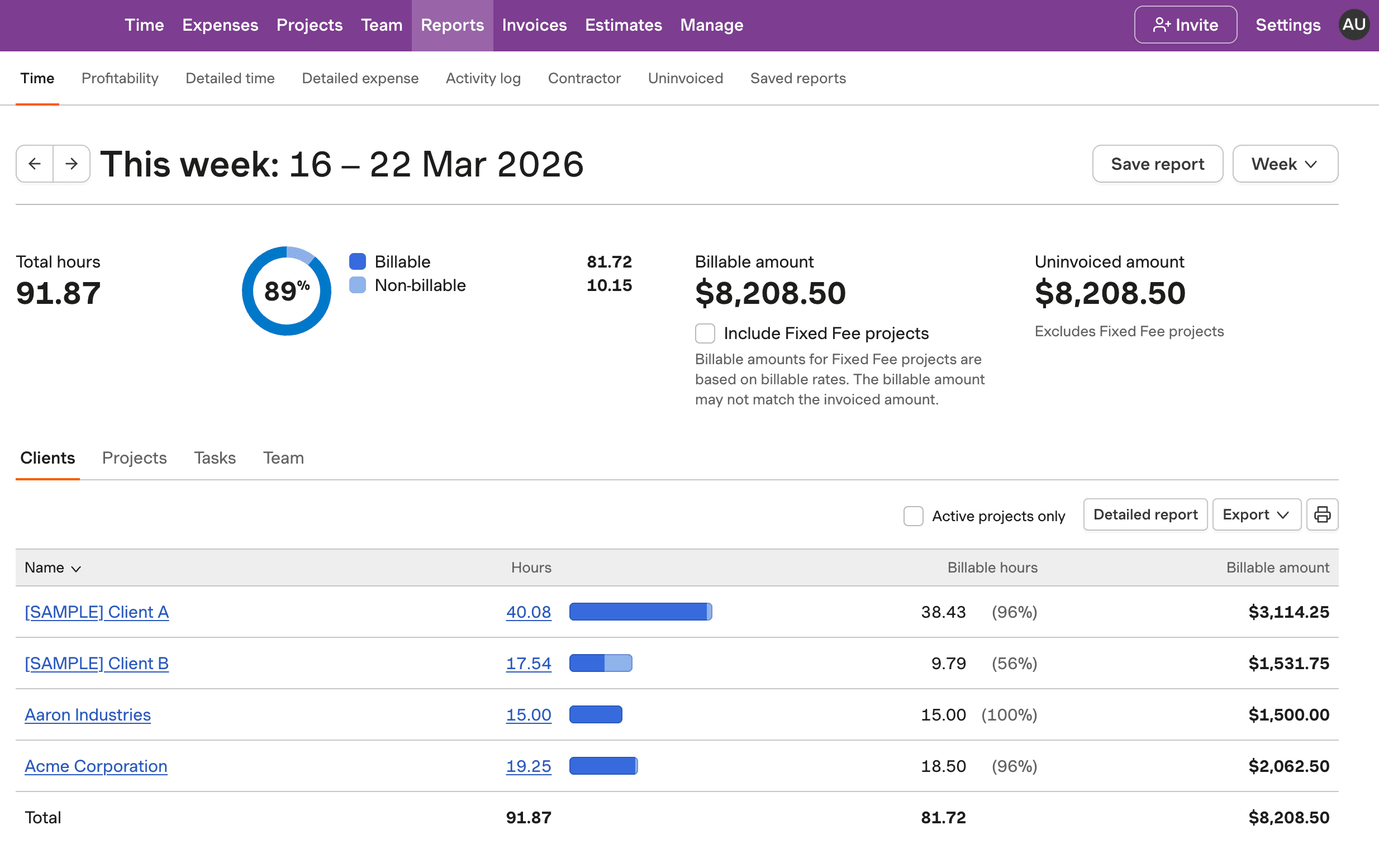
Discover how Harvest's remote work management software enhances productivity with time tracking and invoicing features.

Harvest remote work management software screenshot

Remote Work Management Software FAQs

  • Look for features like communication and collaboration tools, project and task management, time tracking, productivity monitoring, and security compliance. These functionalities help manage distributed teams effectively and maintain productivity.

  • Remote work management software enhances productivity by streamlining workflows, reducing communication overhead, and enabling real-time collaboration. These tools support flexible work schedules, contributing to a 35% productivity increase among remote workers.

  • Security is crucial, and remote work software should provide end-to-end encryption, multi-factor authentication, and compliance with regulations like GDPR and HIPAA. These measures protect data and ensure privacy in distributed work environments.

  • Remote tools foster engagement by facilitating communication, offering flexibility, and supporting employee autonomy. These tools help combat isolation, enhance job satisfaction, and provide data-driven insights for performance improvement.

  • Yes, remote work management software can be tailored for various industries and team sizes. For example, software development teams might need code collaboration tools, while HR teams benefit from HRIS integration and payroll management features.

  • Harvest integrates with platforms like Asana, Trello, Jira, Slack, and QuickBooks, enhancing its functionality for remote work management. These integrations streamline workflows and ensure seamless data sharing across tools.

  • Yes, Harvest offers expense tracking with receipt capture, enabling you to manage and monitor expenses effectively. This feature helps maintain financial oversight and budgeting for remote teams.

  • Costs vary depending on features and team size. Some tools offer free trials or low-cost options for budget-conscious organizations. Assess your needs and explore options like Harvest, which offers a free 30-day trial.

  • Legal considerations include compliance with data protection regulations like GDPR and HIPAA. Ensuring your software adheres to these standards is crucial for protecting employee data and maintaining privacy.