
Harvest
Time Tracking
Sign up free

Work Management Software

Harvest is a time tracking and invoicing tool that solves the challenge of inefficient time management, providing teams and freelancers with one-click timers and detailed reporting.

Try Harvest Free

How much revenue is your team leaving on the table?

Most agencies run at 55-60% utilization. Even a small improvement means significant revenue. See what closing the gap looks like for your team.

Number of people who track billable time
$
Blended rate across roles (junior, senior, lead)
55%
Percentage of total hours that are billable. Industry average is 55-60%.
75%
A realistic target for service businesses is 70-80%.
Monthly revenue gap $0
Revenue at current utilization $0/mo
Revenue at target utilization $0/mo
Extra billable hours needed per person/day 0h
Annual revenue opportunity $0

Start tracking team utilization

Walk through the entire flow below. Start a timer, check your reports, and create a real invoice — all in three clicks.

Go ahead — start tracking!

One click and you're timing. Try it right here: start a timer, add an entry, edit the details. This is exactly how it feels in Harvest.

  • One-click timer from browser, desktop & mobile
  • Works inside Jira, Asana, Trello, GitHub & 50+ tools
  • Duration or start/end — your call
  • Day, week & calendar views to stay on top of it all
  • Friendly reminders so no hour gets left behind
Acme Corp
Website Redesign
Homepage layout revisions
1:24:09
Content Strategy
Blog calendar planning
1:30:00
SEO Audit
Technical audit report
0:45:00
Brand Guidelines
Color system documentation
2:15:00
Logo Concepts
Initial sketches round 1
1:00:00

The Strategic Imperative of Work Management Software

Work management software is essential for enhancing team collaboration and productivity, with the market poised for significant growth. As of 2023, the global market was valued at USD 8.8 billion and is expected to reach USD 18.2 billion by 2032, growing at a CAGR of 8.5%. The increased demand for remote work solutions is a primary driver, with 98% of employees expressing a desire to continue remote work options. This software not only helps streamline workflows but also improves organizational efficiency, saving businesses up to 30% of their time by automating repetitive tasks. Furthermore, project tracking tools are crucial, aiding 71% of businesses in completing projects on time and within budget.
Core Capabilities and Feature Comparisons

Choosing the right work management software involves understanding the core features essential for productivity. Key functionalities include task creation, assignment, prioritization, and tracking. Time tracking is another critical capability, ensuring that teams can efficiently allocate resources. Collaboration tools, such as communication platforms and file-sharing systems, are integral for maintaining seamless team interactions. Advanced features like AI integration and automation enhance predictive analytics and optimize scheduling. Furthermore, a user-friendly interface, mobile accessibility, scalability, and robust security are vital for meeting diverse organizational needs.

Navigating Implementation and Ensuring Adoption

Successful implementation of work management software requires strategic planning and dedicated project teams. Best practices include forming a comprehensive roadmap aligned with business priorities and regional regulations. Iterative rollout strategies help in easing the transition for teams, especially those resistant to change. Effective change management is crucial, with localized training and leadership buy-in playing pivotal roles. Integration with existing systems like ERP and HRMS is essential for maximizing the software's potential, ensuring seamless data flow and reducing operational disruptions.

Understanding Pricing Models and Value Proposition

Work management software pricing varies based on several factors, including feature sets, user count, and deployment type. Common models include per-user, per-project, tiered, and freemium options. Cloud-based solutions dominate the market, accounting for 63.81% of the share, and are preferred for their scalability and ease of access. Evaluating the total cost of ownership (TCO) and return on investment (ROI) is crucial for organizations to understand the long-term benefits. The choice of pricing model should align with an organization’s budget and the extent of features required for optimal performance.

Industry-Specific Applications and Regulatory Compliance

Different industries leverage work management software to meet specific operational needs. In IT and telecom, employee scheduling and shift optimization have seen adoption growth rates of 18.7% and 21.3%, respectively. Healthcare sectors benefit from the software’s ability to enhance scheduling efficiency. For regulated industries such as aerospace and automotive, features like traceability and audit trails ensure compliance with stringent standards. Moreover, regulatory compliance features are vital, helping companies adhere to global data privacy laws like GDPR and CCPA, thereby preventing potential penalties.

Work Management with Harvest

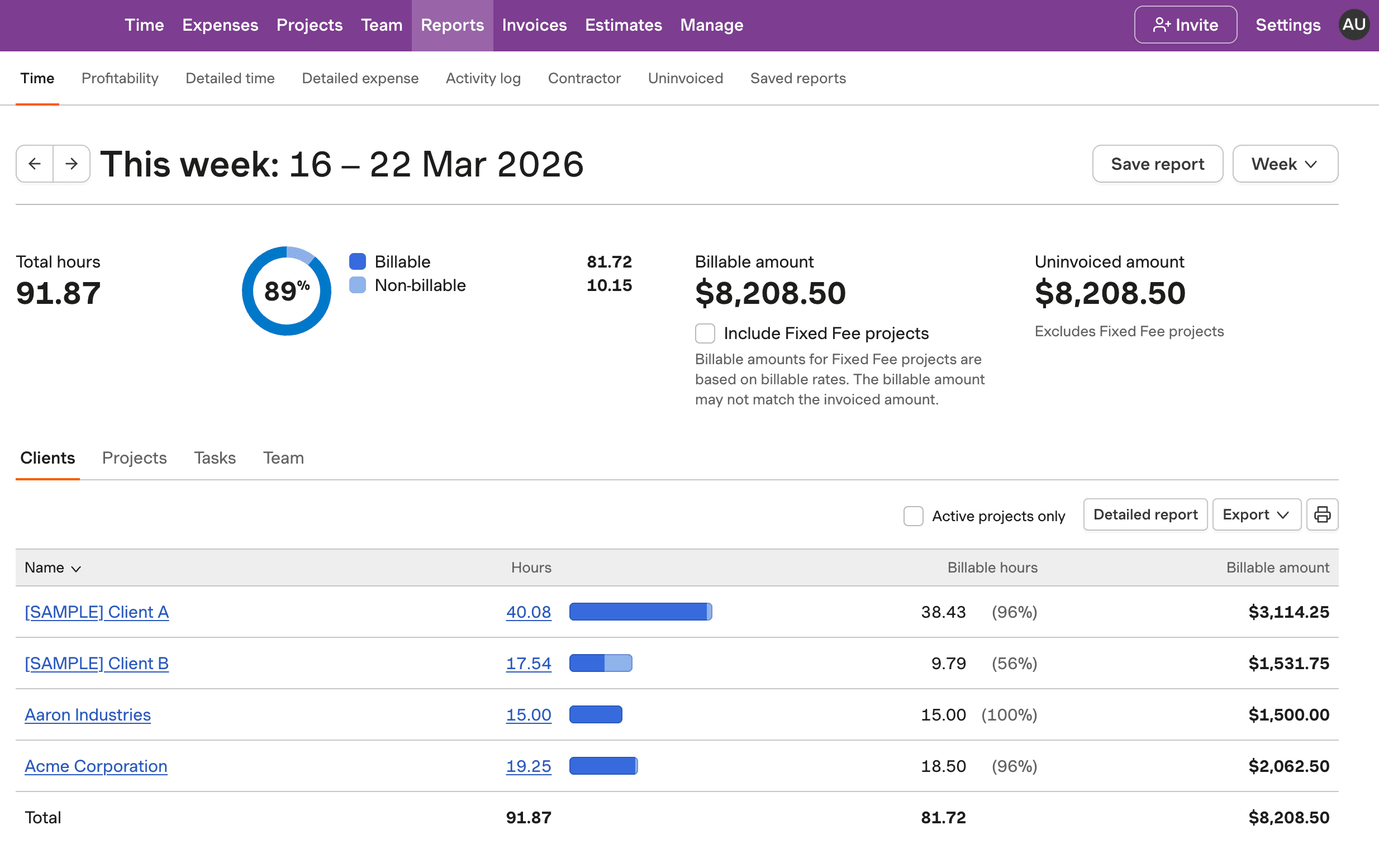
See how Harvest enhances work management with time tracking and invoicing features, providing detailed reports and one-click timers.

Screenshot of Harvest for work management software context

Work Management Software FAQs

  • Work management software enhances productivity by automating repetitive tasks, saving businesses up to 30% of their time. It also streamlines workflows and improves project tracking, helping 71% of businesses complete projects on time and within budget.

  • Effective work management software includes task management, time tracking, collaboration tools, reporting and analytics, and automation. Advanced features like AI integration and scalability are also critical for meeting diverse organizational needs.

  • Work management software supports remote work by facilitating communication, collaboration, and task management across distributed teams. With 98% of employees desiring remote work options, these tools are essential for maintaining productivity and team cohesion.

  • Common pricing models for work management software include per-user, per-project, tiered, and freemium options. Cloud-based solutions are popular, offering scalability and ease of access, with pricing influenced by feature sets and deployment type.

  • Harvest enhances time tracking and invoicing with features like one-click start/stop timers, flexible billing rates, and comprehensive reporting. It integrates with numerous platforms, offering a seamless experience for teams and freelancers.

  • Yes, work management software often integrates with existing systems like ERP, CRM, and HRMS, as well as communication platforms like Slack and file management tools like Google Drive, ensuring seamless workflow and data management.

  • Industries such as IT, healthcare, and retail benefit significantly from work management software. These tools help optimize scheduling, enhance project tracking, and ensure compliance with industry-specific regulations, improving overall efficiency.

  • Common challenges include resistance to change, inadequate training, and technological complexity. Successful adoption requires strategic planning, leadership support, and comprehensive training tailored to team needs.

  • Harvest integrates seamlessly with project management tools like Asana, Trello, and Jira, allowing teams to track time and manage projects efficiently. This integration ensures that time data flows smoothly across platforms.