
Harvest
Time Tracking
Sign up free

Advertising Timesheet

Harvest is the ultimate solution for advertising teams looking to accurately track billable client hours and manage project profitability.

Try Harvest Free

How many hours did you work this week?

Enter your clock-in and clock-out times for each day. The calculator handles breaks, overtime, and weekly totals automatically.

Day Clock In Clock Out Break Hours
Total hours this week 0h
Regular hours (≤40) 0h
Overtime hours 0h
Average hours/day 0h
Total break time 0h

Track time automatically with Harvest

Walk through the entire flow below. Start a timer, check your reports, and create a real invoice — all in three clicks.

Go ahead — start tracking!

One click and you're timing. Try it right here: start a timer, add an entry, edit the details. This is exactly how it feels in Harvest.

  • One-click timer from browser, desktop & mobile
  • Works inside Jira, Asana, Trello, GitHub & 50+ tools
  • Duration or start/end — your call
  • Day, week & calendar views to stay on top of it all
  • Friendly reminders so no hour gets left behind
Acme Corp
Website Redesign
Homepage layout revisions
1:24:09
Content Strategy
Blog calendar planning
1:30:00
SEO Audit
Technical audit report
0:45:00
Brand Guidelines
Color system documentation
2:15:00
Logo Concepts
Initial sketches round 1
1:00:00

The Indispensable Role of Advertising Timesheets

Accurate time tracking is the foundation of profitability for advertising agencies. By meticulously logging hours spent on each client project, agencies can ensure precise billing and maintain transparency with clients. In fact, a lack of time tracking is prevalent, with 33% of agencies not tracking their time at all, which can lead to significant revenue losses. Moreover, delayed time logging can result in under-reporting work by 15-20% if done at the end of the day, and up to 30% if delayed until the end of the week.

Understanding the direct link between tracked hours and client billing is crucial. For instance, federal regulations such as the FLSA require accurate records of working hours for compliance, mandating that non-exempt employees be compensated at 1.5 times their regular rate for overtime. Proper time tracking not only aids in compliance but also informs resource allocation and project planning, ensuring that agencies can manage priorities effectively and meet client deadlines.
Choosing and Customizing Your Free Timesheet Template

Selecting the right timesheet template is essential for effective time tracking in advertising. Popular formats like Excel and Google Sheets offer the flexibility needed for daily, weekly, or project-specific tracking. To customize a template, consider adding your agency’s logo and branding for a professional look. Tailor fields to include specific advertising tasks, such as "Writing digital ad copy" or "Strategizing for an OOH campaign".

To start, download your chosen format and make any necessary adjustments to fit your agency's needs. For Google Sheets, make a copy to your own Drive, and for Excel, download the file directly. Customization can extend to unique client rates or project descriptions, ensuring that every detail relevant to your agency's operations is captured. A well-tailored template not only enhances accuracy but also streamlines the reporting process, making it easier to communicate time spent to clients.

Essential Fields for Comprehensive Time Tracking

To effectively track billable hours, certain key data points must be included in your timesheet. Essential fields include employee name/ID, dates, start and end times, total hours worked, and detailed descriptions of projects or tasks. It's also critical to distinguish clearly between billable and non-billable hours, as this impacts invoicing and profitability analysis.

Incorporating approval mechanisms, such as sections for employee and manager signatures, can streamline workflows and ensure accountability. This step is vital for maintaining accurate records and facilitating timely submissions. Regularly reviewing these fields allows agencies to analyze time data effectively, leading to strategic decision-making and improved project management.

Best Practices for Effective Time Tracking in Advertising

Implementing best practices in time tracking can significantly enhance accuracy and efficiency. One key principle is the "track as you go" approach, which minimizes under-reporting by logging time in real-time rather than retrospectively. This method is especially beneficial for creative teams, as it reduces the burden of administrative tasks and encourages accurate reporting.

Breaking down projects into granular tasks, such as brainstorming or design iterations, provides detailed insights into time allocation. This granularity helps in making informed decisions about resource management and project profitability. Additionally, leveraging time data for performance analysis enables agencies to refine their processes and improve overall efficiency.

Overcoming Challenges and Ensuring Compliance

Time tracking in advertising comes with its challenges, from fears of micromanagement to the complexity of federal regulations like the FLSA. However, these challenges can be overcome by fostering a culture of transparency and demonstrating the benefits of accurate time logging. Systems must be user-friendly to encourage adoption among creative professionals, who often prefer to focus on their craft rather than administrative duties.

Ensuring compliance with regulations is critical, particularly in the USA where detailed record-keeping is required for hourly and non-exempt employees. By maintaining accurate records and distinguishing between billable and non-billable hours, agencies can avoid legal pitfalls and enhance client billing accuracy. Harvest aids in this process by providing robust tracking and reporting capabilities tailored to advertising workflows.

Advertising Timesheet with Harvest

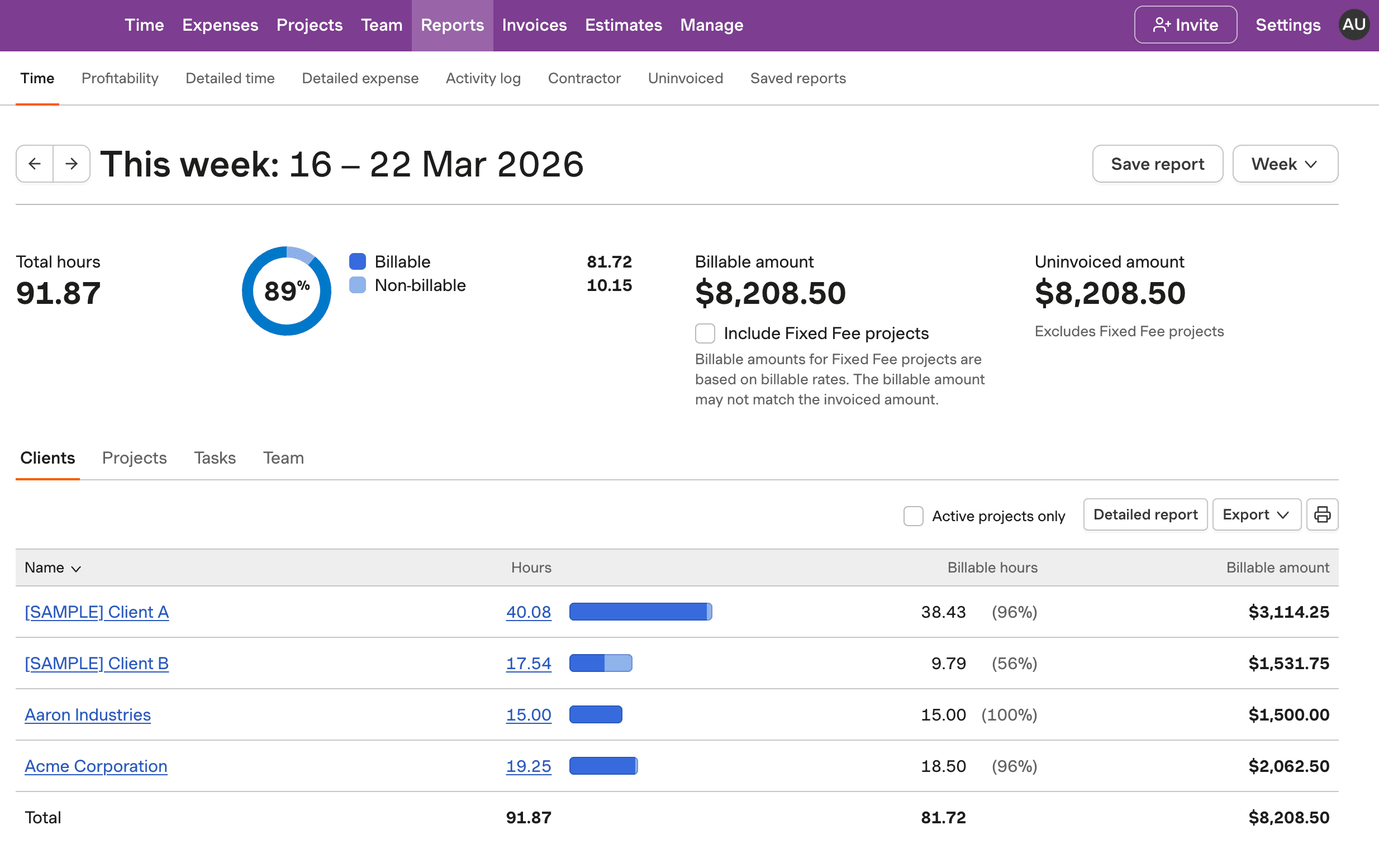
The preview displays how Harvest's advertising timesheet template can be customized to track billable hours and manage client projects.

Screenshot of Harvest advertising timesheet template interface.

Advertising Timesheet FAQs

  • Advertising agencies gain visibility on hours spent per client project, control client hours, and improve project management through time tracking. Accurate time logging supports better invoicing and resource allocation, directly impacting profitability.

  • Advertising timesheet templates are commonly available in Excel and Google Sheets due to their functionality and accessibility. PDF and Word formats are also options for simple record-keeping needs.

  • To customize a timesheet for advertising, add your agency's branding and include fields for specific tasks like "Writing digital ad copy" or "Creating a TV commercial script". Tailor the template to capture all necessary project details.

  • An advertising timesheet should include employee name/ID, dates, start/end times, total hours worked, project/task descriptions, and a distinction between billable and non-billable hours. This ensures comprehensive time tracking.

  • Harvest offers robust tracking and reporting capabilities, allowing agencies to manage and analyze advertising project timesheets effectively. It tracks both billable and non-billable hours and integrates with project management tools specific to advertising workflows.

  • Effective time tracking involves logging time as it happens to maximize accuracy, breaking projects into granular tasks, and leveraging time data for strategic decisions. These practices improve reporting and project management.

  • Creative teams often find time tracking burdensome due to fears of micromanagement and administrative workload. Using user-friendly systems and communicating the benefits of time tracking can help overcome these challenges.