
Harvest
Time Tracking
Sign up free

Geofencing Time Clock

Harvest does not support geofencing, but excels in flexible time tracking and job-level cost management, making it ideal for construction and field services.

Try Harvest Free

How much revenue is your team leaving on the table?

Most agencies run at 55-60% utilization. Even a small improvement means significant revenue. See what closing the gap looks like for your team.

Number of people who track billable time
$
Blended rate across roles (junior, senior, lead)
55%
Percentage of total hours that are billable. Industry average is 55-60%.
75%
A realistic target for service businesses is 70-80%.
Monthly revenue gap $0
Revenue at current utilization $0/mo
Revenue at target utilization $0/mo
Extra billable hours needed per person/day 0h
Annual revenue opportunity $0

Start tracking team utilization

Walk through the entire flow below. Start a timer, check your reports, and create a real invoice — all in three clicks.

Go ahead — start tracking!

One click and you're timing. Try it right here: start a timer, add an entry, edit the details. This is exactly how it feels in Harvest.

  • One-click timer from browser, desktop & mobile
  • Works inside Jira, Asana, Trello, GitHub & 50+ tools
  • Duration or start/end — your call
  • Day, week & calendar views to stay on top of it all
  • Friendly reminders so no hour gets left behind
Acme Corp
Website Redesign
Homepage layout revisions
1:24:09
Content Strategy
Blog calendar planning
1:30:00
SEO Audit
Technical audit report
0:45:00
Brand Guidelines
Color system documentation
2:15:00
Logo Concepts
Initial sketches round 1
1:00:00

Understanding Geofencing Time Clocks: The Basics

Geofencing time clocks leverage location-based technology to enhance the accuracy of employee time tracking. They work by establishing virtual perimeters, known as geofences, around physical work sites. This system ensures employees can only clock in or out when they are within the designated area, helping to eliminate time theft, such as "buddy punching" and unauthorized early clock-ins. Geofencing utilizes GPS, Wi-Fi, cellular data, or RFID to create these virtual boundaries, providing a technological edge to traditional timekeeping methods.

The market for geofencing is rapidly expanding, projected to grow from $3.41 billion in 2025 to $8.14 billion by 2029. This growth underscores the increasing reliance on geofencing technology across industries with distributed workforces. With GPS-based geofencing offering accuracy within 10-50 meters under optimal conditions, and Wi-Fi and Bluetooth beacons providing even greater precision indoors, businesses can significantly improve their time tracking processes.
Key Benefits: Enhancing Accuracy and Efficiency

Geofencing time clocks significantly enhance the accuracy of time tracking while increasing operational efficiency. By restricting clock-ins to approved locations, businesses can effectively prevent time theft, which costs companies an estimated 1.5% to 5% of their gross payroll annually. This can translate to savings of up to $400 billion each year across industries. Additionally, geofencing reduces manual errors and administrative burdens, providing real-time visibility into workforce location and attendance.

The technology also ensures compliance with labor laws such as the Fair Labor Standards Act (FLSA), which requires accurate employee hour records. With geofencing, businesses can centralize and simplify this process, maintaining the necessary records for at least two years. By improving payroll accuracy and ensuring compliance, geofencing time clocks offer a compelling solution for modern workforce management.

Essential Features to Look for in a Geofencing Time Clock

When evaluating geofencing time clock solutions, there are several essential features to consider. A robust mobile app is crucial, as it allows employees to clock in and out seamlessly via their smartphones or tablets. Reliable GPS geofencing is also important, ensuring accurate location tracking within a designated area. Integration capabilities with existing payroll and scheduling systems help streamline operations and reduce manual data entry.

Other vital features include real-time alerts for overtime or missed clock-outs, customizable break rules, and comprehensive reporting for insights into workforce management. Additionally, security measures such as unique employee PINs and photo verification enhance the system's reliability. Offline functionality is also crucial, allowing the system to track locations without an internet connection, ensuring continuous operation even in remote areas.

Implementation Best Practices and Considerations

Successful implementation of a geofencing time clock system involves several best practices. Start by evaluating current timekeeping methods to identify inefficiencies. Define clear geofence boundaries around designated work sites, and choose a user-friendly app compatible with both Android and iOS devices. Plan the deployment carefully, ensuring all employees understand the system and its benefits through transparent communication and training sessions.

It's important to establish clear policies regarding location tracking and data security, considering legal compliance with regulations like the California Consumer Privacy Act (CCPA). Consistent enforcement of these policies across all departments helps maintain fairness and trust. Regular monitoring and refinement of the system, based on employee feedback and performance metrics, ensure its ongoing effectiveness and acceptance.

Cost Analysis and Industry Applications

The cost of geofencing time clock solutions can vary widely, with basic free plans available for small teams and more advanced paid subscriptions ranging from $3.50 to $14.99 per user per month. These solutions are particularly beneficial for industries with remote workforces, such as construction, field services, and delivery services, providing a strong return on investment through reduced time theft and improved efficiency.

By preventing unauthorized clock-ins and outs, geofencing technology helps businesses save on payroll costs and enhances employee accountability. The investment in a geofencing time clock solution not only streamlines operations but also supports compliance with labor laws, ultimately contributing to a more efficient and accurate timekeeping system.

Explore Harvest's Time Tracking Solutions

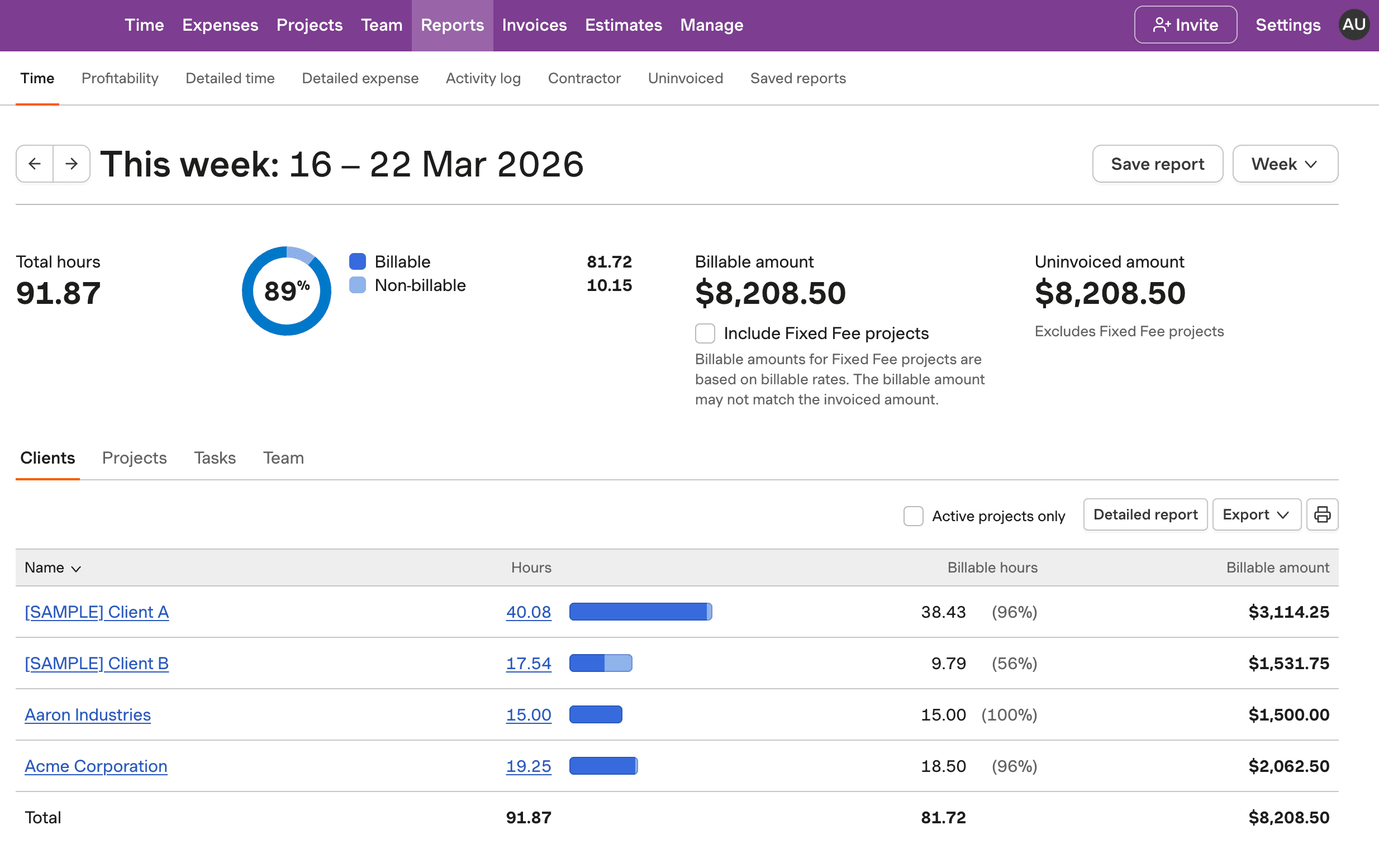
Discover how Harvest enhances time tracking accuracy with job-level cost management, ideal for construction and field services.

Screenshot of Harvest's time tracking features for construction and field service.

Geofencing Time Clock FAQs

  • Geofencing time clocks use mobile apps to detect when a device enters or exits a predefined virtual boundary, automatically triggering clock-in or clock-out events. This ensures that employees can only record hours when within the designated area, improving accuracy and reducing time theft.

  • Look for features such as mobile app access, reliable GPS geofencing, seamless payroll integration, real-time alerts, customizable break rules, and comprehensive reporting. These features ensure accurate time tracking and efficient workforce management.

  • Geofencing improves accuracy by eliminating manual errors, preventing "buddy punching," and ensuring clock-ins occur only within designated areas. This provides verified location data, reducing payroll inaccuracies and time theft costs.

  • Costs range from free plans for small teams to paid subscriptions of $3.50 to $14.99 per user per month. Prices vary based on features and the number of users, with advanced options offering greater functionality.

  • Geofencing is generally legal but requires transparent communication and informed consent from employees about data collection. Tracking should only occur during work hours to respect privacy and maintain ethical standards.

  • Most geofencing time clocks can still track employee locations via GPS offline. While real-time updates may be delayed, location data is stored and synchronized once a connection is restored, ensuring accurate record-keeping.

  • Yes, businesses can create multiple geofences for different job sites or locations. This flexibility allows for precise time tracking across various work environments, enhancing overall workforce management.