
Harvest
Time Tracking
Sign up free

Analyze Team Productivity

Harvest helps teams reclaim lost productivity by providing detailed time tracking and reporting, turning insights into actionable strategies for success.

Try Harvest Free

How much revenue is your team leaving on the table?

Most agencies run at 55-60% utilization. Even a small improvement means significant revenue. See what closing the gap looks like for your team.

Number of people who track billable time
$
Blended rate across roles (junior, senior, lead)
55%
Percentage of total hours that are billable. Industry average is 55-60%.
75%
A realistic target for service businesses is 70-80%.
Monthly revenue gap $0
Revenue at current utilization $0/mo
Revenue at target utilization $0/mo
Extra billable hours needed per person/day 0h
Annual revenue opportunity $0

Start tracking team utilization

Walk through the entire flow below. Start a timer, check your reports, and create a real invoice — all in three clicks.

Go ahead — start tracking!

One click and you're timing. Try it right here: start a timer, add an entry, edit the details. This is exactly how it feels in Harvest.

  • One-click timer from browser, desktop & mobile
  • Works inside Jira, Asana, Trello, GitHub & 50+ tools
  • Duration or start/end — your call
  • Day, week & calendar views to stay on top of it all
  • Friendly reminders so no hour gets left behind
Acme Corp
Website Redesign
Homepage layout revisions
1:24:09
Content Strategy
Blog calendar planning
1:30:00
SEO Audit
Technical audit report
0:45:00
Brand Guidelines
Color system documentation
2:15:00
Logo Concepts
Initial sketches round 1
1:00:00

Understanding Team Productivity: Beyond Just "Busyness"

Analyzing team productivity goes beyond measuring busyness to focus on outcomes and impact. True productivity is about achieving goals effectively, not just staying active. Organizational drag, which refers to inefficient structures and processes, results in a loss of over 20% of productive capacity, equivalent to losing a full day each week. This inefficiency significantly impacts a team's ability to perform at its best.

Data-driven decisions are crucial for improving productivity. Companies that track the right metrics are 28% more likely to hit their project goals and 2.5 times more likely to stay on budget. However, only 21% of organizations have standardized methods for measuring productivity, indicating a reliance on intuition rather than data. By focusing on outcome-based measures, like a 15% increase in user engagement, teams can better evaluate their true impact.
Key Metrics for Measuring Team Performance

Identifying the right metrics is essential for effectively measuring team performance. Core quantitative metrics include task completion rate, actual vs. planned hours, and resource utilization rate. These metrics provide a clear picture of how resources are being used and whether projects are on track. For example, maintaining a high quality of work, reflected in accuracy rates above 95%, is a benchmark for many teams.

Qualitative and outcome-based metrics are equally important. These include employee engagement levels and innovation rates, which indicate how motivated and creative a team is. Industry-specific metrics, such as first-call resolution rates for customer service teams, offer additional insights into performance. Tools like Harvest can help track these metrics, providing detailed reports on team utilization rates and project budgets.

Analyzing Productivity Data: From Raw Numbers to Actionable Insights

Effective analysis of productivity data requires establishing baselines and benchmarking against industry standards. By comparing current performance with historical data or peer organizations, teams can identify trends and areas for improvement. Analyzing data over time helps pinpoint bottlenecks and inefficiencies, allowing teams to address these issues proactively.

Leveraging technology is essential for transforming raw data into actionable insights. Tools like Harvest offer comprehensive capabilities for data collection, reporting, and analysis. With features such as automated reporting and analytics dashboards, organizations can make informed decisions to enhance productivity. By focusing on outcomes rather than just outputs, teams can drive meaningful improvements and achieve their goals more effectively.

Factors Influencing Team Productivity and How to Optimize Them

Numerous factors influence team productivity, including communication, leadership, and motivation. Effective communication ensures that all team members are aligned with the project's goals and objectives. Strong leadership fosters a culture of trust and accountability, which is vital for maintaining high productivity levels.

Structural and environmental factors also play a significant role. Clear roles, adequate resources, and workload management are essential for optimizing productivity. Addressing common obstacles like unclear goals and ineffective delegation can further enhance team performance. By using tools like Harvest to monitor resource allocation and project budgets, teams can ensure they are working efficiently and staying on track.

Strategies for Boosting Team Productivity and Sustaining Growth

Boosting team productivity involves implementing best practices such as setting clear goals using the SMART criteria (Specific, Measurable, Achievable, Relevant, Time-bound). Optimizing meetings and managing workload effectively can prevent burnout and ensure that 70-80% of working hours are spent productively.

Fostering a positive work environment is also crucial. Promoting collaboration, autonomy, and continuous learning encourages teams to innovate and grow. Regular feedback and recognition help maintain motivation and drive continuous improvement. By adapting strategies based on data analysis, teams can sustain growth and achieve long-term success.

Harvest for Team Productivity

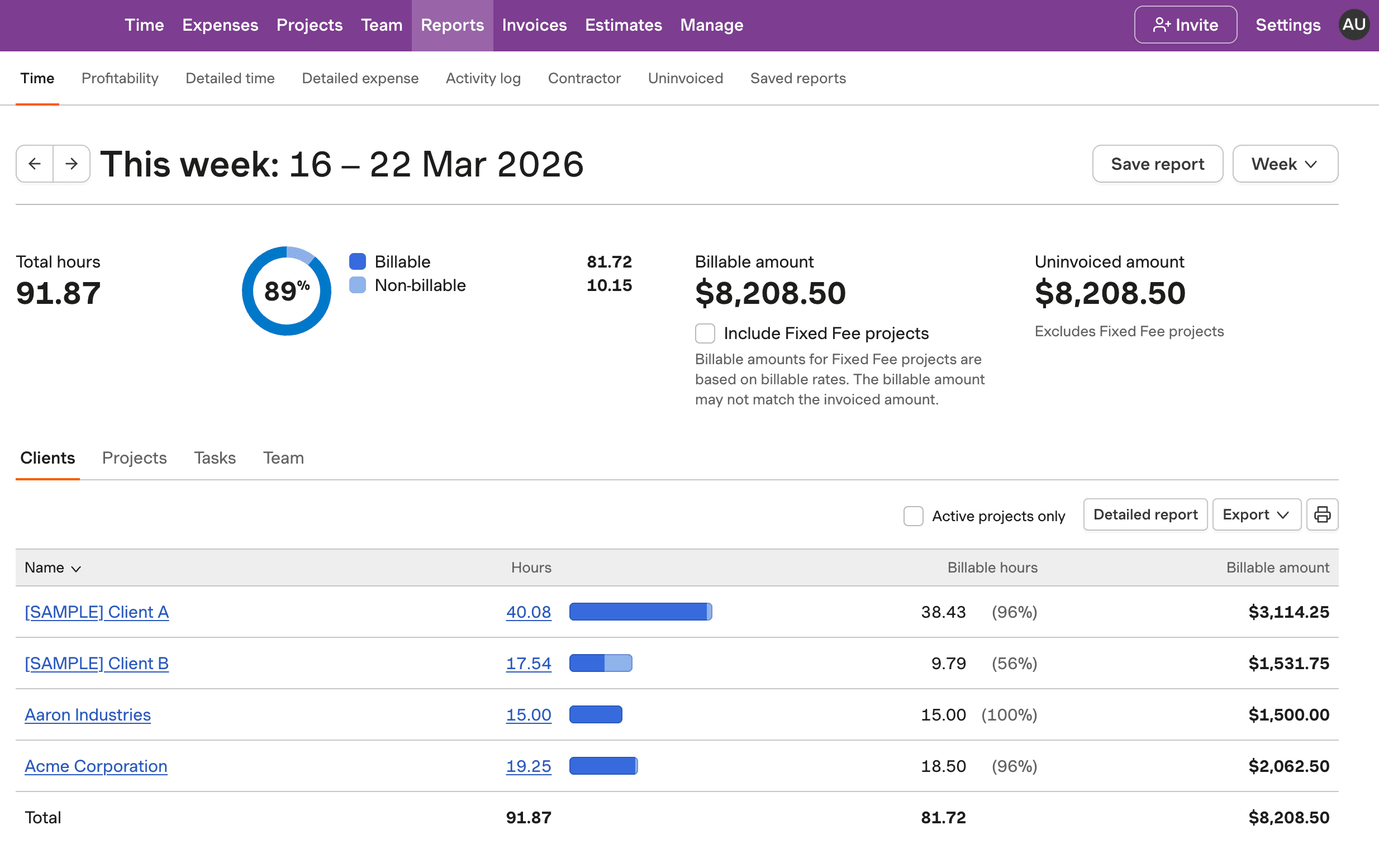
See how Harvest tracks time and optimizes team productivity with detailed reports and intuitive dashboards.

Harvest dashboard for analyzing team productivity metrics

Analyze Team Productivity FAQs

  • Key metrics include task completion rate, actual vs. planned hours, and resource utilization rate. These metrics provide a clear view of team efficiency and effectiveness. Industry-specific metrics, like first-call resolution in customer service, also offer valuable insights.

  • Analyzing team productivity data involves benchmarking against industry standards and internal baselines. Using tools like Harvest, you can track time, identify trends, and pinpoint inefficiencies, transforming raw data into actionable insights.

  • Tools like Harvest are ideal for tracking team productivity. They offer features such as time tracking, project budget monitoring, and detailed reporting, enabling teams to optimize resource allocation and improve efficiency.

  • Harvest enhances productivity analysis with detailed reports on team utilization rates and project budgets. By tracking time and providing insights, Harvest helps teams optimize workflows and achieve their goals more effectively.

  • Factors influencing team productivity include communication, leadership, and motivation. Structural elements like clear roles and adequate resources also play a crucial role. Addressing obstacles such as unclear goals can further enhance productivity.

  • Improving productivity involves strategies like setting clear goals, enhancing communication, and managing workloads effectively. Tools like Harvest provide insights that help teams prioritize tasks and optimize workflows.

  • Yes, Harvest can track both billable and non-billable hours, allowing teams to set flexible rates per project or person. This feature helps in better financial planning and resource allocation.

  • Harvest integrates with popular project management tools like Asana, Trello, and Jira, facilitating seamless time tracking and productivity analysis within existing workflows.

  • Harvest monitors project budgets by tracking expenses and providing alerts when approaching budget limits. This ensures teams stay on track and avoid overspending.