
Harvest
Time Tracking
Sign up free

Automatic Time Tracking App

Harvest is the automatic time tracking app that simplifies time management, helping teams and freelancers avoid up to 80% of timesheet errors.

Try Harvest Free

How much revenue is your team leaving on the table?

Most agencies run at 55-60% utilization. Even a small improvement means significant revenue. See what closing the gap looks like for your team.

Number of people who track billable time
$
Blended rate across roles (junior, senior, lead)
55%
Percentage of total hours that are billable. Industry average is 55-60%.
75%
A realistic target for service businesses is 70-80%.
Monthly revenue gap $0
Revenue at current utilization $0/mo
Revenue at target utilization $0/mo
Extra billable hours needed per person/day 0h
Annual revenue opportunity $0

Start tracking team utilization

Walk through the entire flow below. Start a timer, check your reports, and create a real invoice — all in three clicks.

Go ahead — start tracking!

One click and you're timing. Try it right here: start a timer, add an entry, edit the details. This is exactly how it feels in Harvest.

  • One-click timer from browser, desktop & mobile
  • Works inside Jira, Asana, Trello, GitHub & 50+ tools
  • Duration or start/end — your call
  • Day, week & calendar views to stay on top of it all
  • Friendly reminders so no hour gets left behind
Acme Corp
Website Redesign
Homepage layout revisions
1:24:09
Content Strategy
Blog calendar planning
1:30:00
SEO Audit
Technical audit report
0:45:00
Brand Guidelines
Color system documentation
2:15:00
Logo Concepts
Initial sketches round 1
1:00:00

The Rise of Automatic Time Tracking: A Modern Necessity

Automatic time tracking has become a modern necessity for businesses and freelancers alike, transforming how work hours are recorded and managed. With approximately 73% of businesses expressing satisfaction with automated time-tracking processes, it's clear that the shift from manual to automated systems is driven by significant benefits. These include increased accuracy, efficiency, and cost savings, as well as the potential to recapture up to $666,400 in yearly wages lost to manual errors. As organizations embrace this technology, they also experience a 44% reduction in payroll processing errors, leading to better financial outcomes.

Manual time tracking is fraught with inefficiencies, often resulting in 80% of timesheets containing errors. Automated systems eliminate these inaccuracies through precise and continuous tracking, enhancing team productivity by as much as 50%. This efficiency not only boosts team morale by 90% but also enables businesses to exceed revenue targets by 7%. The transition to automatic time tracking is more than a trend; it’s a critical evolution in workforce management.
Core Features and Functionalities of Automatic Time Tracking Apps

Automatic time tracking apps offer a range of core features designed to streamline time management and improve accuracy. Key functionalities include automatic time capture, which reduces manual input and errors, and robust reporting capabilities that provide insights into work patterns and project progress. Advanced features like AI-powered learning, GPS location tracking, and facial recognition for clock-ins further enhance their appeal, especially for those managing remote or mobile teams.

Integration capabilities are crucial, with many apps offering seamless connections to project management tools like Asana, Trello, and Jira, as well as invoicing and payroll systems. This integration facilitates a cohesive workflow, ensuring that all aspects of time management and financial tracking are aligned. Accessibility across multiple platforms, including desktop, web, and mobile, ensures that users can track time and manage tasks from anywhere, at any time. Harvest, for instance, supports a wide array of platforms and prioritizes user privacy, making it a versatile choice for diverse needs.

Navigating Pricing and Free Options

When considering an automatic time tracking app, understanding the pricing model is essential. Typically, these apps range from $8 to $17 per user per month for comprehensive feature sets, with some basic plans starting as low as $3.75. Many providers also offer free versions with limited features, often supporting unlimited users and projects. These free plans are ideal for small teams or freelancers who require basic time tracking capabilities.

Evaluating the cost-effectiveness of a time tracking solution involves assessing factors such as the number of users, the necessity for advanced features, and the level of customer support provided. For organizations looking to maximize their investment, selecting a tool that offers flexible pricing with scalable features is crucial. Harvest, for example, provides a range of plans that cater to different organizational sizes and needs, ensuring that businesses can find a solution that fits their budget while still offering comprehensive time management functionalities.

Data Security, Privacy, and Legal Compliance

Data security and privacy are paramount considerations when selecting an automatic time tracking app. Compliance with regulations such as the GDPR and FLSA is non-negotiable, as these laws dictate how employee data should be collected, stored, and protected. Automatic time tracking systems must employ robust security measures, including encryption, access controls, and secure cloud hosting, to safeguard sensitive information.

Harvest sets high standards in this regard by ensuring user privacy through its commitment not to monitor chats, take screenshots, or track websites and apps. Businesses must also adhere to best practices for data minimization and storage, keeping records for durations mandated by law. This compliance not only protects organizations from legal repercussions but also fosters trust among employees, who are increasingly concerned about data privacy.

Implementing Automatic Time Tracking: Best Practices and Considerations

Successfully implementing an automatic time tracking system requires a strategic approach. The first step is conducting a thorough needs assessment to determine specific requirements, such as integration needs and the importance of features like reporting and analytics. Once needs are identified, selecting an app with an intuitive interface and user-friendly features is essential to ensure high adoption rates among employees.

Transparency is key; businesses should clearly communicate the purpose and benefits of time tracking to employees, outlining what data is collected and how it will be used. This approach not only addresses privacy concerns but also encourages buy-in from staff. By following these best practices and leveraging industry-specific applications, organizations can maximize the benefits of time tracking, improving productivity and resource management across various sectors.

Automatic Time Tracking with Harvest

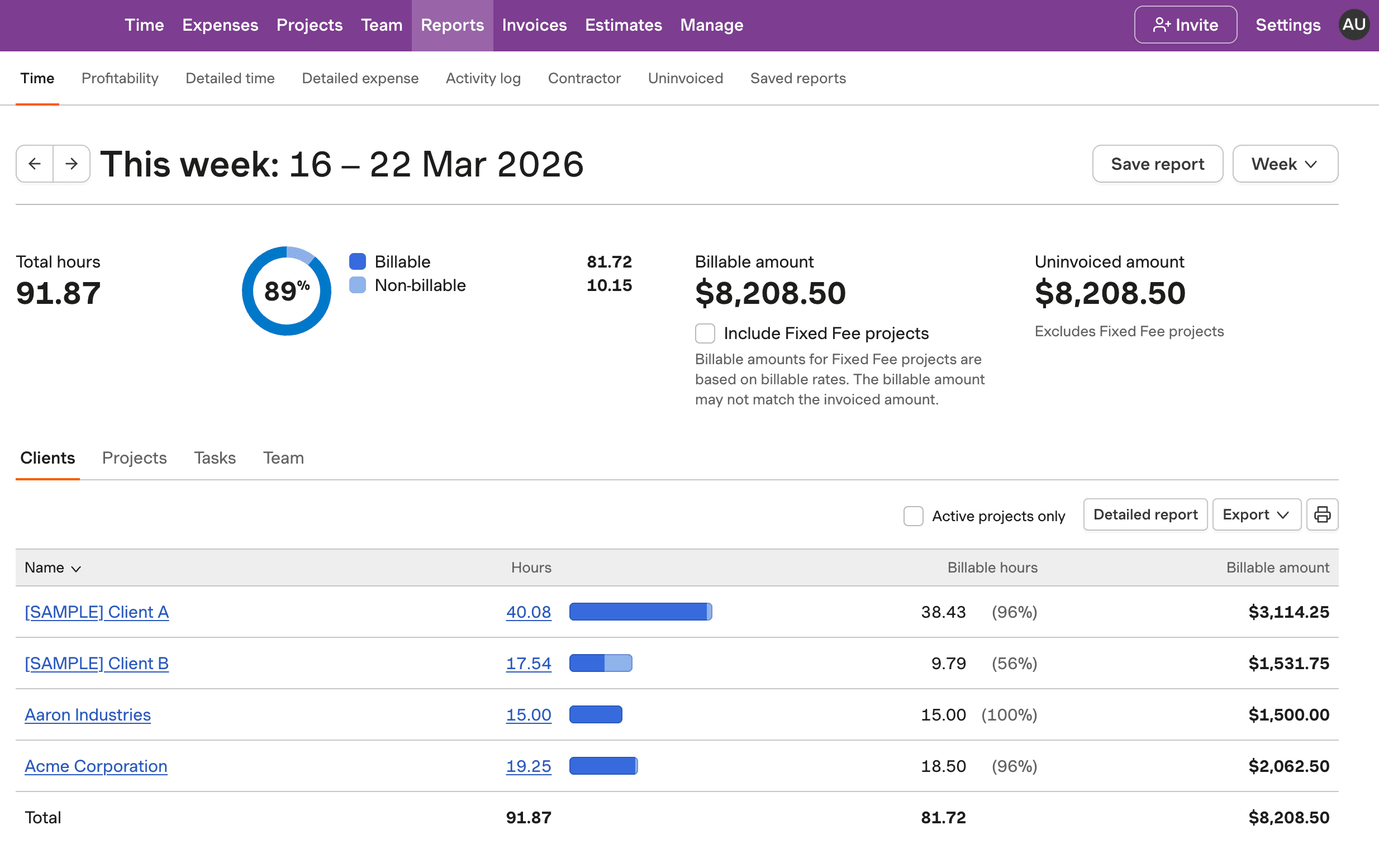
See how Harvest simplifies time management with automatic tracking, detailed reports, and seamless integrations.

Harvest automatic time tracking app interface showcasing time logs and reports

Automatic Time Tracking App FAQs

  • Automatic time tracking improves accuracy by eliminating manual errors, which occur in 80% of timesheets. It ensures precise and continuous recording of work hours, leading to better payroll accuracy and resource allocation.

  • Look for features like automatic time capture, project management, detailed reporting, and integrations with tools like Asana and Slack. GPS tracking and AI learning are also valuable for managing remote teams.

  • Yes, many time tracking apps offer free plans with basic features. These often include unlimited users and projects, making them suitable for small teams or freelancers needing essential tracking capabilities.

  • Data security is crucial to protect sensitive employee information. Apps like Harvest use encryption and secure hosting to comply with regulations like GDPR, ensuring that data is stored safely and privately.

  • Harvest integrates with various project management tools such as Asana, Trello, and Jira, as well as invoicing systems like QuickBooks and Stripe, facilitating a seamless workflow across platforms.

  • Yes, automatic time tracking can increase team productivity by up to 50% by streamlining the time logging process and providing insights into work patterns, enabling better project management and resource allocation.

  • Time tracking is subject to regulations like GDPR and FLSA, which dictate data protection and record-keeping requirements. Compliance is essential to protect both the business and its employees.

  • Harvest supports multiple platforms, including web, macOS, Windows, iOS, Android, and browser extensions, providing flexibility for users to track time from anywhere.