
Harvest
Time Tracking
Sign up free

Ecommerce Time Tracking

Harvest is the solution for e-commerce teams looking to enhance productivity and manage billing effectively. With features like real-time productivity insights and seamless e-commerce integrations, Harvest ensures accurate tracking and reporting.

Try Harvest Free

How much revenue is your team leaving on the table?

Most agencies run at 55-60% utilization. Even a small improvement means significant revenue. See what closing the gap looks like for your team.

Number of people who track billable time
$
Blended rate across roles (junior, senior, lead)
55%
Percentage of total hours that are billable. Industry average is 55-60%.
75%
A realistic target for service businesses is 70-80%.
Monthly revenue gap $0
Revenue at current utilization $0/mo
Revenue at target utilization $0/mo
Extra billable hours needed per person/day 0h
Annual revenue opportunity $0

Start tracking team utilization

Walk through the entire flow below. Start a timer, check your reports, and create a real invoice — all in three clicks.

Go ahead — start tracking!

One click and you're timing. Try it right here: start a timer, add an entry, edit the details. This is exactly how it feels in Harvest.

  • One-click timer from browser, desktop & mobile
  • Works inside Jira, Asana, Trello, GitHub & 50+ tools
  • Duration or start/end — your call
  • Day, week & calendar views to stay on top of it all
  • Friendly reminders so no hour gets left behind
Acme Corp
Website Redesign
Homepage layout revisions
1:24:09
Content Strategy
Blog calendar planning
1:30:00
SEO Audit
Technical audit report
0:45:00
Brand Guidelines
Color system documentation
2:15:00
Logo Concepts
Initial sketches round 1
1:00:00

The Strategic Imperative: Why E-commerce Businesses Need Time Tracking

E-commerce businesses must leverage time tracking to boost operational efficiency and enhance profitability. By identifying inefficiencies, time tracking tools help streamline workflows, leading to faster order fulfillment and improved customer service. Importantly, 57% of employees report increased productivity when remote work is coupled with effective time management. This makes time tracking essential for e-commerce teams operating in a competitive digital marketplace.

Optimizing resource allocation is another critical benefit. Time tracking provides data that helps managers assign tasks effectively, manage project timelines, and prevent over or understaffing across various functions such as logistics and customer service. Additionally, accurate time tracking ensures precise billing and cost control, helping businesses understand true profit margins by recording every billable minute accurately.

By fostering accountability and transparency, time tracking builds trust within teams and with clients, ensuring clear records of work performed. For example, one European agency saw a 12% increase in invoiced hours by switching to automatic tracking, capturing previously unrecorded small tasks without adding to workload.
Essential Features of E-commerce Time Tracking Software

When selecting time tracking software for e-commerce, businesses should prioritize features that enhance productivity and integrate seamlessly with existing systems. Automated and real-time tracking is crucial for accurate data collection and immediate insights. These capabilities help capture time spent on tasks like product listings and customer service inquiries, ensuring no minute goes unrecorded.

Integration capabilities are another must-have. Software that connects with e-commerce platforms and accounting systems automates task creation and streamlines operations. Harvest, for instance, integrates with tools like QuickBooks and Stripe, facilitating seamless data flow and efficient billing processes.

Comprehensive reporting and analytics tools are also essential. They provide insights into team productivity, project progression, and billable hours, allowing informed strategic decisions. Flexible tracking options, including desktop, mobile, and offline tracking, cater to diverse needs, ensuring all e-commerce roles—from marketing to fulfillment—are covered efficiently.

Implementing Time Tracking: Best Practices for E-commerce Teams

Implementing effective time tracking in e-commerce involves setting clear objectives and prioritizing tasks. Managers should focus on high-impact activities, such as dispatching orders and optimizing product listings. Cultivating a culture of transparency and trust is key, with clear communication about the "why" behind time tracking, ensuring employee buy-in and data privacy.

Leveraging automation and integrations maximizes software benefits, reducing time spent on routine tasks. Harvest, for example, offers integrations with Slack and Asana, enhancing task management and team communication. Regularly reviewing time data allows teams to refine processes, improve estimations, and adapt to changing business needs.

By integrating time tracking into planning and client updates, e-commerce teams can normalize transparency and accountability. This approach not only helps in managing project deadlines but also optimizes resource allocation, ensuring projects remain profitable and on schedule.

Navigating Legal and Industry-Specific Considerations

Understanding legal requirements is crucial for e-commerce businesses implementing time tracking. In the US, the Fair Labor Standards Act (FLSA) mandates record-keeping for non-exempt employees, with records needing retention for at least three years. Non-compliance can result in significant fines, as demonstrated by the $202 million recovered in back wages for time-keeping violations in FY2024.

For businesses operating in the EU, GDPR compliance requires a legitimate business purpose for time tracking, with clear employee notification and consent where necessary. Retention periods vary by jurisdiction, making it essential to choose configurable tracking systems like Harvest that adapt to regional laws.

Time tracking also addresses remote work challenges, monitoring productivity while respecting privacy. For e-commerce roles, from developers to warehouse staff, it's important to ensure data security and privacy, building employee trust and meeting regulatory standards.

Ecommerce Time Tracking with Harvest

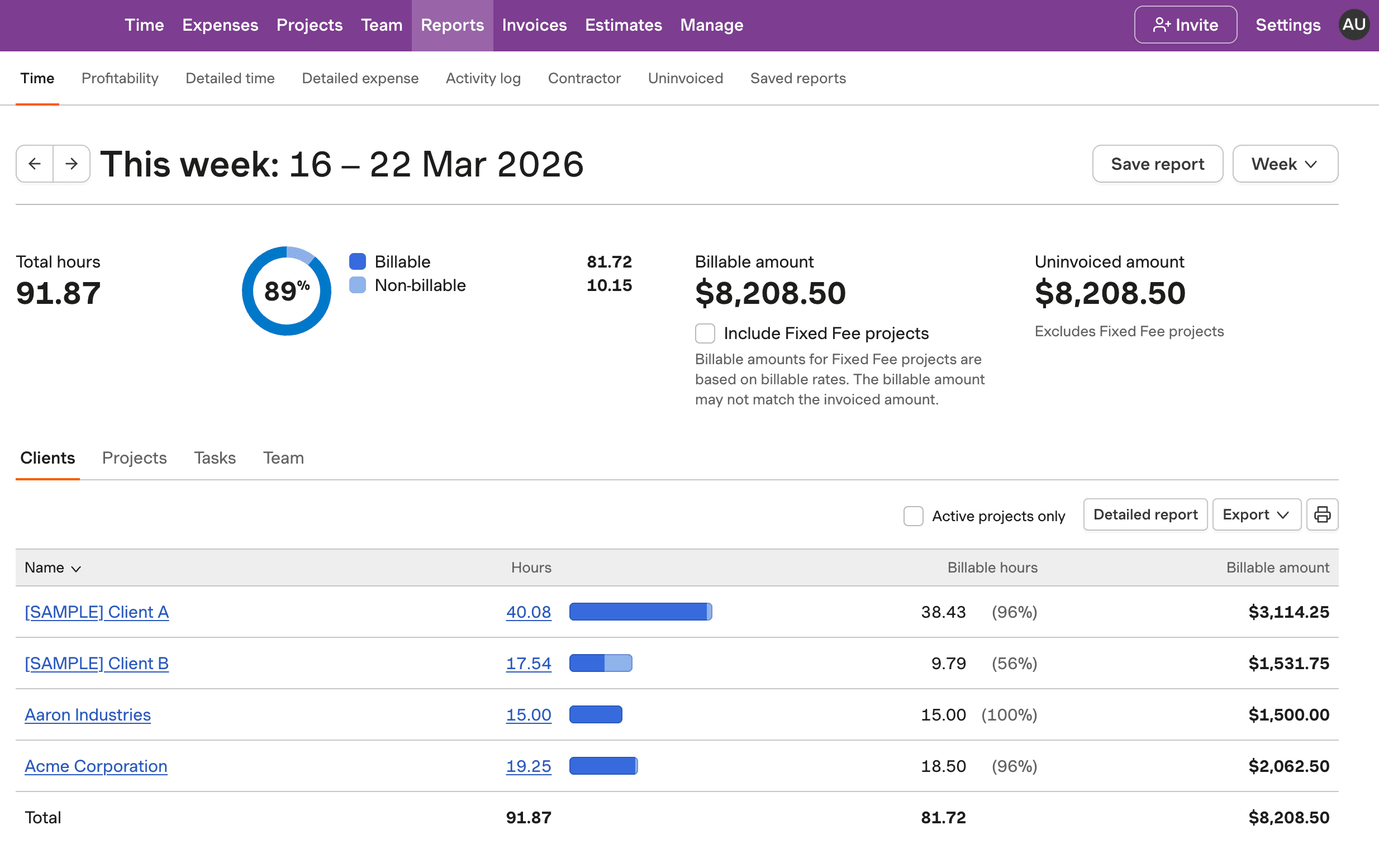
See how Harvest tracks time for e-commerce tasks like product listings and order processing, enhancing productivity and billing management.

Harvest's e-commerce time tracking dashboard with task insights.

Ecommerce Time Tracking FAQs

  • Time tracking enhances productivity by identifying inefficiencies and optimizing workflows. For example, 57% of remote workers report increased productivity when using time management tools. By accurately tracking time, e-commerce teams can streamline order fulfillment and customer service.

  • Look for features like automated time capture, real-time tracking, and seamless integration with e-commerce and accounting platforms. Comprehensive reporting and flexible tracking options for different roles are also essential to meet diverse e-commerce needs.

  • Yes, many time tracking solutions offer a free trial, including Harvest, which provides a 30-day trial without requiring a credit card. This allows businesses to test features like task tracking and integration with e-commerce platforms before committing.

  • Time tracking software like Harvest integrates with e-commerce platforms by automating task creation and streamlining data flow. This ensures accurate billing and efficient operations, helping manage tasks like product listings and order processing.

  • Time tracking must comply with labor laws like the FLSA in the US, which requires record-keeping for non-exempt employees. In the EU, GDPR mandates a legitimate business purpose and employee consent for tracking, ensuring privacy and data protection.

  • Yes, time tracking is ideal for remote e-commerce teams, as it monitors productivity across time zones and roles. Tools like Harvest offer features such as real-time insights and integrations with communication platforms to enhance team collaboration.

  • Time tracking provides data for informed decision-making, helping managers assign tasks effectively and avoid over/understaffing. It ensures projects stay on schedule and within budget, optimizing resource allocation for tasks like marketing and fulfillment.

  • Harvest integrates with Asana to streamline task management, allowing e-commerce teams to track time directly on tasks and projects. This integration helps maintain productivity and ensure efficient workflow management across the team.