
Harvest
Time Tracking
Sign up free

Time Tracking for Designers

Designers often struggle with inaccurate time tracking, impacting billing and productivity. Harvest solves this with easy-to-use tracking and detailed reports.

Try Harvest Free

How much revenue is your team leaving on the table?

Most agencies run at 55-60% utilization. Even a small improvement means significant revenue. See what closing the gap looks like for your team.

Number of people who track billable time
$
Blended rate across roles (junior, senior, lead)
55%
Percentage of total hours that are billable. Industry average is 55-60%.
75%
A realistic target for service businesses is 70-80%.
Monthly revenue gap $0
Revenue at current utilization $0/mo
Revenue at target utilization $0/mo
Extra billable hours needed per person/day 0h
Annual revenue opportunity $0

Start tracking team utilization

Walk through the entire flow below. Start a timer, check your reports, and create a real invoice — all in three clicks.

Go ahead — start tracking!

One click and you're timing. Try it right here: start a timer, add an entry, edit the details. This is exactly how it feels in Harvest.

  • One-click timer from browser, desktop & mobile
  • Works inside Jira, Asana, Trello, GitHub & 50+ tools
  • Duration or start/end — your call
  • Day, week & calendar views to stay on top of it all
  • Friendly reminders so no hour gets left behind
Acme Corp
Website Redesign
Homepage layout revisions
1:24:09
Content Strategy
Blog calendar planning
1:30:00
SEO Audit
Technical audit report
0:45:00
Brand Guidelines
Color system documentation
2:15:00
Logo Concepts
Initial sketches round 1
1:00:00

The Strategic Imperative: Why Designers Need Time Tracking

Time tracking for designers is not just about logging hours; it's a strategic tool that enhances productivity and profitability. In an industry where only 17% of creative professionals manage to track time accurately every day, efficient time tracking becomes a critical asset. By identifying and eliminating inefficiencies — such as time wasted in unproductive meetings — designers can focus more on creative work, which is crucial as 49% of businesses view design as key to success.

Accurate time tracking is essential for both hourly and fixed-fee billing models. It helps prevent underestimating project costs and working for free. For instance, architects, a related profession, spend over half their time on administrative tasks. This highlights the need for tools that streamline these processes, allowing more time for creative endeavors. Ultimately, precise time tracking fosters transparency and trust with clients, reinforcing the value of design work.
Key Features of Time Tracking Tools for Creative Professionals

Designers need time tracking tools that seamlessly integrate with their creative workflows. One of the most sought-after features is integration with design and project management software, enabling smooth data synchronization. Automated tracking and intelligent categorization further enhance efficiency by minimizing manual input, which is crucial in maintaining the creative flow.

Robust reporting and analytics provide actionable insights into how time is spent across different projects and tasks. This helps in refining pricing strategies and optimizing resources, ultimately impacting a design studio's bottom line. A user-friendly interface and mobile accessibility ensure that designers can track time effortlessly, whether in the studio or on the go. With tools like Harvest, designers can track revisions separately from original designs, ensuring accurate billing and project clarity.

Integrating Time Tracking into Your Design Workflow: Best Practices

Implementing time tracking into your design workflow requires strategic setup and regular analysis. Start by defining a clear project structure with a consistent naming convention for clients, projects, and tasks. This organization aids in generating detailed reports that break down hours by task or project phase, offering tangible proof of work for clients.

Leverage automation to minimize manual input and maintain the creative flow. Tools that offer background tracking of application usage are particularly beneficial. Regularly reviewing reports — weekly or monthly — allows you to identify inefficiencies, spot trends, and make informed decisions. Harvest, for example, provides automated reporting features that help designers analyze time spent across various projects, aiding in strategic planning and resource allocation.

Addressing the Creative's Dilemma: Balancing Structure and Freedom

One of the main objections designers have towards time tracking is the fear that it stifles creativity. However, modern solutions like Harvest offer customizable settings that adapt to diverse work styles, preserving creative freedom while ensuring accountability. By focusing on insights rather than micromanagement, designers can use time tracking to enhance their creative processes.

Communicating the benefits of time tracking to your team is vital. Highlight how it can lead to better work-life balance and accurate compensation. This approach fosters a culture of trust and accountability, encouraging creative professionals to embrace time tracking as a tool for personal and professional growth. Harvest's flexible settings and robust reporting capabilities make it an excellent choice for design teams looking to balance structure and freedom.

Time Tracking with Harvest

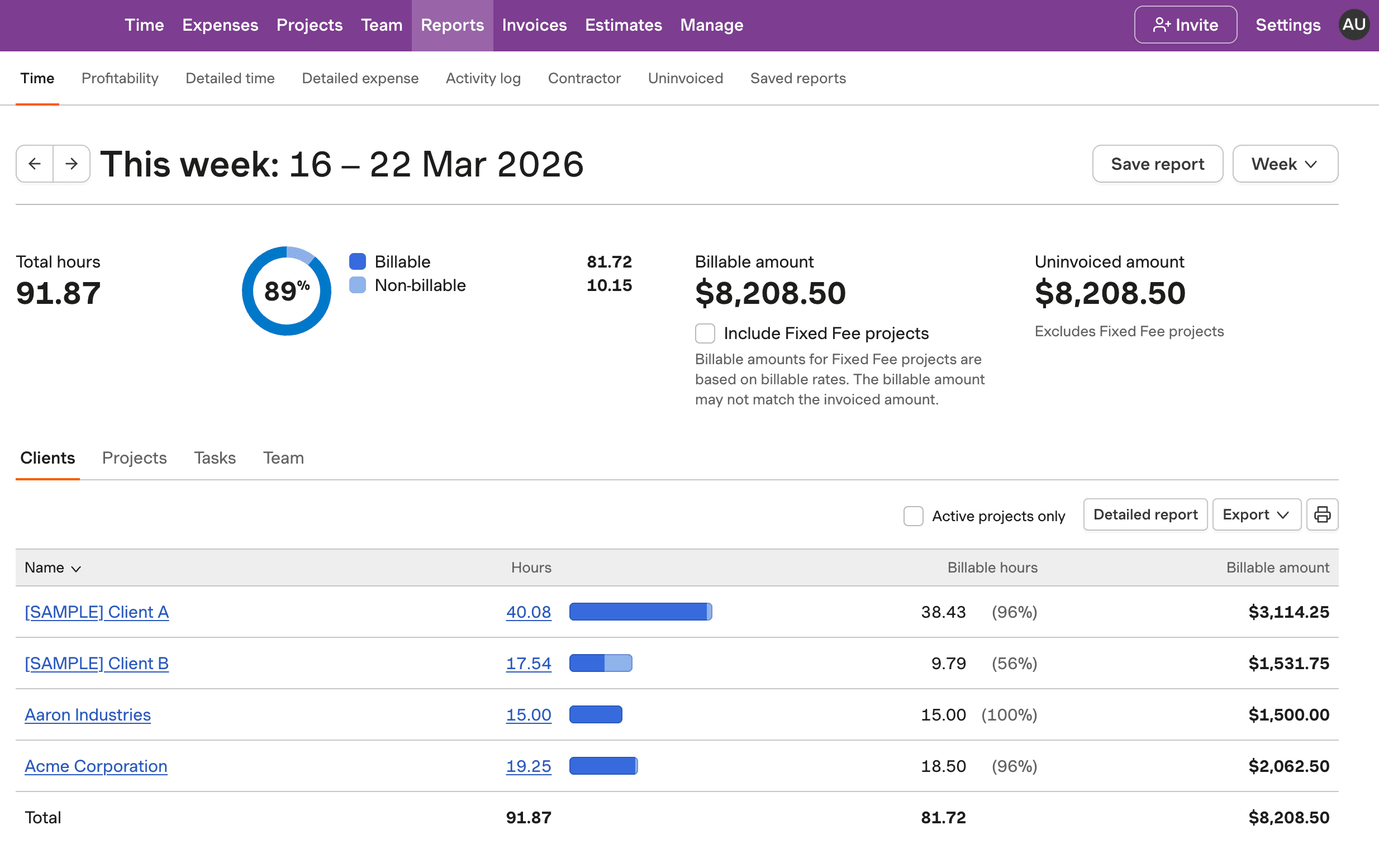
See how Harvest streamlines time tracking for design projects, enhancing billing accuracy and project efficiency.

Harvest time tracking interface for designers

Time Tracking for Designers FAQs

  • Time tracking improves productivity by identifying inefficiencies and helping designers focus on more creative tasks. It highlights time-wasting activities like unproductive meetings, allowing for better resource allocation and project management.

  • Designers should look for tools that integrate seamlessly with design software, offer automated tracking, and provide robust reporting. Harvest, for example, allows tracking of revisions and original designs separately, aiding in accurate billing.

  • Time tracking ensures accurate billing by recording precise hours spent on tasks, including revisions and design phases. This data supports both hourly and fixed-fee billing models, preventing undervaluation of work.

  • Harvest offers flexible billing rates, detailed reporting, and seamless integration with project management tools. These features help designers track time spent on specific tasks and manage collaborative projects efficiently.

  • While some fear it might, modern tools like Harvest offer customizable settings that preserve creative freedom. By focusing on outcomes rather than minute-by-minute tracking, designers can enhance their creative processes and productivity.

  • Harvest integrates with popular project management and design tools, including Asana and Trello. This integration allows for seamless data synchronization and streamlined workflow, enhancing project management for design teams.

  • Yes, there are free options available, but they may lack advanced features like automated reporting and integrations. Harvest offers a free 30-day trial, providing designers with the opportunity to explore its comprehensive features.