
Harvest
Time Tracking
Sign up free

Time Tracking in Sweden

Facing Sweden's strict time tracking laws? Harvest helps employers manage compliance with ease, ensuring accurate record-keeping and payroll integration.

Try Harvest Free

How many hours did you work this week?

Enter your clock-in and clock-out times for each day. The calculator handles breaks, overtime, and weekly totals automatically.

Day Clock In Clock Out Break Hours
Total hours this week 0h
Regular hours (≤40) 0h
Overtime hours 0h
Average hours/day 0h
Total break time 0h

Track time automatically with Harvest

Walk through the entire flow below. Start a timer, check your reports, and create a real invoice — all in three clicks.

Go ahead — start tracking!

One click and you're timing. Try it right here: start a timer, add an entry, edit the details. This is exactly how it feels in Harvest.

  • One-click timer from browser, desktop & mobile
  • Works inside Jira, Asana, Trello, GitHub & 50+ tools
  • Duration or start/end — your call
  • Day, week & calendar views to stay on top of it all
  • Friendly reminders so no hour gets left behind
Acme Corp
Website Redesign
Homepage layout revisions
1:24:09
Content Strategy
Blog calendar planning
1:30:00
SEO Audit
Technical audit report
0:45:00
Brand Guidelines
Color system documentation
2:15:00
Logo Concepts
Initial sketches round 1
1:00:00

Understanding Sweden's Working Hours Act

In Sweden, the Working Hours Act (Arbetstidslag 1982:673) sets the foundation for regulating work hours and ensuring fair labor practices. This act mandates that the standard workweek should not exceed 40 hours, typically spread over five days with a maximum of 8 hours per day. Employers must also comply with overtime regulations, which limit total working hours to an average of 48 hours per week over a four-month period. Additionally, general overtime is capped at 48 hours over a four-week period, with an annual limit of 200 hours per employee.

Rest periods are crucial under this act. Employees are entitled to at least 11 consecutive hours of rest during each 24-hour period, and a weekly rest period of at least 36 consecutive hours, usually over the weekend. Furthermore, employees cannot work over 5 consecutive hours without a break, ensuring a minimum of 30 minutes for meals. On-call time is also regulated, allowing up to 48 hours over four weeks. Implementing a tool like Harvest can help track these hours efficiently, ensuring compliance with these stringent regulations.
The Impact of EU Time Tracking Laws on Swedish Employers

The 2019 ruling by the European Court of Justice (ECJ) requires all EU employers, including those in Sweden, to implement a system that accurately tracks employees' working hours. This includes breaks and overtime to ensure transparency and compliance. The enforcement of this ruling from July 1, 2024, emphasizes the need for objective, reliable, and verifiable systems, aligning with Sweden's tightening approach to time tracking.

Harvest's detailed time tracking capabilities support Swedish employers in complying with these EU requirements by offering an accessible and reliable system. It not only helps in capturing all necessary data but also ensures that records are audit-ready, meeting both local and EU regulations. With features that integrate seamlessly with existing systems, Harvest aids in maintaining GDPR compliance by protecting employee data.

Essential Time Tracking Record-Keeping and Compliance

Employers in Sweden must maintain comprehensive records of employee working hours, including start and end times, breaks, and overtime. These records must be objective and reliable, with a minimum retention period ranging from one to five years, depending on the record type and its purpose. Mismanagement of these records can lead to severe consequences, such as fines or legal actions.

Harvest provides a robust solution for managing these detailed records by allowing employers to create specific tasks for overtime tracking and maintain accuracy. The system's integration capabilities enable easy export of time data for payroll calculations, ensuring compliance with local laws. Moreover, employees have the right to access their time records, and Harvest facilitates this transparency, reinforcing trust and accountability within the workplace.

Time Tracking and Payroll: Navigating Swedish Complexities

Accurate time tracking is essential for proper payroll management in Sweden due to the complexities of various labor laws and agreements. Overtime compensation, sick leave, and absence deductions can vary significantly, often depending on the time of day or day of the week. These complexities are further influenced by Collective Bargaining Agreements (CBAs), which can modify standard pay rates and benefits.

Harvest assists in navigating these complexities by exporting precise time data to integrate with payroll systems, ensuring that payroll calculations are accurate and compliant. Employers can track regular hours, overtime, and even set up internal projects for managing vacation and sick leave, although Harvest does not automatically manage accruals. By using Harvest, employers can effectively manage their payroll processes, reducing errors and ensuring timely employee compensation.

Best Practices for Modern Time Tracking in Sweden

Implementing a modern, reliable time tracking system is crucial for compliance and operational efficiency in Sweden. Automated systems that objectively capture working hours, breaks, and overtime are increasingly expected. Regular audits and employee access to their time records enhance transparency and compliance.

Harvest offers a comprehensive digital solution that ensures objective, reliable, and auditable time tracking, aligning with both Swedish and EU legal requirements. Employers are encouraged to communicate policies clearly and consult CBAs to ensure all specific industry requirements are met. With Harvest, organizations can establish clear internal policies, automate data capture, and maintain compliance with minimal manual intervention, optimizing both time management and employee satisfaction.

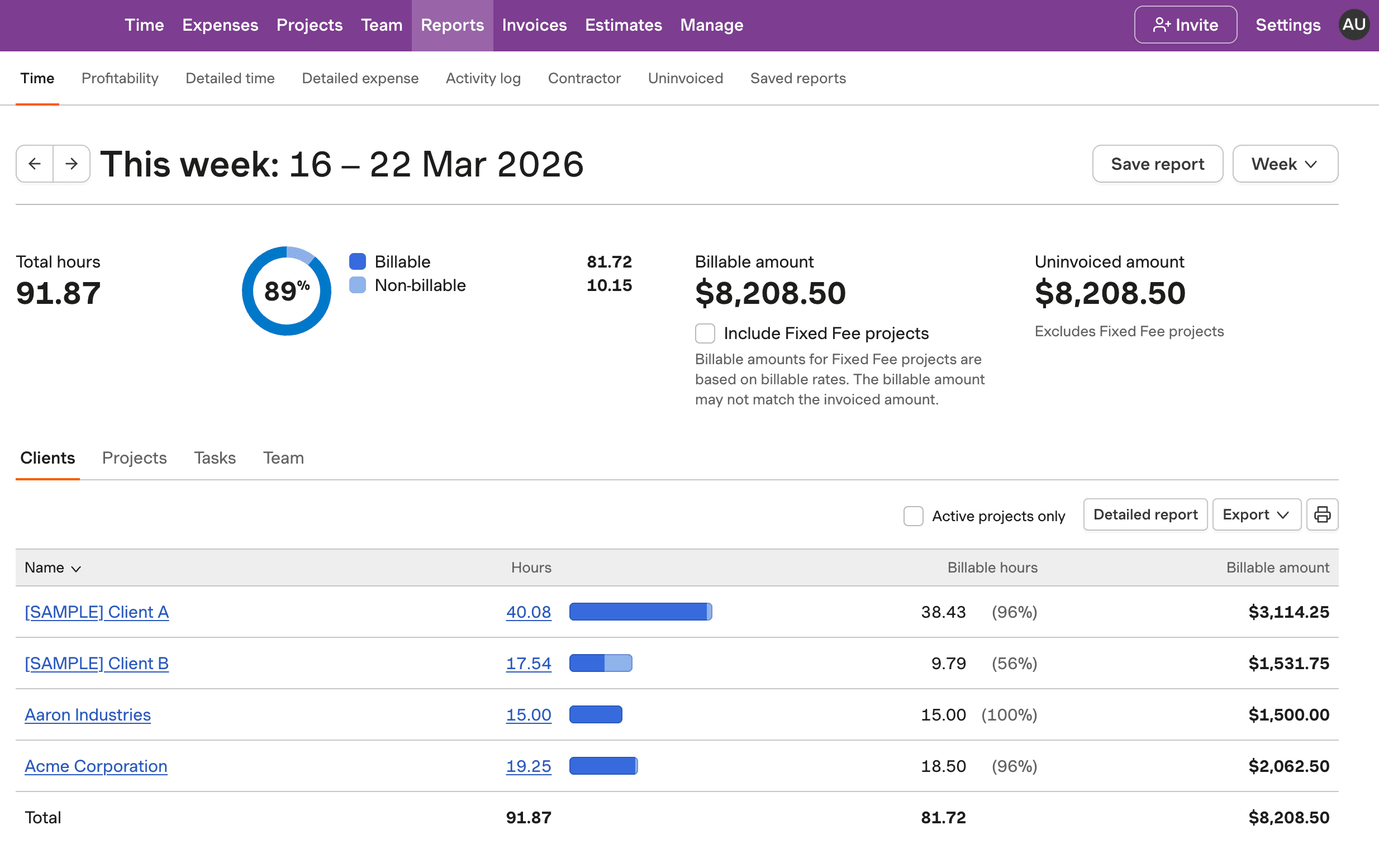
Time Tracking Compliance with Harvest

See how Harvest ensures compliance with Sweden's time tracking laws, featuring accurate logs and payroll integration.

Harvest time tracking dashboard for Sweden's compliance

Time Tracking in Sweden FAQs

  • In Sweden, the Working Hours Act regulates working hours, including a standard 40-hour workweek and limitations on overtime. Employers must maintain accurate records of working hours, breaks, and overtime, ensuring compliance with both Swedish and EU regulations.

  • The EU time tracking law mandates that employers implement a system to accurately track working hours, including breaks and overtime. This regulation, effective from July 1, 2024, requires systems to be objective, reliable, and auditable, aligning with Sweden's tightening approach to labor compliance.

  • Swedish employers must keep detailed records of start and end times, overtime, breaks, and on-call time. These records should be objective and reliable, with a minimum retention period of one to five years, depending on the data type.

  • Accurate time tracking is crucial for payroll calculations in Sweden, affecting factors like overtime compensation, sick leave, and absence deductions. Harvest helps by providing accurate time data that integrates seamlessly with payroll systems, ensuring compliance and precision.

  • The Swedish Working Hours Act mandates a daily rest of at least 11 consecutive hours and a weekly rest period of at least 36 consecutive hours. Employees cannot work more than 5 consecutive hours without a break, ensuring fairness and compliance.

  • Yes, Harvest offers flexible time tracking solutions that help Swedish employers comply with local labor laws. It ensures accurate record-keeping and payroll integration, supporting compliance with both Swedish and EU regulations.

  • In Sweden, Collective Bargaining Agreements (CBAs) can modify the standard Working Hours Act, influencing overtime pay and leave. Employers must consult CBAs alongside the law to ensure full compliance and benefit alignment.