
Harvest
Time Tracking
Sign up free

Billable Hours Calculator for Agencies

Harvest is the ideal solution for agencies needing to optimize billable hours tracking, helping to reduce undercharging by nearly 50% due to non-billable time.

Try Harvest Free

How much revenue is your team leaving on the table?

Most agencies run at 55-60% utilization. Even a small improvement means significant revenue. See what closing the gap looks like for your team.

Number of people who track billable time
$
Blended rate across roles (junior, senior, lead)
55%
Percentage of total hours that are billable. Industry average is 55-60%.
75%
A realistic target for service businesses is 70-80%.
Monthly revenue gap $0
Revenue at current utilization $0/mo
Revenue at target utilization $0/mo
Extra billable hours needed per person/day 0h
Annual revenue opportunity $0

Start tracking team utilization

Walk through the entire flow below. Start a timer, check your reports, and create a real invoice — all in three clicks.

Go ahead — start tracking!

One click and you're timing. Try it right here: start a timer, add an entry, edit the details. This is exactly how it feels in Harvest.

  • One-click timer from browser, desktop & mobile
  • Works inside Jira, Asana, Trello, GitHub & 50+ tools
  • Duration or start/end — your call
  • Day, week & calendar views to stay on top of it all
  • Friendly reminders so no hour gets left behind
Acme Corp
Website Redesign
Homepage layout revisions
1:24:09
Content Strategy
Blog calendar planning
1:30:00
SEO Audit
Technical audit report
0:45:00
Brand Guidelines
Color system documentation
2:15:00
Logo Concepts
Initial sketches round 1
1:00:00

Understanding Billable vs. Non-Billable Hours

Billable hours are the cornerstone of agency profitability, representing time spent directly on client projects. These hours are charged to clients and contribute to revenue generation. In contrast, non-billable hours involve essential tasks like administrative work, internal meetings, and business development, which cannot be billed to clients. Understanding the distinction between these two categories is crucial for agency health, as misallocating time can lead to undercharging and reduced profitability.

Effective management of billable and non-billable hours is vital to maintain agency profitability. Agencies typically aim to bill 60-70% of their time, acknowledging that 30-40% will be consumed by non-billable activities. However, failing to account for non-billable time in pricing can lead to charging 40-60% more per billable hour just to cover these costs. By clearly defining and tracking these hours, agencies can ensure accurate billing and financial health.
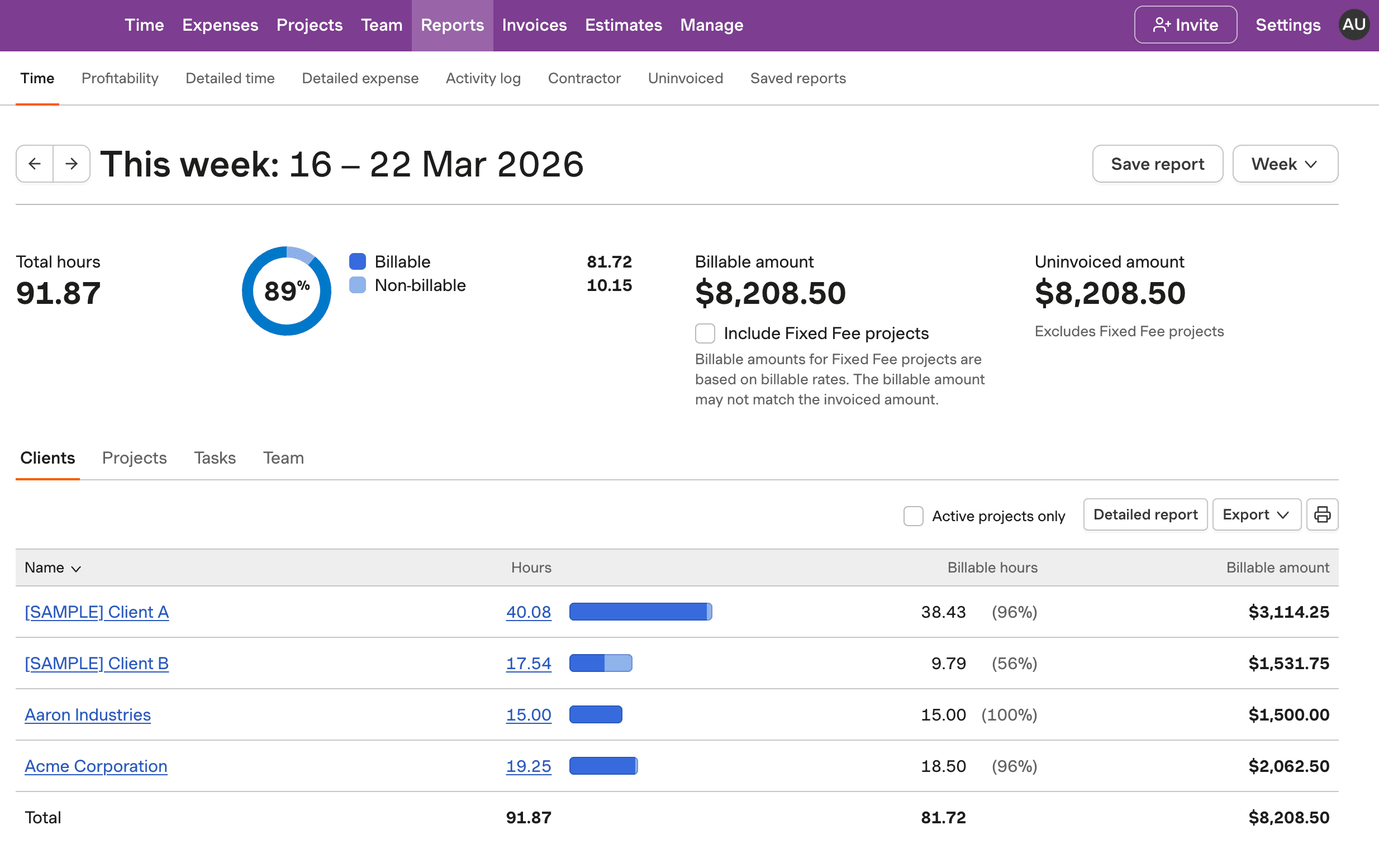
Calculating Your Agency's True Hourly Rate

To calculate a viable hourly rate, agencies must consider not only direct costs but also overhead, non-billable time, and desired profit margins. The national average hourly rate for digital marketing agencies is $82.66, with full-service agencies charging between $165 and $225 per hour. These rates must cover expenses such as rent, utilities, and insurance, as well as provide a profit margin.

Ignoring the cost of non-billable hours can significantly impact profitability. For instance, if 30% of time is non-billable, an agency needs to adjust its rates to ensure that these costs are accounted for. Utilizing metrics like the Actual Cost Per Hour (ACPH) and Average Billable Rate (ABR) can help agencies set competitive and profitable rates, ensuring that all business costs are covered while maintaining market competitiveness.

Mastering Time Tracking for Agencies

Accurate time tracking is essential for agencies to manage billable and non-billable hours effectively. Agencies should encourage daily logging at a task level, as weekly reporting can underestimate billable hours by 5-15%. This granular approach helps identify scope creep and justify rate adjustments.

Implementing user-friendly time tracking software, like Harvest, which integrates with project management tools, can streamline this process. Harvest not only allows differentiation between billable and non-billable hours but also provides detailed reports that inform project management decisions. Regular review of this data supports strategic decision-making and helps identify inefficiencies, ultimately leading to improved productivity and profitability.

Optimizing Utilization for Agency Growth

Utilization rate, calculated by dividing billable hours by total available hours, is a key metric for agency success. Most client-facing roles should aim for a utilization rate of 70-85%, with high-performing agencies maintaining rates between 70% and 80%.

Improving utilization starts with reducing non-essential non-billable tasks and streamlining processes. Harvest's detailed team utilization reports enable agencies to optimize employee productivity and make informed resource allocation decisions. By leveraging accurate time data, agencies can enhance project forecasting and strategic planning, leading to sustainable growth and increased profitability.

Billable Hours Calculator with Harvest

See how Harvest helps agencies calculate billable hours, track time, and improve profitability with detailed reporting.

Harvest billable hours calculator for agencies screenshot

Billable Hours Calculator for Agencies FAQs

  • Billable hours are those that can be directly charged to clients, encompassing time spent on client projects and activities. This is crucial for generating revenue and maintaining profitability.

  • Billable hours include client-facing work like project deliverables, while non-billable hours cover tasks like administration and internal meetings. Harvest helps differentiate these through clear time tracking.

  • To calculate an ideal hourly rate, consider direct costs, overhead, and non-billable time. Use metrics like the Actual Cost Per Hour and Average Billable Rate to set competitive rates.

  • A good utilization rate for agencies is typically between 70-85% for client-facing roles. High-performing agencies aim for 70-80% utilization to balance workload and employee well-being.

  • Harvest offers robust tools for tracking billable hours. It provides detailed reports, differentiates between billable and non-billable hours, and integrates with project management tools to streamline processes.

  • Increase billable hours by streamlining workflows, reducing non-essential tasks, and using tools like Harvest to track time efficiently. Regular review of time data can identify opportunities for improvement.

  • Non-billable hours can impact profitability by increasing the effective cost of billable hours. Agencies need to account for this in pricing strategies to ensure all costs are covered.

  • Yes, Harvest provides detailed utilization reports that help agencies track and optimize employee productivity, ensuring that utilization rates align with industry benchmarks.