
Harvest
Time Tracking
Sign up free

Comprehensive Overtime Calculator

Calculate overtime with confidence. Harvest tracks every hour worked, making it easy to identify overtime and apply the right pay rates.

Try Harvest Free

What will your overtime pay be?

Calculate regular and overtime earnings based on your hours and rate. Supports standard time-and-a-half and double-time multipliers.

$
Standard is 40 hours/week (FLSA threshold)
1.5x
1.5x = time and a half (most common). 2x = double time (CA after 12h, holidays).
Some states require 2x pay after 12 hours/day or on 7th consecutive day.
Total gross pay $0
Regular pay $0
Overtime pay (1.5x) $0
Double-time pay (2x) $0
Effective hourly rate $0

Track overtime hours with Harvest

Walk through the entire flow below. Start a timer, check your reports, and create a real invoice — all in three clicks.

Go ahead — start tracking!

One click and you're timing. Try it right here: start a timer, add an entry, edit the details. This is exactly how it feels in Harvest.

  • One-click timer from browser, desktop & mobile
  • Works inside Jira, Asana, Trello, GitHub & 50+ tools
  • Duration or start/end — your call
  • Day, week & calendar views to stay on top of it all
  • Friendly reminders so no hour gets left behind
Acme Corp
Website Redesign
Homepage layout revisions
1:24:09
Content Strategy
Blog calendar planning
1:30:00
SEO Audit
Technical audit report
0:45:00
Brand Guidelines
Color system documentation
2:15:00
Logo Concepts
Initial sketches round 1
1:00:00

Understanding Overtime Pay Calculations

Overtime pay calculations are a critical aspect of payroll management, ensuring employees are fairly compensated for hours worked beyond the standard workweek. Under the Fair Labor Standards Act (FLSA), most non-exempt employees must receive overtime pay at 1.5 times their regular pay rate for hours worked over 40 in a single workweek. This federal standard ensures workers are compensated for additional hours, but the requirements can vary by state, with some states mandating daily overtime pay.

Several factors influence overtime calculations. Non-discretionary bonuses, shift differentials, and commissions are included in the regular pay rate, affecting the overtime rate. For example, in California, employees earn 1.5 times their rate after working over 8 hours in a day, with double time after 12 hours. Employers must keep accurate, detailed records of hours worked to comply with these laws. Harvest can assist in time tracking but is not designed for automatic overtime calculations.
State-Specific Overtime Regulations

While the FLSA provides a federal baseline for overtime, each state can impose additional regulations. States like California and Alaska require overtime pay after 8 hours in a workday, while Colorado demands overtime pay after 12 hours. These local laws often favor employees more than federal standards, necessitating that employers comply with the most stringent rules applicable.

Employers must stay informed about these variations to avoid legal complications. For instance, California mandates double-time pay after 12 hours of work or on the seventh consecutive day of the workweek. Employers should regularly review state-specific overtime laws to ensure compliance and benefit from tools like Harvest for time tracking, though it doesn’t automate these calculations.

Calculating Overtime for Salaried Employees

Calculating overtime for salaried non-exempt employees involves converting the salary into an hourly rate. This process requires dividing the weekly salary by the total hours worked within that week. When computing overtime, the regular rate must include any non-discretionary bonuses or commissions. For example, if a salaried employee earns $684 per week (the minimum for exemption as of 2019) and works 46 hours, the overtime calculation would factor in the regular rate and additional hours worked.

It’s crucial to accurately track these hours to ensure proper compensation. Employers must calculate the overtime premium and add it to the base pay for any additional hours. Using a comprehensive tool to manage hours, like Harvest, helps maintain accurate records, though it’s not designed for payroll compliance.

Best Practices for Managing Overtime

Effective overtime management requires precise time tracking and a clear understanding of regulatory requirements. Employers should confirm employee classifications—exempt versus non-exempt—to ensure correct pay practices. Establishing robust time-tracking systems, like those offered by Harvest, aids in monitoring employee hours and preventing unapproved overtime.

Regularly updating knowledge of both federal and state overtime laws is essential for compliance. Employers should define a consistent workweek and adhere to it, as well as ensure all hours that count as 'worked' are accurately recorded. By implementing these best practices, businesses can avoid legal pitfalls and maintain fair compensation structures.

Comprehensive Overtime Calculator with Harvest

Explore Harvest's precise time tracking features to support accurate overtime calculations and payroll compliance.

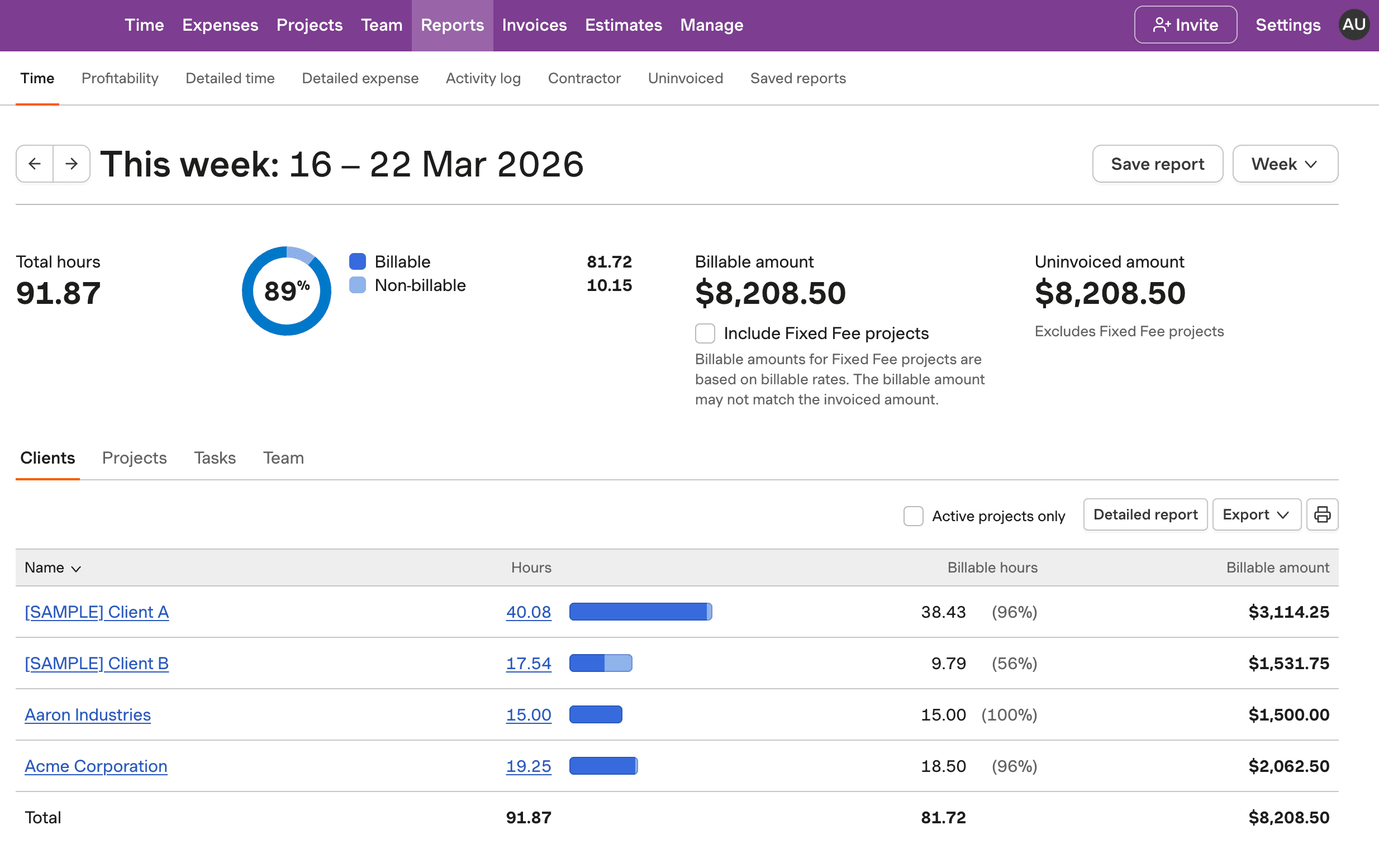
Harvest comprehensive overtime calculator interface screenshot

Comprehensive Overtime Calculator FAQs

  • Overtime pay calculations are affected by the employee's regular rate of pay, which includes hourly wages, non-discretionary bonuses, and commissions. State laws may also impose additional rules, such as daily overtime requirements.

  • State laws can vary significantly, with some requiring daily overtime pay or differing rates. For instance, California requires overtime after 8 hours in a day, while Colorado requires overtime after 12 hours. Employers must comply with the most favorable law to employees.

  • Exempt employees are not entitled to overtime pay and typically hold executive or professional roles, meeting specific salary and duties tests. Non-exempt employees must receive overtime pay for hours worked beyond 40 in a workweek under FLSA rules.

  • To calculate overtime for salaried non-exempt employees, convert their salary to an hourly rate. Divide the weekly salary by hours worked, then apply the overtime premium rate (1.5 times) for hours over 40 in the workweek.

  • Non-discretionary bonuses, shift differentials, and commissions are included in calculating an employee's regular rate of pay, thus impacting overtime calculations. They must be factored into the total earnings before computing the overtime rate.

  • To calculate overtime pay, determine the regular rate, then apply the overtime rate of 1.5 times for hours over 40 in a workweek. Include any bonuses or commissions in the regular rate calculation to ensure accuracy.

  • Yes, under the FLSA, federal and state government employees are eligible for overtime pay, provided they are classified as non-exempt. They must receive overtime for hours worked over 40 in a week.

  • Harvest excels in time tracking and management but does not automate overtime calculations. It provides tools for precise time tracking which supports accurate payroll processing.