
Harvest
Time Tracking
Sign up free

Legal Billing Calculator in Spain

Harvest is an invaluable tool for tracking billable hours and expenses in compliance with Spanish legal billing standards, helping professionals manage VAT and withholding efficiently.

Try Harvest Free

Will this project be profitable?

Estimate your project cost, set the right price, and know exactly how many hours your team can spend before margin disappears.

Total hours across all team members
$
Average rate across all roles on the project
15%
Scope creep is real. Most projects need 10-25% buffer to stay profitable.
Recommended project price $0
Base cost (before buffer) $0
Hours per person per week 0h
Weekly burn rate $0
Max hours before loss 0h

Track project hours with Harvest

Walk through the entire flow below. Start a timer, check your reports, and create a real invoice — all in three clicks.

Go ahead — start tracking!

One click and you're timing. Try it right here: start a timer, add an entry, edit the details. This is exactly how it feels in Harvest.

  • One-click timer from browser, desktop & mobile
  • Works inside Jira, Asana, Trello, GitHub & 50+ tools
  • Duration or start/end — your call
  • Day, week & calendar views to stay on top of it all
  • Friendly reminders so no hour gets left behind
Acme Corp
Website Redesign
Homepage layout revisions
1:24:09
Content Strategy
Blog calendar planning
1:30:00
SEO Audit
Technical audit report
0:45:00
Brand Guidelines
Color system documentation
2:15:00
Logo Concepts
Initial sketches round 1
1:00:00

Understanding Legal Fees in Spain: The Basics

Legal billing in Spain involves several unique aspects that professionals must understand to ensure compliance and transparency. Spanish lawyer fees, known as "honorarios," are not strictly regulated at the national level, except for certain state-provided legal aid cases. Each province's Bar Association offers non-mandatory guideline fee tables, which serve as reference points for benchmarking fees.

All legal services in Spain are subject to a standard Value Added Tax (IVA) of 21%. This VAT applies to professional fees and is an essential consideration when calculating total costs. Additionally, certain cases require both an abogado (lawyer) and a procurador (court representative), with the latter's fees being legally regulated.

Understanding these basics is crucial for any legal professional or client navigating the Spanish legal system, ensuring all billing is legally compliant and transparent.
Common Legal Billing Structures and Their Implications

Legal billing in Spain can take several forms, each with its own implications. Fixed fees are common for predictable services like will drafting or property transactions, providing clients with a clear cost estimate upfront. Hourly rates can vary significantly; for example, lawyers in Madrid or Barcelona may charge €150 to €400 per hour, while those in smaller regions might charge €100 to €200 per hour.

Contingency fees, or cuota litis, are permitted in civil and commercial matters, typically ranging from 10% to 30% of the recovery. These arrangements are barred in criminal or family cases. Retainer agreements require upfront deposits, giving clients a sense of security regarding future legal expenses.

It's essential to understand these billing structures to negotiate effectively and manage legal expenses within Spain's legal system.

Calculating Costs for Specific Legal Services

Calculating costs for specific legal services in Spain requires understanding various billing methods and associated expenses. For example, property transactions incur lawyer fees of 0.5% to 2% of the property value, plus additional taxes like Property Transfer Tax (ITP) and Stamp Duty (AJD), which vary by region.

Inheritance proceedings can range from 1% to 2.5% of the estate's value, reflecting the complexity of the case and the number of heirs. Similarly, company formation costs between €900 and €2,500, excluding government and notary fees.

Knowing these cost structures helps clients anticipate expenses and budget effectively, ensuring they are not caught off guard by unexpected costs.

Navigating Litigation: Cost Recovery and Disputes

In Spanish litigation, understanding cost recovery is crucial for managing legal expenses. The principle of "costas" means that the losing party in a civil case may be ordered to pay the winning party's legal costs. However, the recoverable amount is capped, typically not exceeding one-third of the proceedings' value.

Disbursements, such as court filing fees and expert reports, are often billed separately but can be included in cost recovery if documented correctly. Clients should discuss the prospects of cost recovery with their lawyers before proceeding with litigation to ensure realistic expectations.

Challenging fee assessments is another aspect of navigating legal costs, and having a clear, written agreement from the outset can mitigate disputes.

Best Practices for Managing Legal Expenses in Spain

Managing legal expenses in Spain effectively involves several best practices. Clients should always request detailed written estimates for services and potential extra costs, including VAT and disbursements. This transparency helps avoid misunderstandings and unexpected expenses.

Negotiating fees is often possible, particularly with fixed-fee arrangements or retainer agreements. Clients should also budget for unforeseen expenses, as disbursements are typically separate from professional fees.

Additionally, legal protection insurance can cover some legal costs, and certain fees may be tax-deductible as business expenses. These strategies help manage legal expenses, ensuring they remain within budget and compliant with Spanish regulations.

Legal Billing with Harvest in Spain

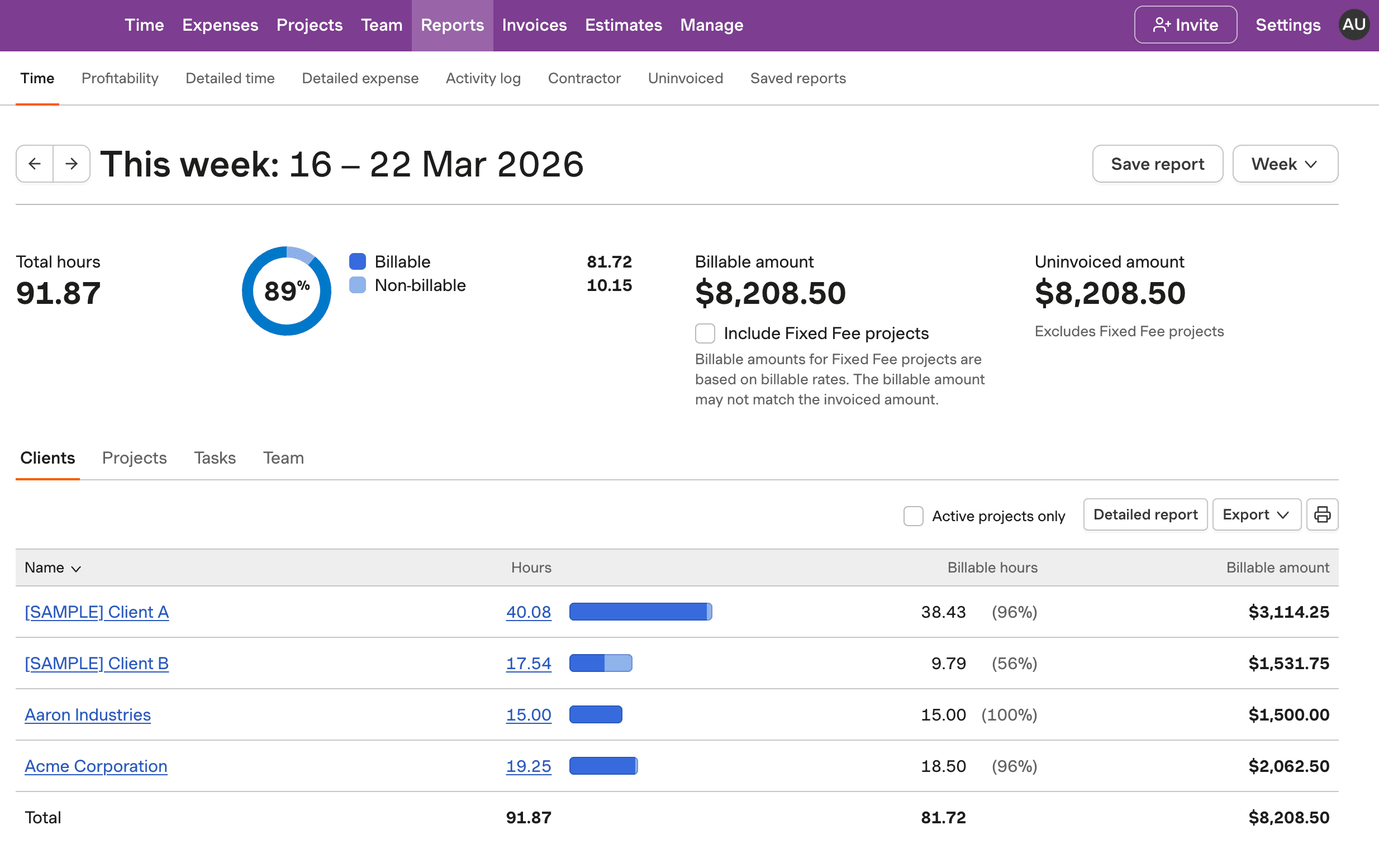
See how Harvest tracks hours and expenses for legal billing in Spain, ensuring compliance with VAT and withholding regulations.

Harvest legal billing tool showing VAT and withholding calculations for Spain.

Legal Billing Calculator in Spain FAQs

  • The VAT rate on legal services in Spain is 21%. This standard IVA rate applies to all professional legal fees, ensuring compliance with tax regulations.

  • Yes, lawyer fees in Spain are generally negotiable. Clients can discuss and agree on fees with their lawyer before engagement, especially for fixed-fee or retainer agreements.

  • Withholding for legal invoices can be calculated by applying the relevant percentage to the total fee before VAT. It's essential to comply with Spanish tax regulations when calculating these amounts.

  • A legal invoice in Spain must include the lawyer's name, identification number, client details, description of services, fees, applicable VAT, and total amount payable. This ensures compliance with legal standards.

  • Harvest assists with legal billing by allowing professionals to track billable hours and expenses, adaptable to Spanish standards, including VAT and withholding calculations.

  • In Spain, the losing party may be ordered to pay the winning party's legal costs. However, recovery is often capped and governed by specific rules like the "one-third rule."

  • Common billing methods include fixed fees, hourly rates, contingency fees, and retainer agreements. Each method has its own advantages depending on the service type and client needs.

  • A retainer agreement requires an upfront deposit for legal services, providing clients with security and lawyers with assurance of payment for future work.

  • Court costs in Spain, regulated by Ley 10/2012, consist of fixed and variable amounts, with exemptions for certain cases. They contribute to the overall cost of litigation.