
Harvest
Time Tracking
Sign up free

Overtime Calculator for Montana

Harvest simplifies overtime tracking with manual entry capabilities, ensuring compliance with Montana's labor laws by allowing accurate time logging and pay calculations.

Try Harvest Free

What will your overtime pay be?

Calculate regular and overtime earnings based on your hours and rate. Supports standard time-and-a-half and double-time multipliers.

$
Standard is 40 hours/week (FLSA threshold)
1.5x
1.5x = time and a half (most common). 2x = double time (CA after 12h, holidays).
Some states require 2x pay after 12 hours/day or on 7th consecutive day.
Total gross pay $0
Regular pay $0
Overtime pay (1.5x) $0
Double-time pay (2x) $0
Effective hourly rate $0

Track overtime hours with Harvest

Walk through the entire flow below. Start a timer, check your reports, and create a real invoice — all in three clicks.

Go ahead — start tracking!

One click and you're timing. Try it right here: start a timer, add an entry, edit the details. This is exactly how it feels in Harvest.

  • One-click timer from browser, desktop & mobile
  • Works inside Jira, Asana, Trello, GitHub & 50+ tools
  • Duration or start/end — your call
  • Day, week & calendar views to stay on top of it all
  • Friendly reminders so no hour gets left behind
Acme Corp
Website Redesign
Homepage layout revisions
1:24:09
Content Strategy
Blog calendar planning
1:30:00
SEO Audit
Technical audit report
0:45:00
Brand Guidelines
Color system documentation
2:15:00
Logo Concepts
Initial sketches round 1
1:00:00

Understanding Montana's Overtime Fundamentals

Montana's overtime laws require that non-exempt employees receive overtime pay for hours worked over 40 in a single workweek. This is calculated at 1.5 times the employee's regular hourly rate, a practice often referred to as "time and a half." Unlike some states, Montana does not require daily overtime or special rates for weekends or holidays unless these hours exceed the 40-hour weekly threshold. Understanding these rules is crucial for both employers and employees to ensure compliance and proper compensation.

Montana's overtime regulations are guided by the Montana Code Annotated § 39-3-405, which operates alongside the federal Fair Labor Standards Act (FLSA). The more employee-favorable law prevails when there are differences between state and federal standards. For instance, the minimum wage in Montana is set to rise to $10.85 per hour in 2026 for businesses with gross annual sales over $110,000. Employers must be vigilant in applying the correct standards to avoid penalties, which may include up to 110% of the owed wages in cases of violation.
Calculating Overtime Pay in Montana

To accurately calculate overtime pay in Montana, employees must first identify their regular rate of pay, which includes hourly wages and other compensation like commissions and bonuses. For hours worked beyond 40 in a workweek, the overtime rate is 1.5 times this regular rate. For instance, if an employee makes $15 per hour, their overtime rate would be $22.50 per hour.

In situations involving multiple pay rates, a weighted average method is used. This involves summing all earnings from different rates, dividing by total hours worked to find an average rate, and then applying the 1.5 multiplier for overtime hours. Employees should also note that non-worked hours, such as holidays or sick leave, do not count toward the 40-hour threshold for overtime eligibility.

Exemptions and Special Considerations for Overtime

While most employees in Montana are entitled to overtime pay, exemptions exist for certain roles and industries. For example, agricultural workers and specific salespeople may be exempt from these rules. Additionally, employees in the public sector may receive compensatory time instead of overtime pay, as long as it accrues at 1.5 hours for each hour of overtime worked. Seasonal student workers at camps or recreational facilities can work up to 48 hours per week without triggering overtime, provided meals and lodging are included.

Employers must ensure proper classification of employees to avoid misclassification penalties. For instance, computer employees earning at least $27.63 per hour may be exempt under certain conditions. Accurate record-keeping and regular audits of employee classifications and payroll practices can prevent costly legal issues and ensure compliance with both state and federal laws.

Using an Overtime Calculator in Montana

An effective overtime calculator for Montana should allow users to enter their regular hourly rate, hours worked, and any additional compensation to compute their due overtime pay. Such a tool simplifies compliance with Montana's labor laws by automatically applying the 1.5x overtime rate to hours worked beyond the 40-hour workweek.

Employers and employees can benefit from calculators that incorporate state-specific guidelines, ensuring accuracy and efficiency. These tools can also help clarify complex scenarios, such as calculating overtime with multiple pay rates or when commissions are involved. Adopting a calculator that aligns with Montana's regulations helps avoid errors and ensures legal compliance.

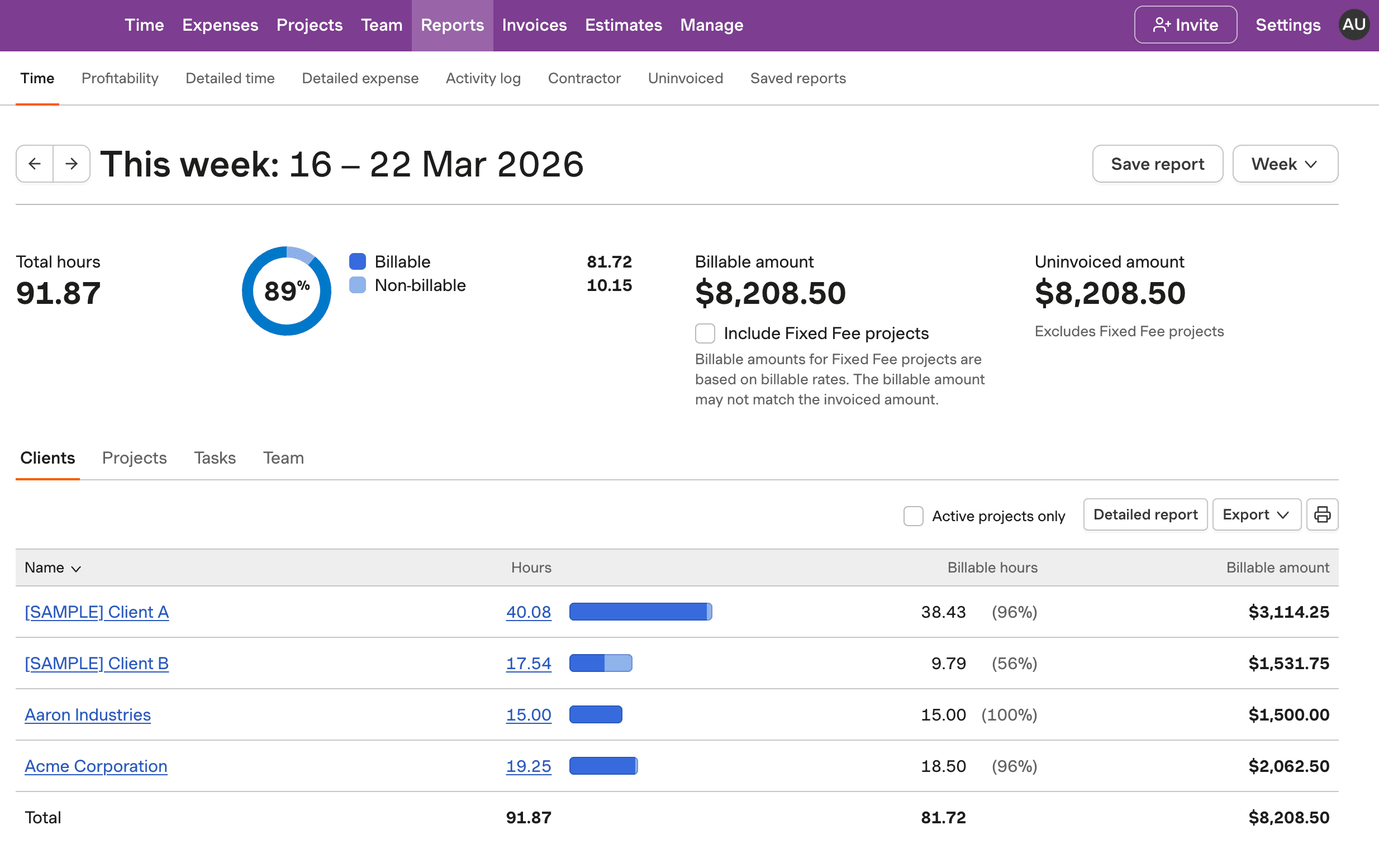
Harvest Overtime Tracking

See how Harvest helps track overtime hours in Montana with manual entry features, ensuring compliance with state labor laws.

Screenshot showing Harvest's manual overtime tracking for Montana.

Overtime Calculator for Montana FAQs

  • In Montana, non-exempt employees must receive overtime pay for all hours worked over 40 in a single workweek. This is calculated at 1.5 times their regular hourly rate.

  • For multiple pay rates, the weighted average method is used. Add all earnings from different rates, divide by total hours worked to find the average rate, then apply the 1.5x multiplier for overtime hours.

  • Salaried employees are not automatically exempt from overtime. Eligibility depends on their job duties, responsibilities, and whether they meet federal salary thresholds under the FLSA.

  • Yes, employers in Montana can require overtime work. However, they must properly compensate employees for all overtime hours worked beyond the 40-hour workweek threshold.

  • Harvest allows for manual tracking of overtime through customizable tasks and setting different billable rates for overtime hours, but it does not automate state-specific calculations.

  • In the private sector, employees cannot opt for comp time instead of overtime pay. Public sector employees may receive comp time at a rate of 1.5 hours per overtime hour worked, if agreed in advance.

  • Employers face penalties such as wage claims and back pay demands. They may also incur penalties up to 110% of the owed wages if found guilty of denying proper overtime pay.