
Harvest
Time Tracking
Sign up free

Overtime Laws by State

Navigating overtime laws can be complex, but Harvest's flexible time tracking helps streamline compliance without enforcing state-specific rules.

Try Harvest Free

What will your overtime pay be?

Calculate regular and overtime earnings based on your hours and rate. Supports standard time-and-a-half and double-time multipliers.

$
Standard is 40 hours/week (FLSA threshold)
1.5x
1.5x = time and a half (most common). 2x = double time (CA after 12h, holidays).
Some states require 2x pay after 12 hours/day or on 7th consecutive day.
Total gross pay $0
Regular pay $0
Overtime pay (1.5x) $0
Double-time pay (2x) $0
Effective hourly rate $0

Track overtime hours with Harvest

Walk through the entire flow below. Start a timer, check your reports, and create a real invoice — all in three clicks.

Go ahead — start tracking!

One click and you're timing. Try it right here: start a timer, add an entry, edit the details. This is exactly how it feels in Harvest.

  • One-click timer from browser, desktop & mobile
  • Works inside Jira, Asana, Trello, GitHub & 50+ tools
  • Duration or start/end — your call
  • Day, week & calendar views to stay on top of it all
  • Friendly reminders so no hour gets left behind
Acme Corp
Website Redesign
Homepage layout revisions
1:24:09
Content Strategy
Blog calendar planning
1:30:00
SEO Audit
Technical audit report
0:45:00
Brand Guidelines
Color system documentation
2:15:00
Logo Concepts
Initial sketches round 1
1:00:00

Understanding State-Specific Overtime Laws

State-specific overtime laws provide unique regulations that employers and employees must adhere to, making compliance a complex process. While the federal Fair Labor Standards Act (FLSA) establishes a baseline requiring overtime pay at 1.5 times the regular rate for hours over 40 in a workweek, many states impose stricter rules. For instance, states like California and Colorado mandate daily overtime pay, with California also requiring double time for hours over 12 in a day or over 8 hours on a seventh consecutive workday. Employers must navigate these nuances to ensure fair compensation and legal compliance.

California's requirements are particularly stringent, requiring double time for hours beyond 12 in a workday. In contrast, Alaska and Nevada also require overtime pay for hours beyond 8 in a single day. Such variations necessitate that employers understand the specific laws applicable to their workforce. Employers must also consider industry-specific exemptions, such as those in agriculture or healthcare, which may alter standard overtime obligations.
Impact of Overtime Laws on Invoicing and Billing

Overtime laws directly affect how businesses bill clients for labor-intensive services. Accurate invoicing is essential to comply with both federal and state overtime regulations. Invoices should itemize regular and overtime hours, clearly distinguishing between different pay rates. For example, an invoice might list regular hours at a standard rate and overtime hours at 1.5 or 2 times that rate, as per state laws.

Employers must include specific fields in their invoices, such as employee names, a description of work performed, and the breakdown of hours. This transparency not only meets legal requirements but also reassures clients about the legitimacy of billed overtime. By adhering to these practices, businesses can maintain compliance and foster trust with their clients.

Navigating Tax Implications of Overtime Wages

Overtime wages come with specific tax implications that both employers and employees must understand. Generally, overtime wages are subject to the same federal income, Social Security, and Medicare taxes as regular wages. However, starting in 2025, employees may be eligible for a federal deduction on overtime pay, allowing them to deduct up to $12,500 (or $25,000 for joint filers) from their taxable income. This deduction applies to the 'half' portion of time-and-a-half pay.

State taxes also apply unless a state has specific provisions. For instance, Colorado has chosen not to adopt the federal deduction, maintaining its standard tax practices. Employers should continue to withhold taxes as usual, with employees realizing these benefits when filing their annual returns.

Ensuring Compliance with Automated Tools

Automated tools like time tracking software play a crucial role in ensuring compliance with overtime laws. These tools help employers accurately record hours worked, distinguishing between regular and overtime hours. Automated systems are invaluable for businesses operating across states with varying overtime laws, as they simplify calculations and reduce errors.

While Harvest offers flexible time tracking that can be manually adjusted for overtime scenarios, it does not automatically enforce state-specific regulations. This flexibility allows businesses to adapt their tracking based on the applicable laws, ensuring accurate billing and compliance. By integrating such tools, businesses can streamline their operations and focus on productive work rather than administrative compliance challenges.

Overtime Laws by State with Harvest

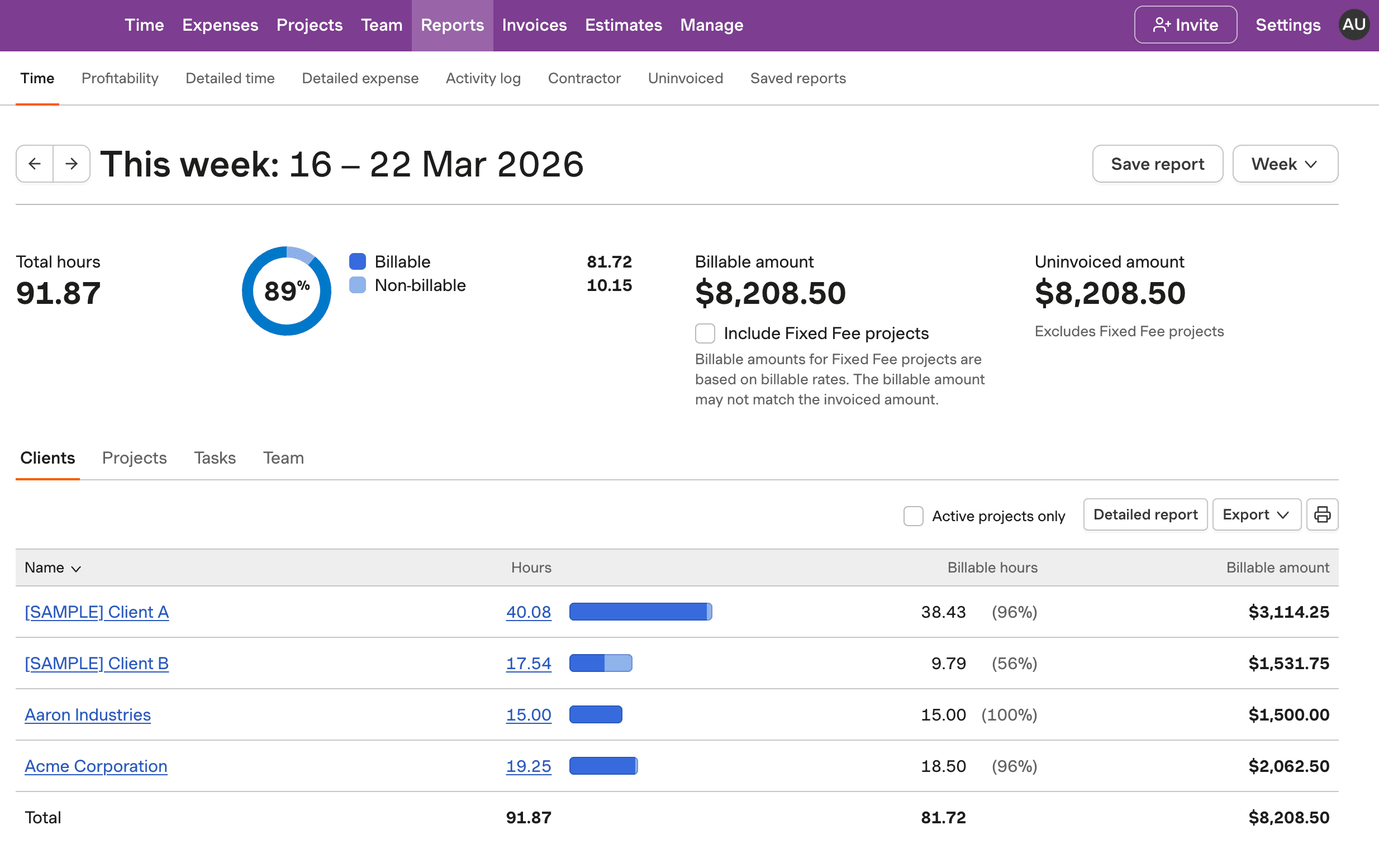
See how Harvest helps manage state-specific overtime compliance with flexible time tracking, ensuring accurate billing and legal adherence.

Harvest time tracking interface showing state-specific overtime compliance.

Overtime Laws by State FAQs

  • In California, overtime pay is required at 1.5 times the regular rate for hours over 8 up to 12 in a workday and for the first 8 hours on the seventh consecutive day. Double time is needed for hours beyond 12 in a day or over 8 hours on the seventh consecutive workday.

  • Several states require daily overtime pay, including California, Alaska, Colorado, and Nevada. These states mandate overtime pay after a certain number of hours worked in a single day, regardless of weekly totals.

  • While the federal FLSA requires overtime for hours over 40 in a week, some states have stricter laws, such as daily overtime requirements or double-time rules for long shifts. Employers must apply the law that provides the highest earnings to the employee.

  • Starting in 2025, eligible employees can deduct the "half" portion of their overtime pay from federal taxable income, up to $12,500 for individuals. State taxes still apply unless a state has specific provisions.

  • Common exemptions include certain salaried employees classified as exempt under the FLSA, and industry-specific exemptions in sectors like agriculture and healthcare. These exemptions depend on state-specific criteria and duties tests.

  • Harvest provides flexible time tracking that accommodates various overtime scenarios. While it doesn't enforce state-specific laws automatically, users can adjust time entries to reflect applicable overtime rates, ensuring accurate billing and compliance.

  • Invoices should clearly itemize regular and overtime hours, including employee names, work descriptions, and separate line items for different pay rates. This transparency ensures compliance and client understanding.