
Harvest
Time Tracking
Sign up free

Utilization Calculator vs Excel

Struggling with manual errors and inefficiencies in tracking utilization rates? Harvest offers a seamless solution with its integrated utilization calculator, outperforming Excel's manual processes.

Try Harvest Free

How much revenue is your team leaving on the table?

Most agencies run at 55-60% utilization. Even a small improvement means significant revenue. See what closing the gap looks like for your team.

Number of people who track billable time
$
Blended rate across roles (junior, senior, lead)
55%
Percentage of total hours that are billable. Industry average is 55-60%.
75%
A realistic target for service businesses is 70-80%.
Monthly revenue gap $0
Revenue at current utilization $0/mo
Revenue at target utilization $0/mo
Extra billable hours needed per person/day 0h
Annual revenue opportunity $0

Start tracking team utilization

Walk through the entire flow below. Start a timer, check your reports, and create a real invoice — all in three clicks.

Go ahead — start tracking!

One click and you're timing. Try it right here: start a timer, add an entry, edit the details. This is exactly how it feels in Harvest.

  • One-click timer from browser, desktop & mobile
  • Works inside Jira, Asana, Trello, GitHub & 50+ tools
  • Duration or start/end — your call
  • Day, week & calendar views to stay on top of it all
  • Friendly reminders so no hour gets left behind
Acme Corp
Website Redesign
Homepage layout revisions
1:24:09
Content Strategy
Blog calendar planning
1:30:00
SEO Audit
Technical audit report
0:45:00
Brand Guidelines
Color system documentation
2:15:00
Logo Concepts
Initial sketches round 1
1:00:00

Understanding Utilization Rates and Their Importance

Utilization rates measure the percentage of available time spent on productive or billable work. Achieving an optimal utilization rate is crucial for balancing efficiency and employee well-being. Industry benchmarks vary, with accounting firms aiming for 65-85% and marketing agencies targeting 70-80%. The ideal rate generally falls between 70% and 80% to accommodate both billable and non-billable tasks. However, aiming for 100% utilization is unrealistic and can lead to burnout and reduced work quality.

Tracking utilization rates is essential for identifying trends and making informed adjustments. For example, professional services teams that achieve 75-80% utilization are often top performers, while those below 60% may be underperforming. Regular tracking—whether weekly or monthly—helps maintain this balance, ensuring that teams are not overburdened and have time for essential non-billable activities such as training and meetings.
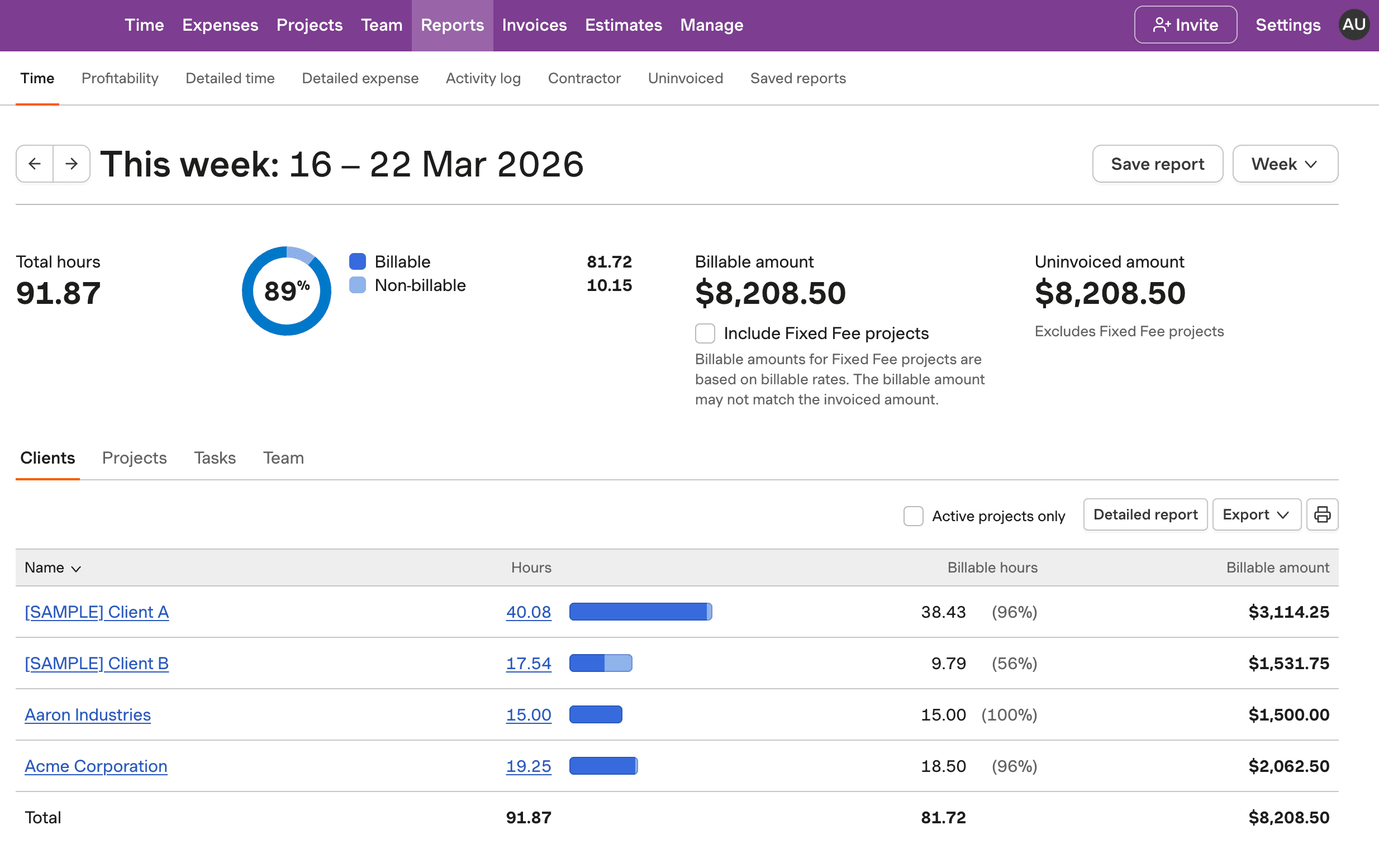
Utilization Calculators vs. Excel: Key Differences

When comparing utilization calculators to Excel, a primary difference lies in automation and error reduction. Dedicated calculators, especially those integrated with resource management software, can significantly reduce manual errors—research shows up to 88% of spreadsheets contain errors. Automated tools also save time, with AI-driven solutions cutting workload by up to 76% compared to traditional methods. This automation allows for more accurate and timely adjustments to resource allocation.

Excel, while versatile, requires manual data entry and formula creation, increasing the risk of human error. Despite this, it remains popular due to its flexibility and familiarity. However, for those managing large teams or complex projects, a dedicated utilization calculator offers a more reliable and efficient solution. Harvest, for instance, integrates with tools like Asana, allowing seamless data export to Excel for detailed analysis while maintaining the benefits of automated tracking.

Advantages of Using Excel for Utilization Tracking

Excel offers unparalleled flexibility, allowing users to create customized reports and analyses. It is particularly beneficial for those who are already familiar with its interface and formulas. Excel can integrate data from various sources, making it ideal for comprehensive utilization analysis. For instance, Harvest's integration capabilities enable project data export to Excel, facilitating detailed tracking and reporting.

In scenarios where specific, customized data manipulation is required, Excel shines. Its robust features allow for complex calculations and visualizations that may not be feasible in dedicated calculators. However, the trade-off is the potential for errors and the time required for manual entry and reconciliation. Despite these challenges, Excel remains a valuable tool for those who need detailed, customizable utilization insights.

When to Choose a Utilization Calculator Over Excel

Choosing between a utilization calculator and Excel depends on the complexity and scale of the task. For large teams or frequent tracking, a dedicated calculator offers efficiency and accuracy benefits that Excel cannot match. Automation reduces manual entry errors and saves significant time, with some systems offering up to 83% time savings compared to traditional methods.

For smaller teams or less frequent tracking, Excel's flexibility might be sufficient. However, if data accuracy and real-time insights are priorities, a utilization calculator is preferable. Harvest, for instance, provides automated tracking and integrates with project management tools, offering a comprehensive solution for those seeking both precision and efficiency in utilization management.

Utilization Calculator with Harvest

Explore how Harvest's utilization calculator streamlines tracking compared to Excel's manual processes for error-free management.

Utilization calculator dashboard in Harvest showcasing tracking efficiency

Utilization Calculator vs Excel FAQs

  • A utilization rate measures the percentage of available time spent on productive work. It is crucial for optimizing resource use and maintaining team efficiency, with industry benchmarks typically between 70% and 80%.

  • Harvest's utilization calculator offers automated tracking, reducing manual errors common in Excel. With integrations like Asana, it provides seamless data export for detailed analysis, enhancing accuracy and efficiency.

  • Excel provides flexibility and familiarity, allowing for customized reports and analyses. It can integrate data from various sources, making it useful for detailed utilization insights despite the risk of manual errors.

  • Opt for a utilization calculator when managing large teams or requiring frequent, accurate tracking. It offers automation and reduces errors, saving time compared to Excel's manual processes.

  • Research indicates that up to 88% of spreadsheets contain errors, impacting data accuracy. Manual entry and formulas in Excel increase the risk, making automated tools a better choice for precision.

  • Yes, Harvest integrates with tools like Asana, allowing for seamless project data export to Excel for comprehensive utilization analysis, combining automated tracking with detailed reporting.

  • Utilization rates should be tracked weekly or monthly to identify trends and make timely adjustments. Regular tracking helps maintain efficiency and balance between billable and non-billable activities.