
Harvest
Time Tracking
Sign up free

Utilization Rate Calculator in Turkey

In Turkey, understanding how effectively resources are utilized is crucial for economic health. Harvest offers insights into utilization rates, helping businesses optimize performance.

Try Harvest Free

How much revenue is your team leaving on the table?

Most agencies run at 55-60% utilization. Even a small improvement means significant revenue. See what closing the gap looks like for your team.

Number of people who track billable time
$
Blended rate across roles (junior, senior, lead)
55%
Percentage of total hours that are billable. Industry average is 55-60%.
75%
A realistic target for service businesses is 70-80%.
Monthly revenue gap $0
Revenue at current utilization $0/mo
Revenue at target utilization $0/mo
Extra billable hours needed per person/day 0h
Annual revenue opportunity $0

Start tracking team utilization

Walk through the entire flow below. Start a timer, check your reports, and create a real invoice — all in three clicks.

Go ahead — start tracking!

One click and you're timing. Try it right here: start a timer, add an entry, edit the details. This is exactly how it feels in Harvest.

  • One-click timer from browser, desktop & mobile
  • Works inside Jira, Asana, Trello, GitHub & 50+ tools
  • Duration or start/end — your call
  • Day, week & calendar views to stay on top of it all
  • Friendly reminders so no hour gets left behind
Acme Corp
Website Redesign
Homepage layout revisions
1:24:09
Content Strategy
Blog calendar planning
1:30:00
SEO Audit
Technical audit report
0:45:00
Brand Guidelines
Color system documentation
2:15:00
Logo Concepts
Initial sketches round 1
1:00:00

Understanding Capacity Utilization: A Key Economic Barometer in Turkey

Capacity Utilization Rate (CUR) is a critical metric for understanding the economic health of Turkey, particularly within the manufacturing sector. Defined as the ratio of actual output to potential output, expressed as a percentage, CUR provides insights into how effectively resources are being utilized. The Central Bank of the Republic of Turkey (TCMB) is responsible for assembling and publishing these statistics, primarily through its Business Tendency Survey (BTS). This survey is crucial for businesses and policymakers as it helps signal economic expansion or contraction and can serve as a leading indicator of inflation.

In 2025, Turkey's manufacturing industry saw CUR figures ranging from 74% to 75% across various months, with sector-specific highs and lows such as 83.8% in wood products and 62.4% in leather manufacturing in December. These variations highlight the diverse economic activities and demand pressures across sectors. The average CUR since 2007 has been around 75.98%, peaking at 84.10% in July 2007, reflecting strong economic periods and potential for growth.
How Turkey Measures Manufacturing Capacity Utilization

The TCMB's Business Tendency Survey (BTS) serves as the foundation for calculating Turkey's Capacity Utilization Rate. This survey involves responses from over 1,800 manufacturing units, providing a comprehensive view of the industry's performance. The methodology includes a three-stage weighting process using production values from the previous year, classified under NACE Rev. 2. Seasonal adjustments are made using the TRAMO-SEATS method to ensure accuracy and relevancy of the data.

The survey covers two-digit manufacturing sub-sectors, excluding sensitive areas like coke and refined petroleum products. This exclusion maintains statistical confidentiality. For instance, in February 2026, the CUR was reported at 73.5%, showing a slight decrease from previous months. These figures are instrumental in determining the health of Turkey’s manufacturing sector and guiding economic policy decisions.

Current Trends and Historical Context of Turkey's Capacity Utilization

The capacity utilization trends in Turkey reveal a nuanced economic landscape. Recent data shows a CUR of 73.5% in February 2026, reflecting slight fluctuations from prior months such as 74.1% in January. Historically, the CUR has averaged 75.98% since 2007, with notable highs of 84.10% and lows of 60.80%, indicating periods of robust growth and economic challenges, respectively.

These fluctuations correlate with broader economic cycles, where a healthy CUR typically ranges between 75% and 85%. This range suggests optimal use of resources without overstretching capacity, which could lead to inflationary pressures. Monitoring these trends helps businesses and policymakers make informed decisions about investments and resource allocation.

Sectoral Insights: Disparities in Capacity Utilization Across Turkish Industries

Capacity utilization rates in Turkey exhibit significant disparities across different sectors. For instance, in December 2025, wood products manufacturing reported a high utilization rate of 83.8%, while the leather sector lagged at 62.4%. Such differences are often driven by varying demand levels, financial conditions, and supply chain dynamics.

Factors like insufficient demand, cited by 13.7% of manufacturers in October 2025, along with financial difficulties and labor shortages, contribute to these sectoral disparities. Understanding these nuances is crucial for businesses aiming to optimize production efficiency and align with prevailing economic conditions. Sector-specific strategies can be developed to address these challenges, ensuring sustainable production and growth.

Calculating and Interpreting Capacity Utilization for Your Business

Calculating the Capacity Utilization Rate for individual businesses involves a straightforward formula: CUR = (Actual Output / Potential Output) × 100. This formula allows businesses to assess how efficiently they are using their resources. "Actual Output" refers to the total production achieved in a specific period, while "Potential Output" represents the maximum sustainable production under normal conditions.

  1. Define Measurement Period: Choose a consistent time frame, such as monthly or quarterly.
  2. Determine Actual Output: Quantify the goods or services produced in that period.
  3. Determine Potential Output: Assess the maximum output possible without extraordinary measures.
  4. Apply the Formula: Calculate the CUR to gain insights into operational efficiency.

Regularly monitoring your CUR helps identify trends and inform strategic decisions, ensuring that resources are utilized effectively and potential bottlenecks are addressed proactively.

Utilization Rate Insights with Harvest

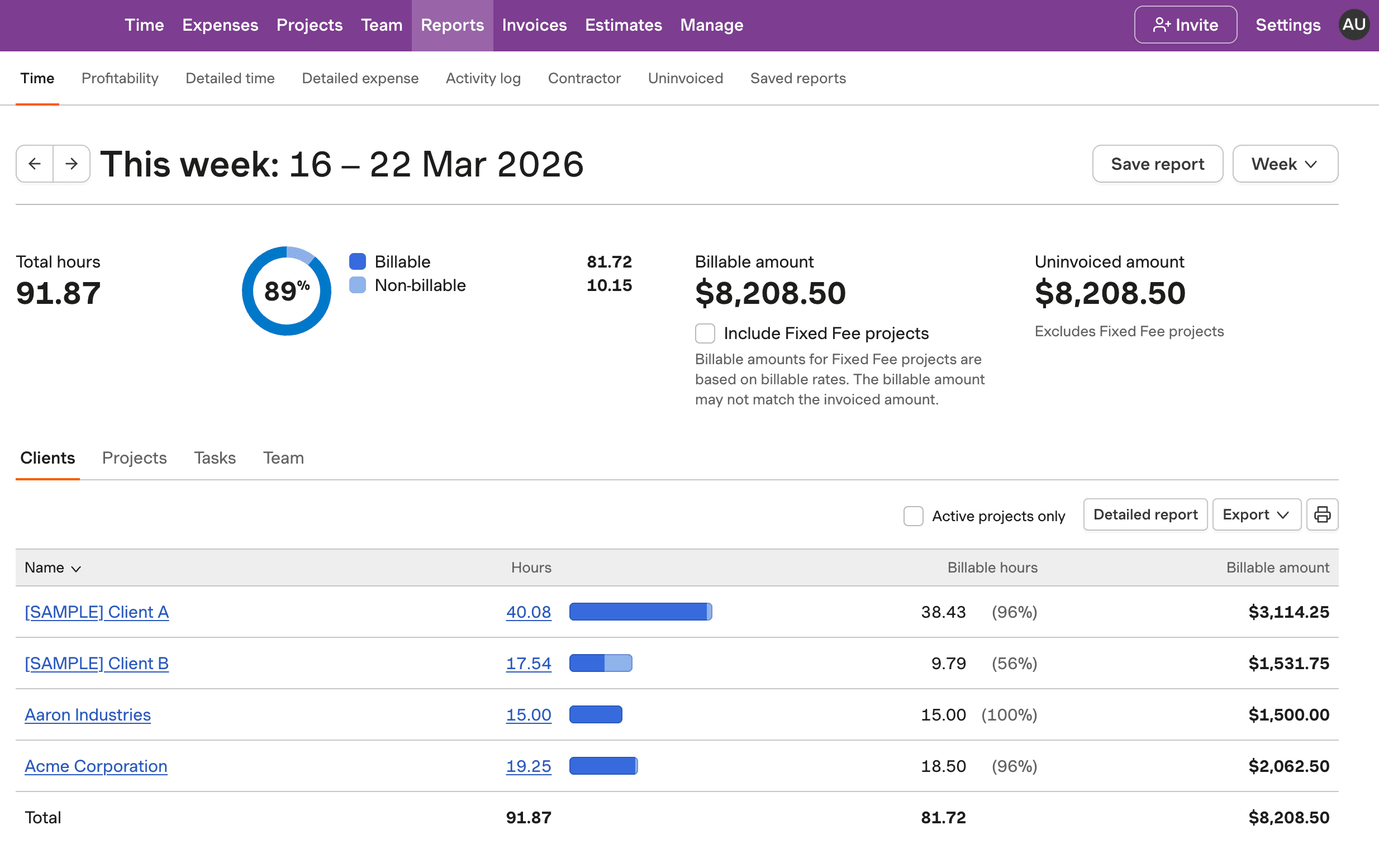
See how Harvest calculates utilization rates in Turkey to help optimize resource use and drive business success.

Harvest dashboard showing utilization rate calculation in Turkey

Utilization Rate Calculator in Turkey FAQs

  • As of February 2026, the capacity utilization rate in Turkey's manufacturing sector is 73.5%. This figure is part of a series of monthly reports by the Central Bank of the Republic of Turkey, reflecting resource utilization efficiency.

  • The capacity utilization rate in Turkey is calculated using the formula: CUR = (Actual Output / Potential Output) × 100. This involves data collected from the Business Tendency Survey by the TCMB, which surveys over 1,800 manufacturing units.

  • A high capacity utilization rate, typically between 75% and 85%, indicates efficient resource use and strong economic activity. It can also suggest potential inflationary pressures if demand exceeds supply capabilities.

  • In December 2025, sectors like wood products had high utilization rates of 83.8%, while leather manufacturing was lower at 62.4%. These variations highlight different demand levels and operational efficiencies across industries.

  • Factors such as demand fluctuations, financial conditions, labor availability, and supply chain constraints significantly influence capacity utilization rates in Turkey's industries.

  • By understanding their capacity utilization rate, businesses can optimize resource use, identify bottlenecks, and make informed strategic decisions to enhance operational efficiency.

  • Turkey's capacity utilization rate informs economic policy by indicating resource efficiency and potential inflation. It helps policymakers understand economic cycles and make decisions on interest rates and investment incentives.