
Harvest
Time Tracking
Sign up free

Utilization Rate Calculator on Chrome

For teams struggling with resource management, Harvest offers a comprehensive solution to calculate and optimize utilization rates efficiently.

Try Harvest Free

How much revenue is your team leaving on the table?

Most agencies run at 55-60% utilization. Even a small improvement means significant revenue. See what closing the gap looks like for your team.

Number of people who track billable time
$
Blended rate across roles (junior, senior, lead)
55%
Percentage of total hours that are billable. Industry average is 55-60%.
75%
A realistic target for service businesses is 70-80%.
Monthly revenue gap $0
Revenue at current utilization $0/mo
Revenue at target utilization $0/mo
Extra billable hours needed per person/day 0h
Annual revenue opportunity $0

Start tracking team utilization

Walk through the entire flow below. Start a timer, check your reports, and create a real invoice — all in three clicks.

Go ahead — start tracking!

One click and you're timing. Try it right here: start a timer, add an entry, edit the details. This is exactly how it feels in Harvest.

  • One-click timer from browser, desktop & mobile
  • Works inside Jira, Asana, Trello, GitHub & 50+ tools
  • Duration or start/end — your call
  • Day, week & calendar views to stay on top of it all
  • Friendly reminders so no hour gets left behind
Acme Corp
Website Redesign
Homepage layout revisions
1:24:09
Content Strategy
Blog calendar planning
1:30:00
SEO Audit
Technical audit report
0:45:00
Brand Guidelines
Color system documentation
2:15:00
Logo Concepts
Initial sketches round 1
1:00:00

Understanding Utilization Rate: The Foundation of Efficiency

Utilization rate is a crucial metric in assessing how effectively resources are being used. It is calculated by dividing used hours by available hours and multiplying by 100 to get a percentage. This measure helps businesses understand how much of their capacity is being devoted to productive work. For example, if an employee works 1,600 productive hours out of 2,000 available hours annually, their utilization rate would be 80%. This metric is essential for identifying inefficiencies and ensuring optimal resource allocation.

Effective utilization rates typically range between 70% and 80%, balancing billable work with necessary non-billable activities like training and meetings. Rates above 90% might indicate overutilization, leading to burnout, while rates below 60% could suggest underutilization. Harvest excels in tracking both billable and non-billable hours, providing a strong foundation for accurate utilization rate calculations, ensuring that your team remains productive without being overburdened.
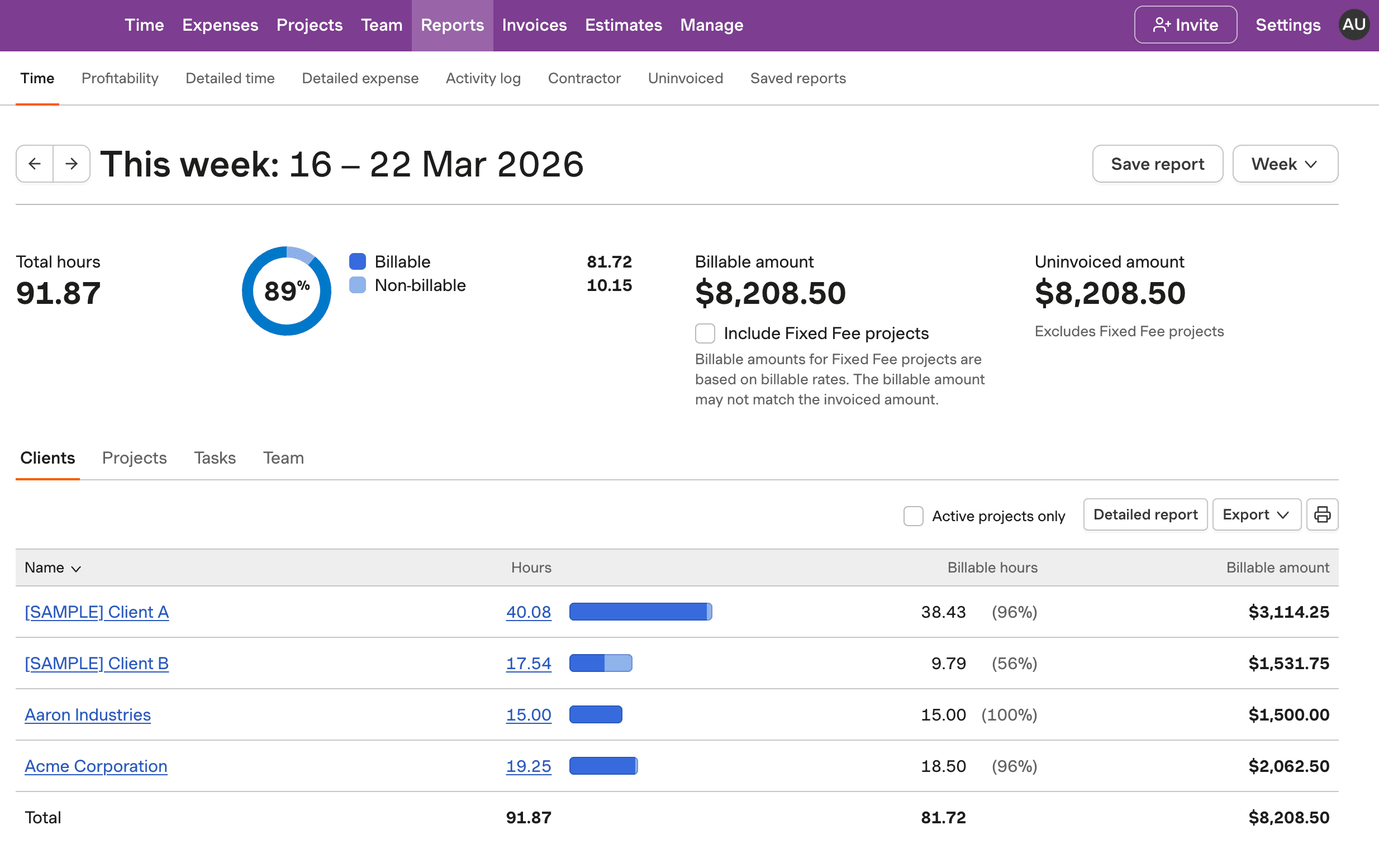
Calculating Utilization: A Step-by-Step Approach

To accurately calculate utilization rates, start by defining the measurement window, such as a week or month. Next, determine the total available hours by starting with contractual hours (e.g., 40 hours per week) and subtracting planned time off. Then, sum up the total used hours, which includes all productive activities. Apply the core formula: (Used Hours / Available Hours) × 100% to derive the utilization rate.

For example, if an individual logs 150 productive hours in a month out of 176 available hours, their utilization rate is approximately 85%. Harvest facilitates this by providing accurate time logging for both billable and non-billable activities, integrated with tools like Asana and Jira to streamline data collection. This ensures precise tracking and easy calculation of utilization rates, empowering informed decision-making.

Benchmarks and Best Practices for Optimal Utilization

Industry standards for utilization rates vary, with professional services typically targeting 70-85%. IT services often aim for 75-85%, while marketing agencies might target 70-80%. Recognizing these benchmarks helps in setting realistic targets and avoiding burnout or inefficiency. For instance, a manager might aim for a utilization rate of 30-50% given their supervisory role, while junior employees might aim for 90%.

To improve utilization, accurate time tracking is vital. Harvest supports this with one-click timers and detailed reporting, allowing businesses to monitor their performance against industry benchmarks. Regular reviews and strategic adjustments, such as optimizing workflows and minimizing non-billable overhead, can also enhance utilization rates and business profitability.

Leveraging Utilization Data for Strategic Decision-Making

Utilization data is invaluable for strategic planning and decision-making. By analyzing utilization rates, businesses can forecast staffing needs, balance workloads, and refine pricing strategies to maximize profitability. For example, if a team consistently exceeds 90% utilization, it might indicate the need for additional hiring to prevent burnout.

Harvest's detailed reports provide insights into team performance and resource allocation, enabling data-driven decisions. Integrations with project management tools like Trello and Slack further enhance visibility, allowing managers to adjust workflows in real-time. Leveraging this data helps identify top performers and areas for development, ensuring that resources are used efficiently and strategically.

Utilization Rate Calculator by Harvest

The preview showcases Harvest's utilization rate calculator on Chrome, designed to optimize team efficiency by tracking billable hours seamlessly.

Harvest utilization rate calculator interface on Chrome

Utilization Rate Calculator on Chrome FAQs

  • A good utilization rate often falls between 70% and 80%, balancing productivity with necessary non-billable activities. Rates above 90% can risk burnout, while below 60% may indicate inefficiencies.

  • Utilization rate is calculated by dividing used hours by available hours and multiplying by 100%. For example, if an employee works 1,600 hours out of 2,000 available annually, their utilization rate is 80%.

  • Tracking utilization rate is essential for enhancing productivity, profitability, and resource planning. It provides insights into how effectively resources are being used, helping to identify inefficiencies and optimize performance.

  • Harvest helps track utilization rates by offering detailed reports on billable and non-billable hours. Its integrations with tools like Asana and Trello streamline data collection and improve accuracy.

  • While theoretically possible if employees work beyond their capacity, utilization rates exceeding 100% are unsustainable and indicate overwork. Rates should be managed to prevent burnout.

  • Factors include accurate definition of available hours, distinguishing between billable and non-billable tasks, and tracking overtime. Consistency in these elements ensures reliable utilization data.

  • Harvest improves team utilization by offering tools for accurate time tracking and detailed reporting. This helps businesses monitor performance, optimize workflows, and make informed staffing decisions.