
Harvest
Time Tracking
Sign up free

Utilization Rate Calculator on Safari

Struggling with tracking utilization rates on Safari? Harvest offers a seamless solution, ensuring accurate calculations and detailed reports to boost your team's efficiency.

Try Harvest Free

How much revenue is your team leaving on the table?

Most agencies run at 55-60% utilization. Even a small improvement means significant revenue. See what closing the gap looks like for your team.

Number of people who track billable time
$
Blended rate across roles (junior, senior, lead)
55%
Percentage of total hours that are billable. Industry average is 55-60%.
75%
A realistic target for service businesses is 70-80%.
Monthly revenue gap $0
Revenue at current utilization $0/mo
Revenue at target utilization $0/mo
Extra billable hours needed per person/day 0h
Annual revenue opportunity $0

Start tracking team utilization

Walk through the entire flow below. Start a timer, check your reports, and create a real invoice — all in three clicks.

Go ahead — start tracking!

One click and you're timing. Try it right here: start a timer, add an entry, edit the details. This is exactly how it feels in Harvest.

  • One-click timer from browser, desktop & mobile
  • Works inside Jira, Asana, Trello, GitHub & 50+ tools
  • Duration or start/end — your call
  • Day, week & calendar views to stay on top of it all
  • Friendly reminders so no hour gets left behind
Acme Corp
Website Redesign
Homepage layout revisions
1:24:09
Content Strategy
Blog calendar planning
1:30:00
SEO Audit
Technical audit report
0:45:00
Brand Guidelines
Color system documentation
2:15:00
Logo Concepts
Initial sketches round 1
1:00:00

Understanding Utilization Rate: The Foundation of Efficiency

Utilization rate is a critical metric for assessing the efficiency and productivity of any business operation. It measures how effectively resources—whether human, equipment, or time—are being used. The formula is straightforward: (Actual Usage / Maximum Potential Usage) × 100. For employees, this often translates to (Total Billable Hours ÷ Total Available Hours) × 100. This KPI not only tracks efficiency but also impacts profitability significantly. Companies that actively monitor utilization rates can see a 15–25% improvement in project profitability.

Understanding the distinction between different types of utilization is key. Billable utilization focuses on revenue-generating work, while resource utilization includes all productive activities, such as administrative tasks and internal meetings. For example, in professional services firms, an optimal utilization rate is around 75%-85% for billable team members, balancing high productivity with essential non-billable activities.
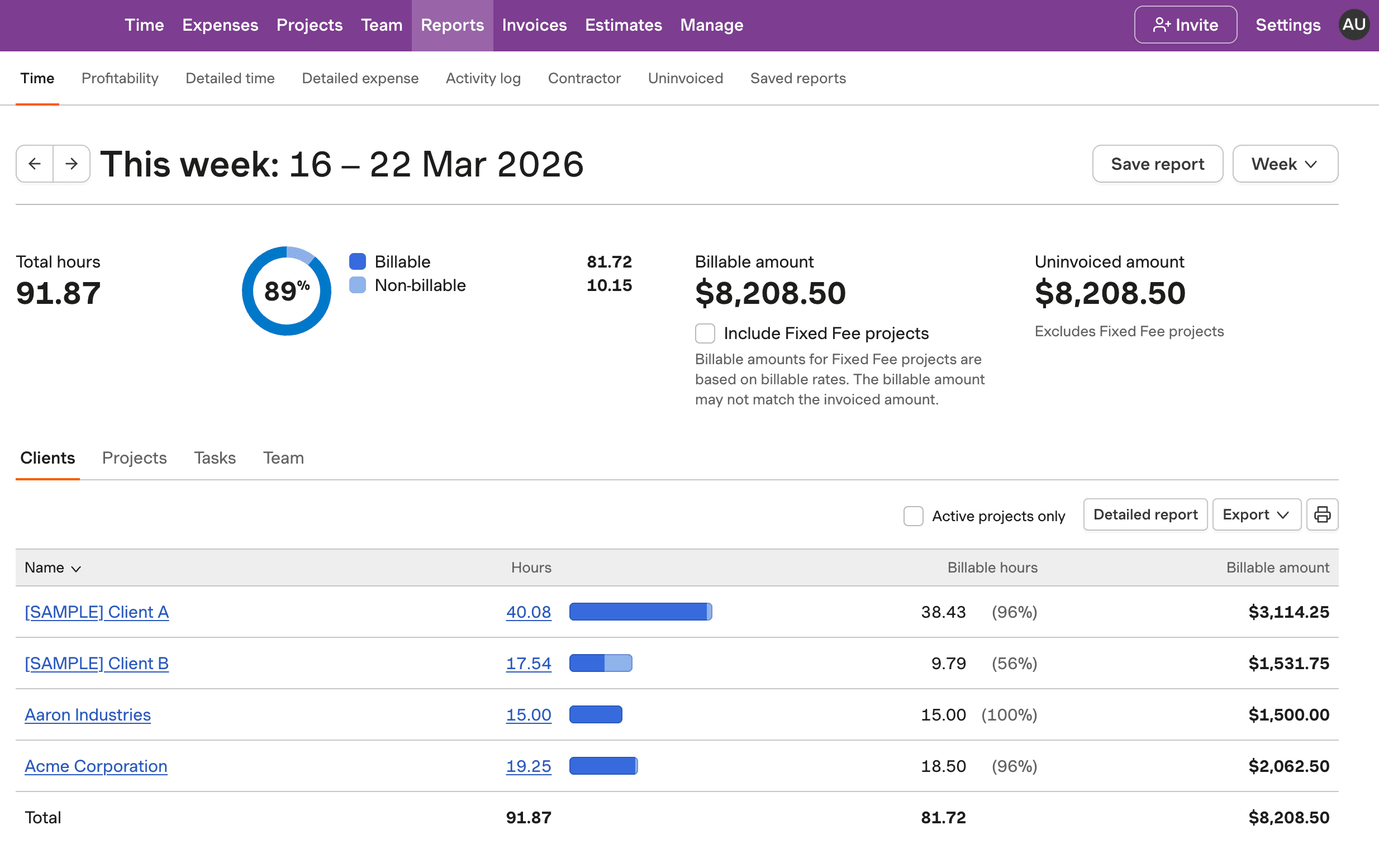
Calculating Utilization: A Step-by-Step Guide

Calculating utilization involves a clear understanding of available hours and task categorization. Start by defining the time window for calculation—typically weekly or monthly. Set the total available hours by accounting for contractual hours, subtracting planned time off like PTO and holidays. Categorize tasks into billable, productive non-billable, and non-productive time.

Use the formula (Productive Hours ÷ Total Available Hours) × 100 to calculate individual utilization. For team-wide analysis, sum the individual rates and divide by the number of team members. Accurate time tracking is crucial, and tools like Harvest streamline this process, providing comprehensive reports that highlight both billable and non-billable hours.

What's a 'Good' Utilization Rate? Benchmarks and Nuances

Determining a "good" utilization rate depends on industry and role. Generally, a utilization rate of 70-80% is ideal for employees, balancing workload with non-billable activities like training. Industry-specific benchmarks vary; for instance, marketing agencies often target 70%-80%, while IT services aim for similar averages.

Role-specific benchmarks are equally important. For example, interns and junior employees might target around 90% billable tasks, while senior employees focus on 60-70% due to involvement in strategic activities. It's crucial to avoid the pitfalls of aiming for 100% utilization, which can lead to burnout and decreased quality.

Factors Influencing Utilization and Strategies for Improvement

Several factors impact utilization rates, including workforce capacity, equipment availability, and project scheduling. Tracking these rates provides insights that inform hiring decisions, improve profitability, and enhance project planning. For instance, companies that actively track utilization rates often see a 15–25% increase in project profitability.

To improve utilization, consider optimizing workforce scheduling, investing in employee training, and automating routine processes. Tools like Harvest offer detailed reports on team utilization, making it easier to balance billable and non-billable work, thus preventing burnout and underutilization. Regular monitoring of these metrics ensures a proactive approach to maintaining optimal efficiency.

Utilization Rate Calculator with Harvest

See how Harvest's utilization rate calculator works on Safari, providing insights into team efficiency and productivity.

Harvest utilization rate calculator on Safari for team efficiency tracking.

Utilization Rate Calculator on Safari FAQs

  • A utilization rate calculator measures the percentage of time resources are used for productive work. It's crucial for assessing efficiency and profitability in businesses. The basic formula is (Actual Usage / Maximum Potential Usage) × 100.

  • To calculate utilization rates, use the formula: (Total Billable Hours ÷ Total Available Hours) × 100. This provides insights into how effectively time is being used, crucial for optimizing productivity and profitability.

  • Generally, utilization rates cannot exceed 100% as this would imply working beyond available hours. However, temporary overages may occur if overtime is included in billable hours but not in available hours, though this is not standard practice.

  • Tracking utilization rate is vital for understanding team efficiency, informing hiring decisions, and improving profitability. Companies tracking these metrics see up to a 25% improvement in project profitability.

  • Utilization rates can be improved by optimizing scheduling, enhancing training, and automating processes. Tools like Harvest provide detailed reports to help balance workload and prevent burnout.

  • Look for features that allow for accurate time tracking, integration with other tools, and detailed reporting. Harvest offers these capabilities, aiding in effective resource management and profitability analysis.

  • Harvest offers a seamless experience on Safari, providing detailed reports on team utilization. This helps businesses track both billable and non-billable hours efficiently, optimizing productivity.

  • Yes, Harvest integrates with various apps like Asana, Trello, and Slack, providing a comprehensive time tracking solution that enhances team management and productivity.