
Harvest
Time Tracking
Sign up free

Utilization Rate Calculator on Ipad

Harvest on iPad offers a robust utilization rate calculator, addressing the need for accurate productivity tracking with real-time data and comprehensive reporting.

Try Harvest Free

How much revenue is your team leaving on the table?

Most agencies run at 55-60% utilization. Even a small improvement means significant revenue. See what closing the gap looks like for your team.

Number of people who track billable time
$
Blended rate across roles (junior, senior, lead)
55%
Percentage of total hours that are billable. Industry average is 55-60%.
75%
A realistic target for service businesses is 70-80%.
Monthly revenue gap $0
Revenue at current utilization $0/mo
Revenue at target utilization $0/mo
Extra billable hours needed per person/day 0h
Annual revenue opportunity $0

Start tracking team utilization

Walk through the entire flow below. Start a timer, check your reports, and create a real invoice — all in three clicks.

Go ahead — start tracking!

One click and you're timing. Try it right here: start a timer, add an entry, edit the details. This is exactly how it feels in Harvest.

  • One-click timer from browser, desktop & mobile
  • Works inside Jira, Asana, Trello, GitHub & 50+ tools
  • Duration or start/end — your call
  • Day, week & calendar views to stay on top of it all
  • Friendly reminders so no hour gets left behind
Acme Corp
Website Redesign
Homepage layout revisions
1:24:09
Content Strategy
Blog calendar planning
1:30:00
SEO Audit
Technical audit report
0:45:00
Brand Guidelines
Color system documentation
2:15:00
Logo Concepts
Initial sketches round 1
1:00:00

Understanding Utilization Rates for Enhanced Productivity

Utilization rate is a crucial metric that measures how effectively resources like employees or equipment are being used. It is commonly calculated using the formula: (Billable Hours ÷ Total Available Hours) × 100. For instance, if an employee bills 34 hours out of a 40-hour workweek, their utilization rate is 85%. Aiming for a utilization rate between 70% and 85% is generally considered healthy in professional services, balancing billable work with non-billable activities, such as training and meetings. Rates above 85% might indicate overutilization, leading to burnout, whereas rates below 70% can signal inefficiencies.

Tracking utilization rates consistently can significantly impact profitability. Companies that monitor these rates have seen project profitability improve by 15–25%. However, a decline in resource utilization has been noted, with some firms reporting averages as low as 68.9% in 2024. It's essential to track utilization rates weekly or monthly to identify trends and make necessary adjustments promptly.
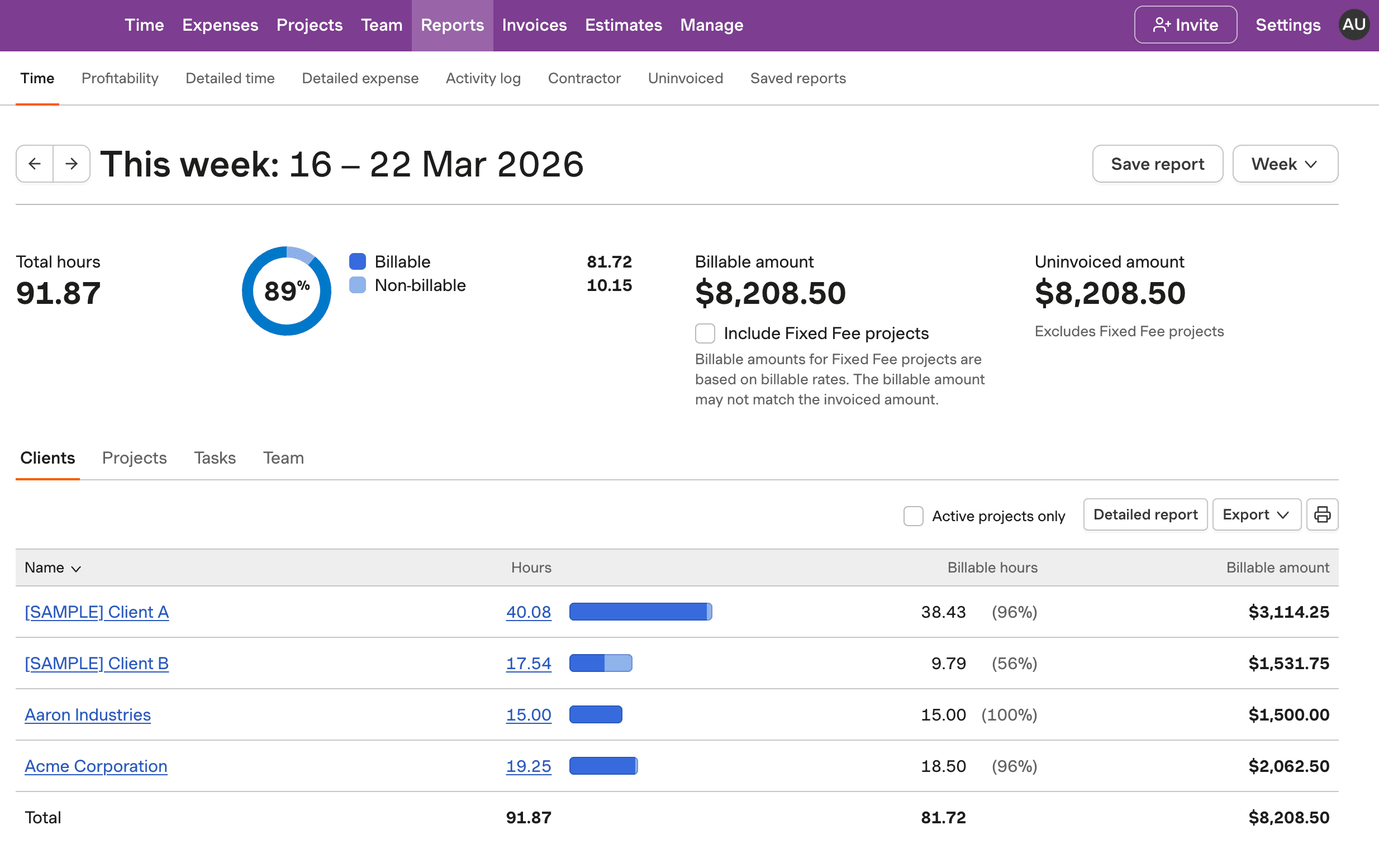
Calculating Utilization Rates on Mobile Devices

Calculating utilization rates accurately often involves using mobile devices like iPads for real-time data entry. This approach offers immediate visibility into operational processes, enabling proactive identification of bottlenecks and improved efficiency. The essential steps include defining available hours, categorizing tasks, and accurately tracking all hours spent on various activities.

Mobile tools facilitate real-time access to scheduling data and automate data collection. These capabilities are crucial for time-sensitive applications, allowing for rapid responses to changing conditions. For example, Harvest provides comprehensive utilization rate tracking on the iPad, integrating seamlessly with other productivity tools to enhance functionality.

Interpreting Utilization Rates Across Industries

The interpretation of what constitutes a good utilization rate varies significantly across industries. For instance, professional services firms aim for a 75%-85% utilization rate, while legal services providers consider a 40% firm-wide average as healthy. Consulting firms might expect up to 90% utilization for individuals. These benchmarks reflect the unique demands and operational structures of each industry.

Role-based utilization targets also differ within organizations. Interns and junior staff may achieve up to 90% utilization, whereas managers often operate between 30%-50% due to broader responsibilities. Understanding these nuances helps organizations set realistic targets and optimize their resource planning strategies.

Optimizing Utilization for Increased Profitability

Improving utilization rates involves implementing strategic practices such as streamlining workflows and automating administrative tasks. Effective resource planning, efficient scheduling, and workload balancing are critical to enhancing profitability and sustainability. Mobile devices play a pivotal role in this optimization process, providing analytics that can uncover inefficiencies and inform strategic decisions.

Leveraging data analytics from tools like Harvest on the iPad allows businesses to identify performance trends and adjust their operations accordingly. By maintaining a balanced workload and preventing overbooking, companies can avoid employee burnout while ensuring maximum productivity and profitability.

Utilization Rate Calculator with Harvest

The Harvest app on iPad showcases a robust utilization rate calculator, featuring real-time data tracking and comprehensive reporting for enhanced productivity.

Harvest utilization rate calculator on iPad showcasing productivity features.

Utilization Rate Calculator on Ipad FAQs

  • A good utilization rate typically ranges between 70% and 85%, which balances productive work with necessary non-billable activities. This range helps prevent burnout while ensuring efficiency.

  • Utilization rates should be tracked weekly or monthly. Regular monitoring helps identify trends and make timely adjustments to improve resource management and profitability.

  • Yes, utilization rates can exceed 100% if overtime is billed and the calculation divides billable hours by a fixed number of available hours, such as 40 per week. This indicates the resource is working beyond standard capacity.

  • Tracking utilization helps maintain a balance between billable and non-billable work, ensures profitability, prevents burnout, and aids in strategic resource planning. It is crucial for identifying inefficiencies and optimizing operations.

  • Mobile devices enable real-time data entry and access, facilitating accurate utilization tracking. They provide immediate visibility into operations, allowing for quick adjustments and improved efficiency through tools like Harvest.

  • Harvest integrates with numerous productivity tools such as Asana, Trello, Jira, and Slack. This integration enhances its functionality as a utilization rate calculator on the iPad, streamlining workflow management.

  • Look for features such as detailed reporting, real-time data tracking, and team management capabilities. Harvest offers these features, making it a comprehensive solution for utilization rate calculations.