
Harvest
Quotes
Sign up

Estimate Template for Contractors in Chinese

Harvest offers customizable estimate templates that help contractors effectively manage labor, materials, and equipment costs, crucial for the dynamic Chinese construction market.

ESTIMATE DRAFT

Add your logo here
Item type
Description
Qty
Unit price
Tax
Amount
Subtotal
$0.00
Discount
$0.00
Total estimate
$0.00
Get paid via:
Credit card / Debit card
ACH
Wire transfer

Customize estimate

Appearance

Add a logo
Show estimate title

Quote settings

Tax Add up to 2 tax rates
%
Discount Apply a discount percentage
%

Key Components of a Contractor Estimate Template in Chinese

Creating a comprehensive contractor estimate template in Chinese involves several critical components. A robust estimate should begin with the inclusion of essential fields such as the contractor's company name, address, and the Unified Social Credit Code. Pricing details must be presented in Renminbi (CNY), and the estimate should itemize services or products with quantities, unit prices, and subtotals. This clarity prevents disputes and ensures transparency.

Additionally, the estimate template should support bilingual formatting, often requiring the application of official company seals for authenticity. To further enhance clarity, it’s important to define the scope of work precisely, including what is covered and what is explicitly excluded, along with payment terms and schedules. A validity period, typically ranging from 30 to 60 days, should also be specified to account for potential fluctuations in material costs or labor rates.

While Harvest does not provide specific legal compliance features for China, its customizable estimate templates offer fields for labor, materials, and equipment costs. This flexibility allows contractors to adapt the template to various project needs and client expectations, aligning with the unique requirements of the Chinese construction industry.

Legal Considerations for Contractor Estimates in China

When crafting contractor estimates in China, it is essential to comply with the country's dual legal framework for bidding and tendering, which includes the Tendering and Bidding Law and the Government Procurement Law. Each framework has its distinct procedures and mandatory standard bidding documents, ensuring transparency and fairness in the procurement process.

A critical component of these legal requirements is the inclusion of comprehensive contractual clauses, detailing project scope, quality standards, and responsibilities for material supply. Furthermore, retainage practices, where 5% of the contract price is withheld until project completion, are standard to ensure obligations are met. Harvest's estimate templates, while not providing legal compliance features, allow contractors to manage labor, materials, and equipment costs effectively, supporting the financial aspect of these legal requirements.

For contractors operating in China, it is advisable to seek legal counsel to review bid security documents and ensure all estimates meet the necessary legal standards. This proactive approach can help mitigate risks associated with non-compliance and enhance the credibility of the contractor's bids.

Customizing Estimate Templates for Diverse Construction Projects

Customization is key to creating effective estimate templates for diverse construction projects. Contractors must ensure that templates are adaptable to various project types, client needs, and branding requirements. This adaptability can be achieved by using templates with customizable fields for labor, materials, and equipment costs, as offered by Harvest.

Moreover, contractors should consider including contingency funds, typically 10-20% of the project cost, within their estimates. This practice helps mitigate risks from unexpected expenses, a common challenge in construction projects. Harvest's estimate templates provide the flexibility to incorporate such contingencies, enhancing project management efficiency.

While Harvest does not automatically include local tax regulations, its templates enable manual control of tax settings, allowing contractors to adjust estimates according to specific project requirements. This feature is crucial in a dynamic market like China's, where project demands and regulatory frameworks can vary significantly.

Leveraging Digital Tools for Estimate Management

As the digital transformation market in China continues to grow, leveraging digital tools for estimate management becomes increasingly important for contractors. Harvest offers customizable estimate templates that facilitate the efficient management of labor, materials, and equipment costs, crucial for maintaining profitability in a competitive market.

Digital documentation, supported by Harvest, streamlines procurement processes and enhances overall project efficiency. The adaptability of Harvest's templates allows contractors to easily update estimates to reflect changing project needs, a significant advantage in a rapidly evolving construction sector.

While Harvest's tools do not include AI or big data analytics for estimation, their flexibility and ease of use offer contractors a practical solution for managing estimates. This adaptability is particularly beneficial given the rising labor costs and the criticality of precise cost estimation in China's construction industry.

Finding Free Resources for Contractor Estimate Templates in Chinese

For contractors seeking free resources for estimate templates in Chinese, it's important to find templates that offer both functionality and compliance with local standards. While Harvest provides customizable estimate templates, it is crucial to ensure any free resources align with the specific legal and regulatory requirements of the Chinese market.

Templates should include fields for essential information such as company details, pricing in CNY, and detailed itemizations of services or products. Additionally, consider utilizing bilingual templates with official seals to enhance authenticity and clarity. Although Harvest does not offer free resources, its templates provide a strong foundation for managing estimates effectively.

By leveraging Harvest's tools, contractors can tailor estimates to meet specific project requirements, ensuring all necessary fields are covered. This adaptability helps contractors stay competitive in a market characterized by intense competition and rising costs.

Estimate Templates with Harvest

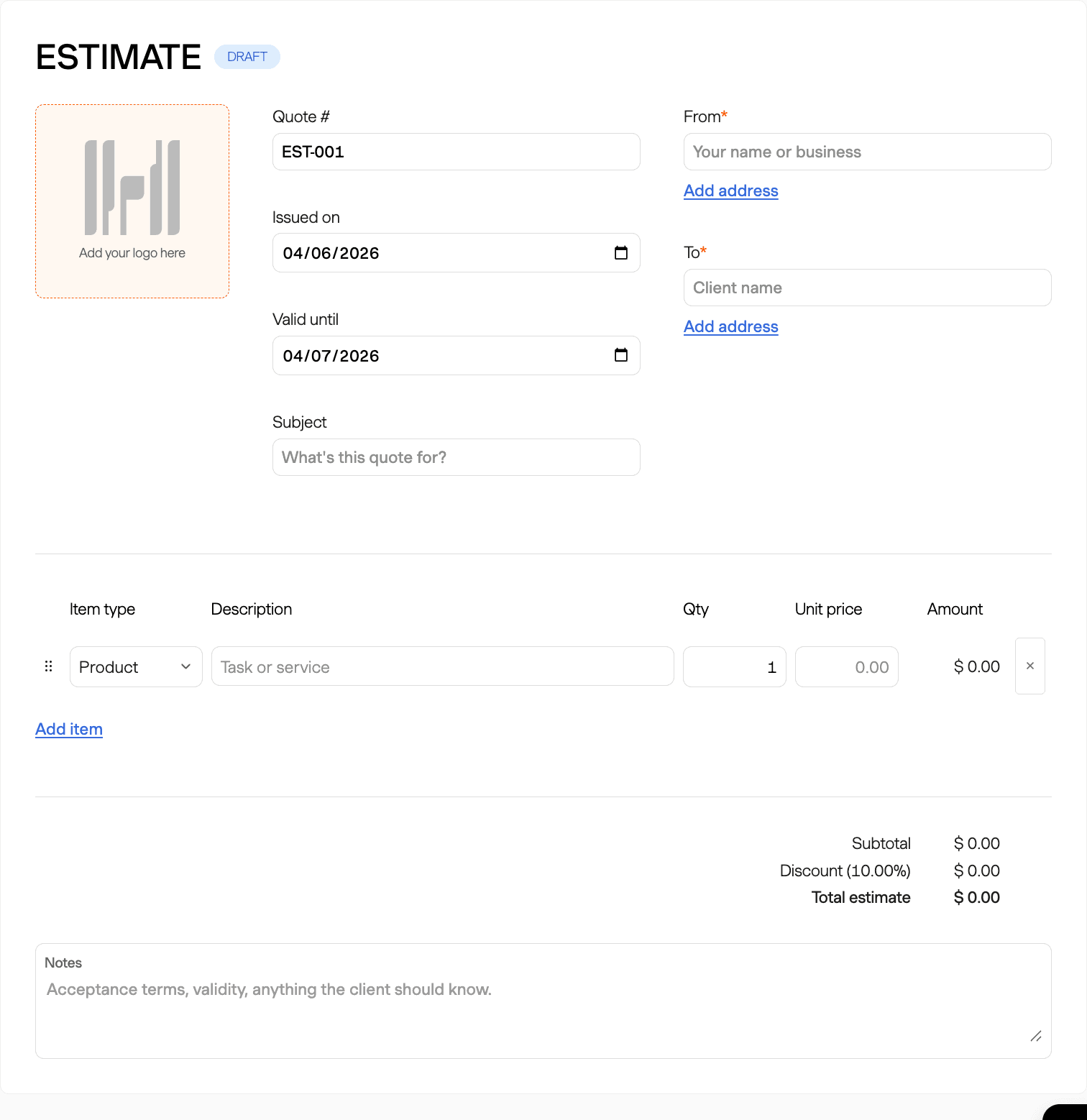
Harvest provides customizable estimate templates in Chinese, helping contractors manage labor, materials, and costs efficiently.

Estimate template for contractors in Chinese shown in Harvest.

Estimate Template for Contractors in Chinese FAQs

  • A contractor estimate template in Chinese should include fields for company names, addresses, Unified Social Credit Code, pricing in Renminbi, and itemized services or products. Bilingual formatting and company seals are also essential for authenticity.

  • Customization can be achieved by using templates with adjustable fields for labor, materials, and equipment costs. Harvest's templates allow contractors to adapt estimates to various project types and client needs.

  • Estimates must comply with China's dual legal framework, including the Tendering and Bidding Law. They should include comprehensive contractual clauses and adhere to retainage practices, typically withholding 5% of the contract price.

  • Yes, estimates must include the Unified Social Credit Code, be presented bilingually, and often require company seals for official authentication. Compliance with the Tendering and Bidding Law is also necessary.

  • While Harvest does not automatically include local tax regulations, it allows manual control of tax settings, enabling contractors to adjust estimates according to project requirements.

  • Digital documentation streamlines procurement processes and enhances project efficiency. Harvest supports this by offering adaptable templates, helping contractors manage changing project needs effectively.

  • Rising labor costs, which have increased by 30% over the last decade, significantly impact project estimates. Accurate cost estimation and stringent expenditure control are critical for minimizing cost overruns.