
Harvest
Quotes
Sign up

Proposal Template for Contractors in Arabic

Harvest offers streamlined time tracking and invoicing solutions for contractors, making it easier to manage project timelines and payments in Arabic-speaking regions.

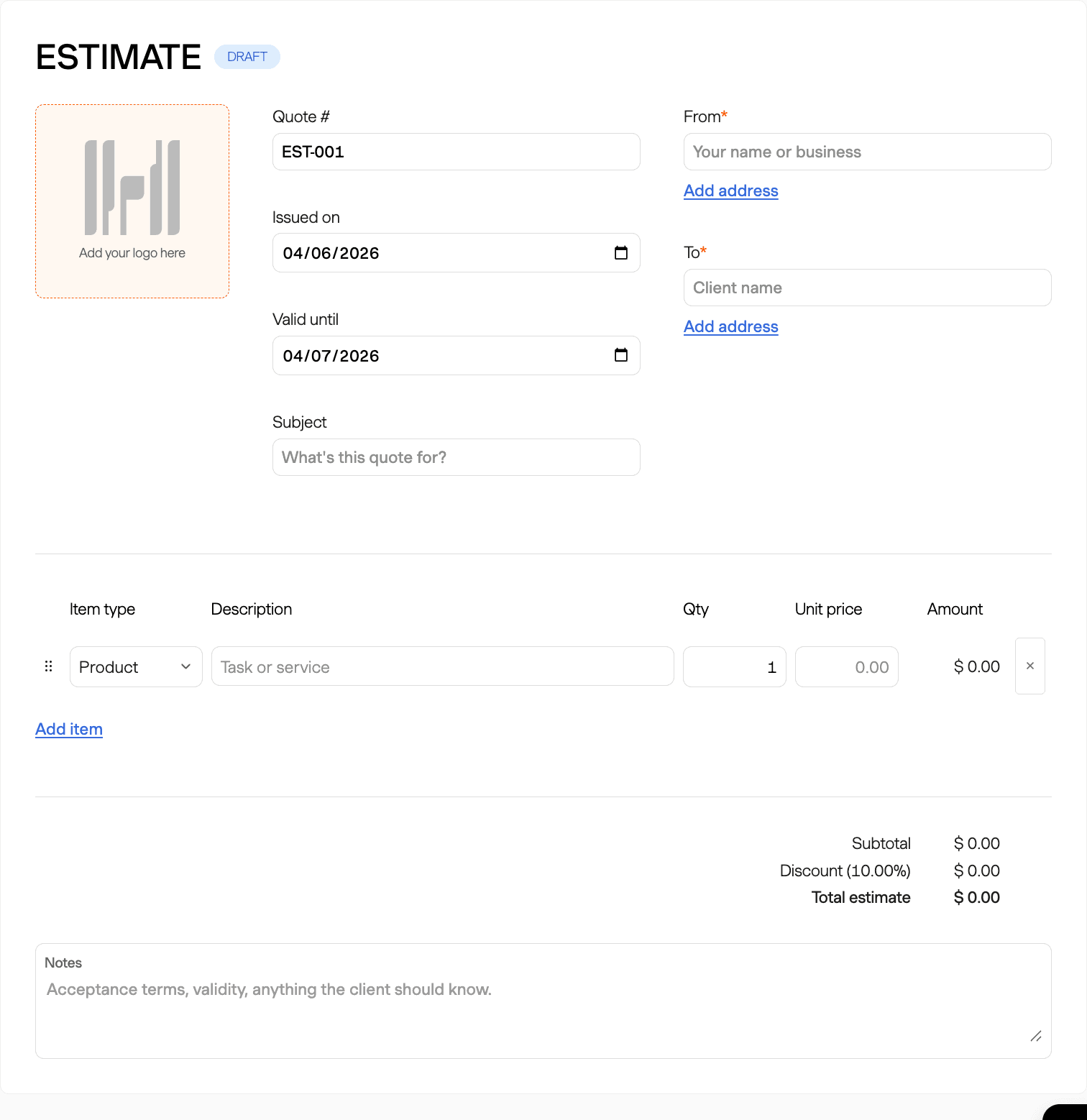
ESTIMATE DRAFT

Add your logo here
Item type
Description
Qty
Unit price
Tax
Amount
Subtotal
$0.00
Discount
$0.00
Total estimate
$0.00
Get paid via:
Credit card / Debit card
ACH
Wire transfer

Customize estimate

Appearance

Add a logo
Show estimate title

Quote settings

Tax Add up to 2 tax rates
%
Discount Apply a discount percentage
%

Key Components of a Contractor Proposal in Arabic

Creating a comprehensive contractor proposal in Arabic involves several critical components that cater to the specific needs of the MENA region. First, a strong introduction sets the tone, establishing the credibility of the proposing team. This includes highlighting educational backgrounds, logos of prestigious companies worked with, and professional photos. Research shows that this approach is crucial in the Middle East, where establishing trust early on is essential.

The proposal should then provide a clear project overview and detailed scope of work. This includes outlining the objectives, deliverables, and methodologies, ensuring alignment with national development plans like Saudi Vision 2030 or UAE Vision 2021. Such alignment not only demonstrates foresight but also resonates with the leadership's future aspirations. Industry experts emphasize the importance of connecting proposals to these visions, as it significantly increases the chances of a successful bid.

Cost estimates are another vital component. The MENA region often faces challenges with underestimating project costs, leading to financial strain. Proposals should include realistic cost projections and contingency plans to account for potential challenges such as material price fluctuations or labor shortages. This comprehensive approach helps prevent financial strain and project delays.

Legal Requirements for Contractor Proposals in Arabic-Speaking Countries

Legal compliance is a cornerstone of proposal submissions in Arabic-speaking countries. For instance, in Saudi Arabia, proposals submitted to government entities must be in Arabic, with any English versions accompanied by a certified Arabic translation. In case of disputes, the Arabic version prevails, highlighting the importance of linguistic accuracy.

The UAE's new Civil Code, effective June 2026, introduces significant changes to construction contracts, emphasizing contractual certainty and risk allocation. Proposals must comply with these legal frameworks to avoid penalties, such as those outlined in Saudi Arabia's Government Tenders and Procurement Law. This law includes provisions for unforeseen circumstances and potential financial penalties for non-compliance, which can be as severe as prohibiting dealings with government entities for up to five years.

In Qatar, public tenders must adhere to specific rules, such as preparing documents in Arabic or including an Arabic summary. Contractors must ensure their proposals meet these linguistic and legal standards to avoid rejection. Experts suggest that understanding and integrating these legal nuances into proposals can significantly enhance their success rate.

Customizing Proposal Templates for Specific Projects

Customizing proposal templates for specific construction projects is crucial for contractors aiming to stand out in the MENA region's competitive market. A tailored approach begins with understanding the project's unique requirements and aligning them with the client's aspirations. Experts recommend focusing on how the project aligns with the client's vision rather than merely addressing problems.

To effectively customize a proposal, contractors should incorporate specific project details, such as the scope of work, timelines, and cost estimates. This involves using language and terminology appropriate for the region, ensuring the proposal resonates with local stakeholders. For example, using Arabic numerals and providing critical numbers in both numerals and words can help avoid confusion.

Furthermore, contractors should highlight their unique value propositions, such as sustainability practices or innovative construction technology. By showcasing past successes and expertise, contractors can differentiate themselves from competitors. Including a portfolio of similar completed projects and references can build confidence in the contractor's ability to deliver.

Language and Cultural Considerations in Arabic Proposals

Language and cultural nuances play a significant role in crafting effective contractor proposals in Arabic. One key consideration is the use of Arabic numerals and the right-to-left reading format, which requires re-creating graphics and ensuring the proposal is visually and linguistically coherent. This attention to detail can prevent misunderstandings and misinterpretations.

Cultural sensitivity is also paramount. Proposals should respect local customs and business etiquette, which includes formal language, honorifics, and attention to hierarchy. Highlighting the proposing team's credibility through educational qualifications and affiliations with prestigious firms can further enhance trust.

Moreover, aligning the proposal with national development plans and demonstrating how the project contributes to these visions can resonate deeply with local stakeholders. This approach not only meets compliance requirements but also positions the proposal as a strategic fit for regional aspirations, increasing the likelihood of acceptance.

Harvest Proposal Templates

Explore Harvest's proposal templates tailored for contractors in Arabic-speaking regions. Streamline project management with effective solutions.

Harvest proposal template for contractors in Arabic

Proposal Template for Contractors in Arabic FAQs

  • A contractor proposal in Arabic should include a compelling introduction, a clear project overview, detailed scope of work, realistic cost estimates, and legal terms. Emphasizing the proposing team's credibility and aligning with local development plans are also crucial.

  • Yes, legal requirements in Arabic-speaking countries often mandate proposals to be in Arabic, with certified translations if needed. Compliance with local tender laws, such as Saudi Arabia's Government Tenders and Procurement Law, is essential to avoid penalties.

  • To customize a proposal template, focus on the project's unique requirements, align with the client's vision, and incorporate specific details like scope, timeline, and costs. Highlight unique value propositions and ensure cultural and linguistic appropriateness.

  • Common mistakes include underestimating project costs, missing legal compliance, and rushing bids. It's crucial to provide comprehensive details, align with local development plans, and include contingency plans for risks like material shortages.

  • Aligning with national development plans like Saudi Vision 2030 demonstrates foresight and strategic fit, resonating with leadership aspirations. This can significantly enhance the proposal's chances of acceptance in the MENA region.

  • Language considerations include using Arabic numerals, ensuring right-to-left reading format, and respecting cultural nuances. This attention to detail helps prevent misunderstandings and enhances the proposal's clarity and acceptance.

  • Harvest aids in managing time tracking and invoicing, streamlining project timelines and payment processes. While it doesn't create proposals, it supports contractors in managing the financial aspects of their projects efficiently.