
Harvest
Quotes
Sign up

Proposal Template for Contractors in Dutch

Harvest helps contractors avoid costly proposal errors by providing a structured approach to time tracking and invoicing, ensuring compliance with Dutch procurement laws.

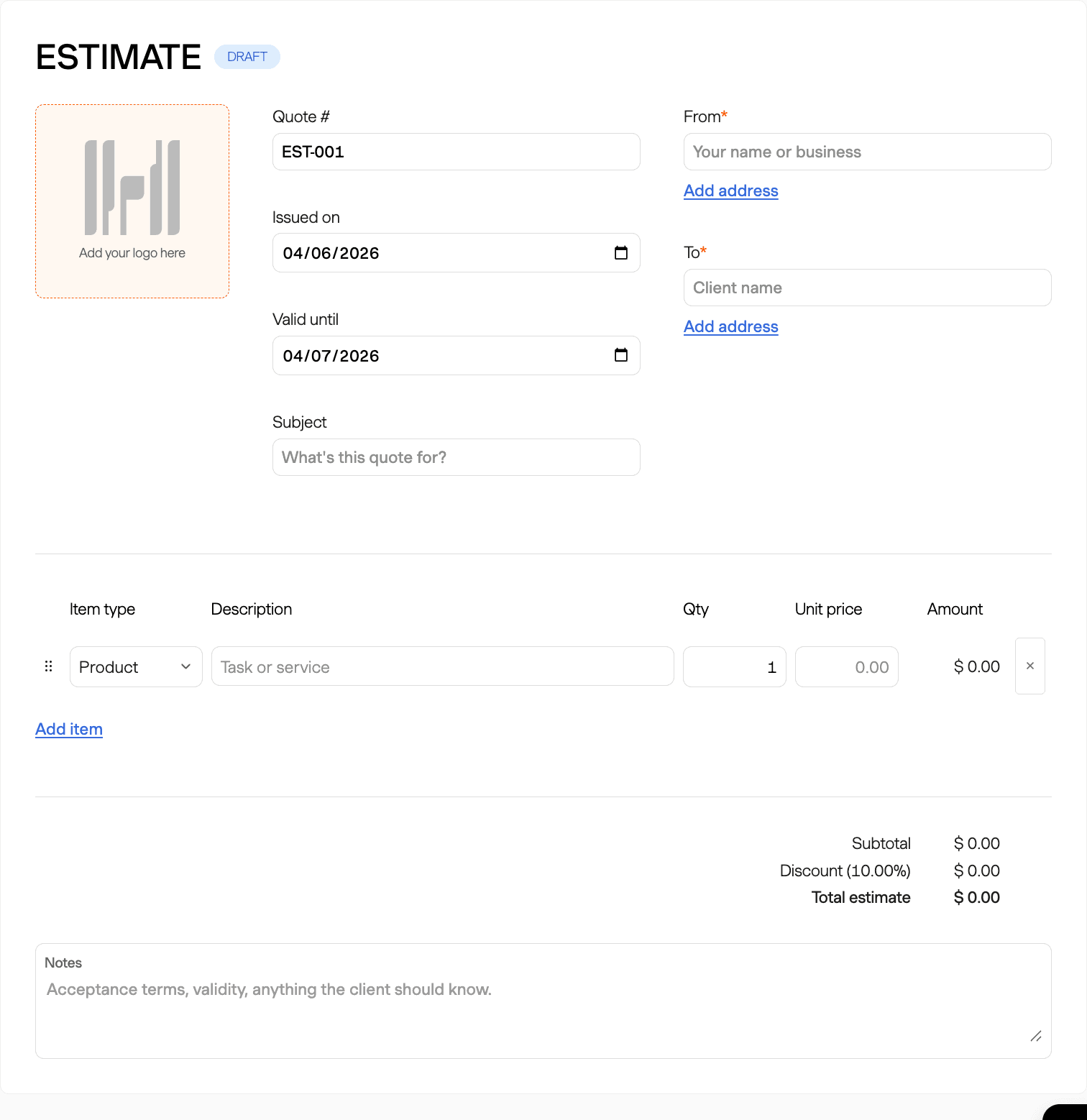
ESTIMATE DRAFT

Add your logo here
Item type
Description
Qty
Unit price
Tax
Amount
Subtotal
$0.00
Discount
$0.00
Total estimate
$0.00
Get paid via:
Credit card / Debit card
ACH
Wire transfer

Customize estimate

Appearance

Add a logo
Show estimate title

Quote settings

Tax Add up to 2 tax rates
%
Discount Apply a discount percentage
%

Understanding the Structure of a Dutch Contractor Proposal

Creating a proposal template for contractors in the Netherlands involves understanding both the required components and the legal context. Dutch law emphasizes the importance of transparency and accuracy in proposals. A well-structured proposal must include the contractor's company details, client details, and a clear description of the services offered. The applicable VAT percentage and total price, including VAT, are also mandatory. Additionally, referencing general terms and conditions is crucial for establishing legal certainty.

Mandatory elements also include a unique quote number and the date of proposal issuance. Including a validity period is important, especially in the construction sector where material costs can fluctuate. If unspecified, the offer is generally binding for a "reasonable period." This structure not only complies with legal requirements but also enhances trust with potential clients by demonstrating professionalism and attention to detail.

Ensuring Compliance with Dutch Procurement Laws

Compliance with Dutch procurement laws in contractor proposals is essential for legality and credibility. Under Dutch private law (Article 6:217 BW), a legally binding agreement is formed through a clear and concrete offer and its acceptance. Therefore, the proposal must be explicit enough for the client to accept with a simple "yes." This involves detailing the scope of work, timelines, and pricing transparently to prevent misunderstandings.

Moreover, including a payment schedule can help manage cash flow and ensure financial planning aligns with project phases. This schedule typically involves staggered payments, such as 30% upon assignment, 40% at the start of work, and 30% upon completion. By adhering to these legal and practical guidelines, contractors not only avoid potential legal issues but also build trust and reliability in their business relationships.

The Role of Digital Tools in Proposal Creation

In the Dutch construction sector, digitalization is revolutionizing how quotes and proposals are created and managed. Many contractors are transitioning from manual spreadsheet calculations to specialized software solutions. These tools automate the quoting process, reducing errors and saving significant time — up to 60-80% compared to manual methods. This shift not only improves efficiency but also enhances the accuracy of quotes.

Digital tools also facilitate automated follow-up processes, which can increase conversion rates by 10% to 30%. By integrating digital signing and CRM systems, contractors can streamline administrative tasks, leading to faster project approvals and payments. For instance, a painting company using digital invoicing tools reported a 21% acceleration in payment collection and an 8-hour weekly reduction in administrative work.

Personalizing and Presenting Your Proposal

Personalization and professional presentation are key to creating compelling proposals. Addressing the client by name and referencing prior discussions not only personalizes the proposal but also demonstrates attentiveness to the client's needs. A polished layout, featuring the company logo, distinct headings, and organized cost tables, conveys professionalism.

Moreover, detailed project descriptions broken down into logical phases help minimize misunderstandings. For example, outlining phases such as demolition, construction, and finishing gives clients a clear overview of the process. Incorporating these elements ensures that your proposal serves as a "business card," making a strong first impression and increasing the likelihood of securing contracts.

The Importance of Follow-up in Proposal Success

Following up on proposals is a critical step often overlooked by contractors. Industry statistics reveal that 70% of quotes are never actively followed up, resulting in missed opportunities. Structured follow-up processes are crucial for increasing the chances of contract acceptance. Simple actions like sending reminders or clarifications via email or WhatsApp can significantly enhance client engagement.

Expert perspectives highlight the importance of this proactive approach. Implementing automated follow-up flows can boost conversion rates by 10% to 30%. This strategy transforms passive quote submission into active client engagement, ultimately leading to higher acceptance rates and improved client relationships. By prioritizing follow-up, contractors can maximize their proposal's potential and secure more projects.

Harvest Proposal Templates for Dutch Contractors

Harvest offers structured proposal templates tailored for Dutch contractors, focusing on legal compliance and professional presentation.

Screenshot of Harvest proposal template for Dutch contractors.

Proposal Template for Contractors in Dutch FAQs

  • A Dutch contractor proposal should include the contractor's and client's details, a project description, applicable VAT, total price, and general terms and conditions. It's also important to specify a validity period and include a unique quote number.

  • To ensure compliance, include all mandatory information such as clear project descriptions, payment schedules, and references to general terms. Under Dutch law, the proposal must be explicit enough for the client to agree with a simple "yes."

  • While there's no fixed layout, Dutch law requires clarity in proposals. Include company and client details, a validity period, project scope, VAT, and total price. Reference general terms for legal certainty.

  • Non-compliance can lead to legal disputes, financial penalties, and loss of client trust. It's crucial to ensure all proposals meet Dutch legal standards to avoid such risks.

  • Yes, proposal templates can be customized to match specific project requirements. Personalizing proposals by addressing client preferences and project specifics can improve engagement and acceptance rates.

  • Digital tools streamline proposal creation, reduce errors, and save time. They also facilitate automated follow-ups, increasing conversion rates by up to 30% and enhancing client engagement.

  • Follow-up is crucial as it significantly increases the likelihood of quote acceptance. Automated reminders and structured communication can boost conversion rates and improve client relationships.