
Harvest
Quotes
Sign up

Estimating Software for Defense Contractors

Harvest streamlines time tracking and invoicing for defense contractors, helping ensure compliance with DCAA and DFARS standards.

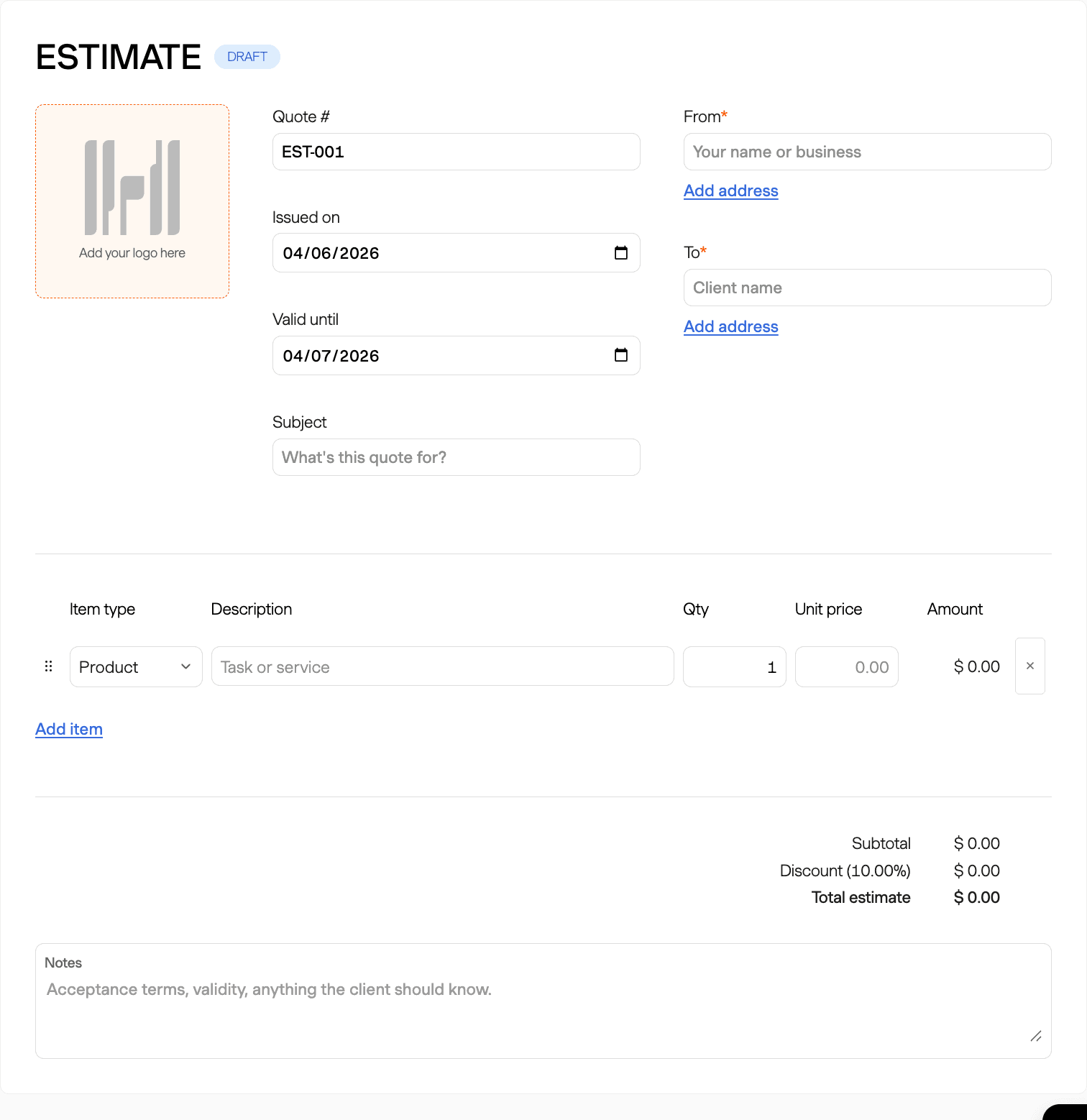
ESTIMATE DRAFT

Add your logo here
Item type
Description
Qty
Unit price
Tax
Amount
Subtotal
$0.00
Discount
$0.00
Total estimate
$0.00
Get paid via:
Credit card / Debit card
ACH
Wire transfer

Customize estimate

Appearance

Add a logo
Show estimate title

Quote settings

Tax Add up to 2 tax rates
%
Discount Apply a discount percentage
%

Understanding DCAA and DFARS Requirements for Defense Contractors

Defense contractors must navigate complex compliance requirements, particularly concerning the Defense Contract Audit Agency (DCAA) and Defense Federal Acquisition Regulation Supplement (DFARS) standards. DFARS 252.215-7002 outlines 17 specific criteria that a reliable estimating system must meet. These include establishing clear responsibilities for estimate preparation, ensuring personnel have adequate training, and consistently applying estimating techniques. Compliance with these regulations is vital, as failure to meet them can result in audit failures, withholding of payments, or contract loss.

The DCAA conducts audits to ensure these criteria are met, and the process can take approximately 259 days to complete. An acceptable system must protect against cost duplication and omissions, a critical aspect given the cost growth issues in major defense acquisition programs. From 1997 to 2016, 36% of such programs experienced significant cost growth, highlighting the importance of robust estimating practices for defense contractors.

Challenges in Estimating for Defense Contractors

Estimating costs in the defense sector poses unique challenges, where inaccuracies can lead to inflated budgets or project delays. For instance, from 1997 to 2016, cost growth caused numerous Major Defense Acquisition Programs to breach Nunn-McCurdy financial thresholds. Traditional software cost estimation methods often fall short due to complexities like feature-based licensing and globally distributed teams.

Defense contractors must adapt to the Department of Defense's shift from the waterfall development model to Agile principles. Agile allows for iterative software delivery and ongoing refinement of estimates based on user feedback and real-world data. This transition has been crucial as the DoD aims to deliver working software more efficiently, reducing the time from years to potentially less than a year.

Selecting the Right Estimating Software for Compliance

For defense contractors, selecting the right estimating software is critical to ensure compliance with DCAA and DFARS standards. The software must facilitate the preparation of estimates that are accurate and consistent with compliance requirements. Advanced estimating software can automate parts of the Basis of Estimates (BOE) process, include built-in compliance checks, and maintain audit trails, enhancing both efficiency and accuracy.

Furthermore, these systems should integrate seamlessly with other business management systems, such as timekeeping and project costing. This integration ensures that data flows smoothly across the organization, supporting compliance and financial control. As the Aerospace & Defense industry grows, with investments expected to rise from $7.7 billion in 2024 to $9.7 billion by 2028, the use of advanced estimating tools becomes increasingly crucial.

Implementing Best Practices in Estimation Processes

Implementing best practices in estimation processes is vital for compliance and efficiency. Establishing clear standards and guidelines for the Basis of Estimates (BOE) ensures consistency and compliance. Regular training and certification programs for estimating teams help maintain high compliance standards, ensuring personnel are well-equipped to perform their tasks.

A rigorous review and approval process, involving peer and management reviews, is essential. This process verifies adherence to standards and the documentation of assumptions. Integrating these practices with broader business processes, such as DCAA-compliant accounting systems, enhances overall compliance and efficiency. As software becomes a core element in defense projects, accurate cost estimation becomes even more crucial.

Leveraging Data-Driven Estimation for Accuracy

Data-driven estimation is key to achieving accuracy in defense contracting. By utilizing license usage data and demand forecasts, contractors can make more informed budgeting decisions. The shift towards data-driven estimation is evident in the decreasing variability of cost estimates for major defense acquisition programs since the 1970s.

Calibrating models with real-world data further refines estimation accuracy. An empirical study showed significant improvement in estimation accuracy when the COCOMO II model was calibrated using collected data. Such calibration is not only about the choice of model but also about using the data effectively. This approach supports the DoD's emphasis on iterative estimation, refining estimates as more data becomes available.

Harvest for Defense Contractors

See how Harvest supports defense contractors with compliant time tracking and invoicing solutions.

Screenshot of Harvest's estimating software for defense contractors.

Estimating Software for Defense Contractors FAQs

  • To comply with DCAA standards, estimating software must meet 17 criteria outlined in DFARS 252.215-7002. These include clear assignment of responsibility for estimates, consistent application of techniques, and protection against cost duplication.

  • Accurate cost estimation is crucial as it prevents inflated budgets and project delays. For instance, significant cost growth has affected 36% of Major Defense Acquisition Programs between 1997 and 2016, leading to financial breaches.

  • Defense contractors can ensure DFARS compliance by using advanced estimating software that automates parts of the BOE process, maintains audit trails, and integrates with other management systems for efficiency and transparency.

  • Trends include the shift to Agile methodologies and data-driven estimation, improving accuracy and flexibility. By 2028, the Aerospace & Defense industry's software investments are expected to rise to $9.7 billion, reflecting these changes.

  • Calibration of estimation models using real-world data significantly improves accuracy. An empirical study found that calibrating the COCOMO II model enhanced estimation accuracy, highlighting the importance of data realism checks.

  • Data-driven estimation leverages actual usage and demand data to improve budgeting decisions. This approach has reduced variability in cost estimates for major defense acquisition programs since the 1970s.

  • Integration with other management systems, like timekeeping and project costing, ensures seamless data flow and compliance, enhancing financial control and efficiency within defense contracting organizations.