Sign up


Essential Elements of an Hourly Contract
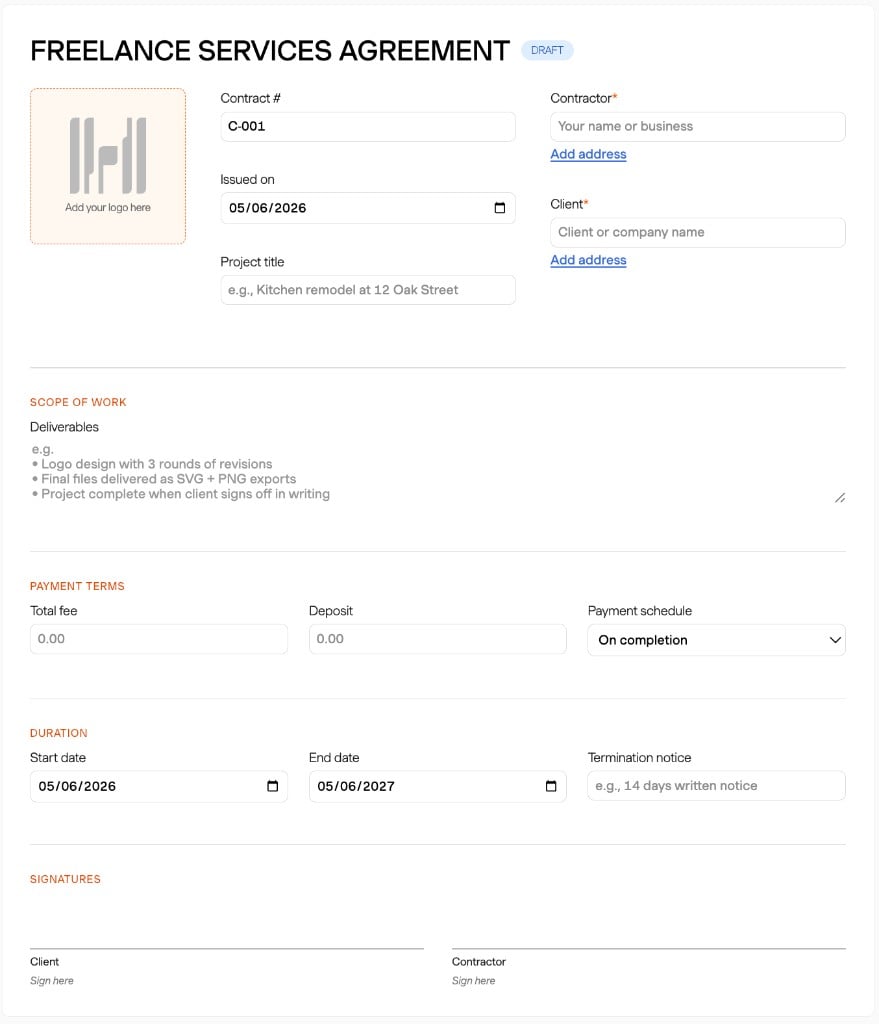
Creating an effective hourly contract involves several key elements that ensure clarity and compliance. First and foremost, it's crucial to define the scope of work, detailing specific tasks, responsibilities, and deliverables expected from the contractor. This prevents scope creep and misunderstandings that could lead to disputes. Additionally, payment terms must be clearly outlined, specifying the agreed hourly rate, payment schedule, and invoicing procedures. This clarity helps avoid delays and friction related to compensation.
Another vital component is the inclusion of project duration and termination clauses. These should specify the start and end dates and conditions under which either party can terminate the contract, including notice periods. Intellectual property rights and confidentiality clauses are also essential to protect the client's interests and sensitive information. Lastly, the contract must explicitly state the contractor's independent status, clarifying that they're responsible for their own taxes, insurance, and benefits. This is critical to avoid misclassification, which can result in legal penalties.