
Harvest
Contracts
Sign up

Contract Template for Defense Contractors

Defense contractors face complex compliance challenges. Harvest supports your contract management by streamlining time tracking and invoicing.

Start from a template

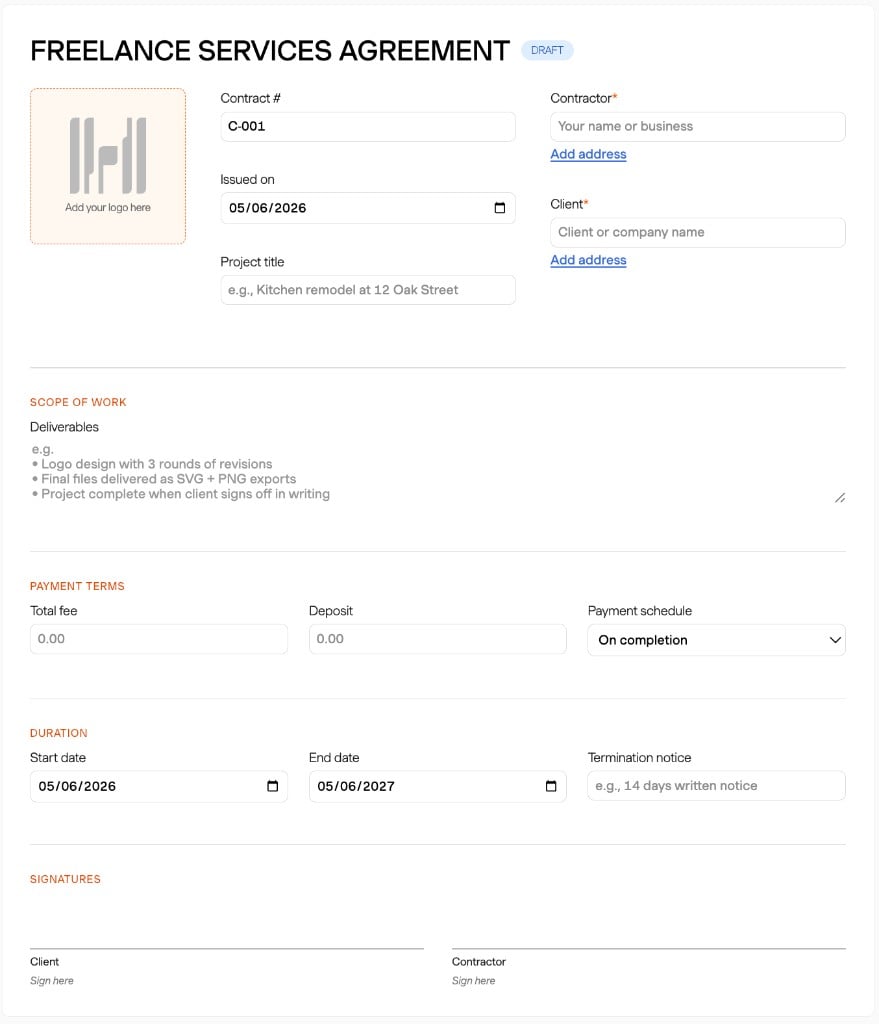
AGREEMENT DRAFT

Add your logo here

Scope of work

Payment terms

Duration

Signatures

Client

Sign here

Contractor

Sign here

Get paid via:
Credit card / Debit card
ACH
Wire transfer

Customize contract

Appearance

Add a logo
Show contract title

Contract settings

Include payment terms Total fee, deposit, and schedule
Include termination clause Notice required to end the contract
Include signature blocks Both parties sign at the bottom

Understanding Defense Contract Templates

Defense contract templates are essential tools for ensuring compliance with federal regulations and streamlining the contracting process. The Federal Acquisition Regulation (FAR) and Defense Federal Acquisition Regulation Supplement (DFARS) provide a framework for these contracts, which are crucial for defense contractors working with the Department of Defense (DoD). Compliance with these regulations is non-negotiable, as non-compliance can result in significant penalties, including fines and potential debarment from future contracts.

Standardized contract templates offer significant efficiency gains, reportedly closing deals 30% faster while reducing legal costs. However, using a template is not enough; customization is key. Defense contracts must include specific clauses mandated by DFARS, such as cybersecurity requirements for safeguarding Covered Defense Information (CDI) and reporting cyber incidents. This ensures that contracts not only align with regulatory standards but also address the unique needs of each project.

Essential Clauses in Defense Contracts

When drafting a contract template for defense contractors, it's crucial to include specific clauses that address compliance and operational requirements. The DFARS mandates include clauses for cybersecurity, such as DFARS 252.204-7012, ensuring sensitive information's protection. Additionally, contracts should specify governing law and jurisdiction to avoid disputes.

Another vital component is the inclusion of termination and breach clauses, which outline conditions for contract termination, notice periods, and breach consequences. These clauses prevent misunderstandings and ensure that both parties are aware of their obligations and rights. Regular updates to contract templates, reflecting changes in the National Defense Authorization Act (NDAA), also help maintain compliance and relevance.

Compliance with FAR and DFARS

Federal regulations like FAR and DFARS are critical components of defense contracting, providing a uniform format for solicitations and contracts. These regulations ensure that defense contractors meet all necessary compliance requirements, reducing the risk of penalties. For instance, the DFARS requires defense contractors to comply with NIST 800-171 standards for cybersecurity, emphasizing the importance of protecting defense-related information.

The National Defense Authorization Act (NDAA) introduces annual changes that influence compliance standards. Recent changes exempt nontraditional defense contractors from some FAR cost principles, affecting over 90% of the defense industrial base. Keeping abreast of such changes is vital for defense contractors to maintain compliance and avoid costly penalties.

Customizing Contract Templates

While standardized templates provide a solid foundation, customization is crucial to address the unique aspects of each defense contract. This involves integrating industry-specific clauses and regulatory controls directly into the templates, ensuring compliance and operational efficiency. For instance, defense contracts often require precise definitions and avoidance of vague terms to prevent disputes or unenforceable agreements.

Developing a library of pre-approved standard clauses and regularly reviewing them for relevance and compliance is a best practice. It’s also essential to identify variable fields for customization, ensuring that the contract reflects specific project requirements and jurisdictional laws. This approach not only aligns with compliance but also accelerates contract execution and reduces legal risks.

The Role of Harvest in Defense Contracting

While Harvest does not directly offer contract templates for defense contractors, it plays a crucial role in the broader project management and administrative landscapes. Harvest specializes in time tracking and invoicing solutions, which are integral to managing defense contracts efficiently. By accurately tracking billable hours and managing expenses, Harvest supports defense contractors in maintaining financial accuracy and accountability.

Integrating Harvest into the contract management process can lead to improved visibility over project timelines and budgets. This ensures that defense contractors can focus on compliance and contract execution, while Harvest handles the logistical aspects of time and expense management, ultimately contributing to more streamlined and successful contract fulfillment.

Streamline with Harvest

Harvest helps defense contractors by streamlining time tracking and invoicing, supporting contract management and compliance.

Contract template for defense contractors showing compliance features

Contract Template for Defense Contractors FAQs

  • Key clauses in a defense contract template include cybersecurity requirements, termination and breach clauses, and governing law specifications. These ensure compliance with DFARS and provide clear guidelines for managing contracts.

  • Defense contractors ensure compliance by incorporating the necessary clauses mandated by FAR and DFARS into their contract templates. This includes cybersecurity measures and periodic reviews to align with the latest regulations.

  • Cybersecurity is crucial in defense contracts to protect sensitive information. DFARS requires compliance with specific cybersecurity standards to safeguard Covered Defense Information (CDI) and ensure national security.

  • Customization is essential to address specific project needs and regulatory requirements. This includes integrating sector-relevant clauses and avoiding vague language to prevent disputes and ensure compliance.

  • Harvest assists defense contractors by streamlining time tracking and invoicing. This helps maintain financial accuracy and supports the administrative aspects of contract management.

  • The NDAA introduced provisions exempting nontraditional defense contractors from certain FAR cost principles, affecting compliance and operational requirements for a large part of the defense industrial base.

  • Defense contract templates should be reviewed regularly to ensure compliance with the latest regulations and industry standards. This helps in adapting to changes in laws and maintaining effective contract management.