
Harvest
Contracts
Sign up

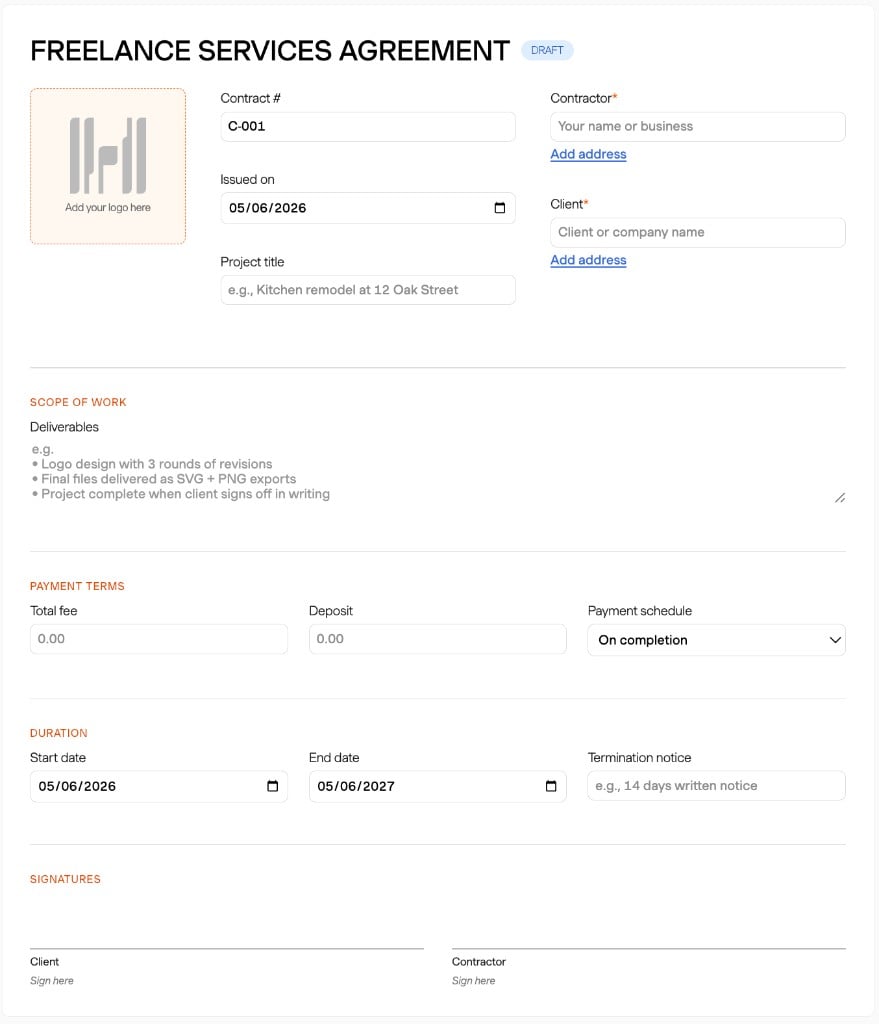
Independent Contractor Agreement Template in Malay

With the rise of Malaysia's gig economy, crafting a clear independent contractor agreement is crucial. Harvest helps contractors manage project scopes and payment terms effectively.

Start from a template

AGREEMENT DRAFT

Add your logo here

Scope of work

Payment terms

Duration

Signatures

Client

Sign here

Contractor

Sign here

Get paid via:
Credit card / Debit card
ACH
Wire transfer

Customize contract

Appearance

Add a logo
Show contract title

Contract settings

Include payment terms Total fee, deposit, and schedule
Include termination clause Notice required to end the contract
Include signature blocks Both parties sign at the bottom

Understanding Independent Contractor Agreements in Malaysia

An independent contractor agreement in Malaysia, known as a "Perjanjian Kontraktor Bebas," is crucial for defining the terms of engagement between businesses and gig workers or freelancers. This contract type is governed by the Contracts Act 1950 and distinguishes contractors from employees, who fall under the Employment Act 1955. Misclassification can lead to significant legal and financial consequences, such as back-payments for the Employees Provident Fund (EPF) and other benefits. Therefore, understanding the key components of such agreements is essential.

The agreement should clearly outline the scope of services, payment terms, confidentiality clauses, and intellectual property rights. For instance, payment terms must specify whether the contractor is paid per deliverable or on an invoice basis, rather than a fixed salary, to reinforce the independent nature of the relationship. The "control test," often applied by Malaysian courts, assesses the degree of control over how the work is performed, influencing the classification significantly.

Legal experts advise that simply labeling a worker as an "independent contractor" does not suffice. The substance of the working relationship is what courts scrutinize. To avoid misclassification, it's vital for contractors to have autonomy over their work methods and schedules and to be free to provide services to other clients.

Legal Considerations for Malaysian Independent Contractor Agreements

Legal compliance is a cornerstone of drafting effective independent contractor agreements in Malaysia. The Contracts Act 1950 governs these agreements, and businesses must ensure they do not inadvertently create an employer-employee relationship. The upcoming Gig Workers Bill 2025 aims to establish clearer frameworks for gig workers, highlighting the importance of staying abreast of legislative changes.

Critical legal considerations include retaining records of all contractor payments and agreements for at least seven years, as required for tax compliance and potential audits by Malaysian authorities. Non-resident contractors must be aware that companies are required to withhold 10% tax under Section 109B of the Income Tax Act 1967, which can impact agreement negotiations.

Businesses should seek legal advice to tailor agreements to their specific needs and ensure compliance. While templates can provide a starting point, they must be carefully customized to reflect the independent nature of the relationship and comply with Malaysian laws.

Creating Effective Independent Contractor Agreements

Creating an effective independent contractor agreement involves more than just filling out a template. It requires a comprehensive understanding of the specific needs of the business and the contractor, as well as the legal landscape. Essential clauses include detailed identification of both parties, a precise scope of services, clear payment terms, intellectual property ownership, and confidentiality provisions.

Contractors should ensure they have autonomy over their work and are not subject to company codes of conduct meant for employees. This autonomy helps solidify their status as independent contractors, reducing the risk of misclassification. Payment structures should be based on deliverables or invoices, which align with the independent nature of contracting.

Harvest supports contractors by providing tools that help define clear payment terms and manage project scopes through its invoicing and project management features. While Harvest does not offer legal contract templates, its features can assist in organizing project-related tasks and expenses effectively, ensuring that contractors maintain clarity and control over their engagements.

The Role of Harvest in Managing Project Agreements

While Harvest does not provide legal templates for independent contractor agreements, it plays a significant role in managing projects and agreements once they're in place. Harvest's time tracking and invoicing capabilities are invaluable for contractors who need to ensure accurate billing and project management.

Harvest allows contractors to track billable hours and project expenses efficiently, helping maintain transparency and accuracy in invoicing. Its project management tools can assist in defining and monitoring project scopes, which are critical components of any contractor agreement.

For contractors operating in industries like IT, consulting, or creative sectors, where project management and billing accuracy are crucial, Harvest provides a reliable platform to support their operational needs. By focusing on these core functionalities, Harvest helps contractors manage their workflows effectively, even if specific legal contract drafting is handled externally.

Harvest for Malaysian Contractors

Discover how Harvest supports project scopes and payment terms for Malaysian contractors, enhancing clarity and control.

Harvest project and payment management tools for independent contractors in Malaysia.

Independent Contractor Agreement Template in Malay FAQs

  • An independent contractor agreement in Malaysia should include the identification of both parties, a precise scope of services, payment terms, intellectual property rights, and confidentiality provisions. It must clearly outline the independent nature of the relationship to avoid misclassification.

  • Yes, Malaysia's Contracts Act 1950 governs these agreements, distinguishing them from employment contracts under the Employment Act 1955. Businesses must ensure the agreement reflects an independent contractor relationship to avoid legal penalties.

  • Misclassification can lead to penalties, including back-payments for EPF and other benefits. It's crucial to establish clear terms in contracts to reflect the independent nature of contractors and avoid legal issues.

  • Yes, while templates provide a starting point, they should be customized to reflect the specific nature of the business and contractor relationship. Consulting legal experts is advisable to ensure compliance with Malaysian laws.

  • Payment terms define how contractors are compensated, reinforcing their independent status. Terms should specify payment per deliverable or invoice, rather than a fixed salary, to align with contractor status.

  • Harvest supports freelancers by providing tools for time tracking and invoicing, essential for managing projects and ensuring accurate billing. This helps maintain transparency and control over engagements.