Sign up


Understanding Independent Contractor Agreements in Japan
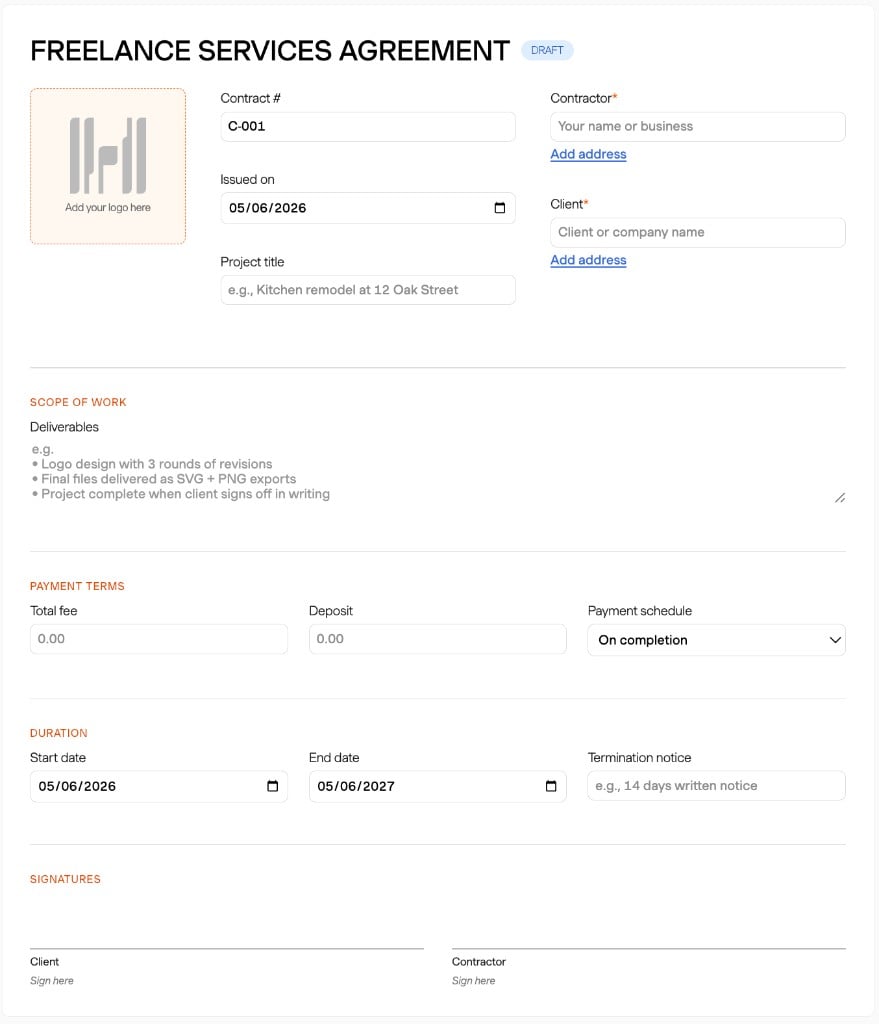
Independent contractor agreements in Japan are governed by specific legal frameworks designed to protect both parties involved. These contracts, known as "Gyo-mu Itaku" agreements, facilitate a business-to-business relationship, primarily involving sole proprietors. These agreements are essential in Japan's growing gig economy, which is projected to reach 110 billion yen by 2024, emphasizing the need for clear and compliant contracts. The Freelance Act, effective from November 1, 2024, mandates written or electronic contracts that specify key terms like work description, payment details, and deadlines. This regulation aims to address past issues with verbal agreements, which often led to delayed payments and reduced wages.
It's crucial for businesses and contractors to understand the distinction between "Ukeoi" (Contract for Work) and "Jun-inin" (Quasi-delegation) agreements. The former ties compensation to specific deliverables, while the latter compensates for services provided over a period. Misclassification of contractors as employees can result in severe penalties, making it vital to structure agreements correctly. Legal experts note that Japanese contracts are typically concise, focusing on fundamental terms, and allow for later negotiations if necessary.